The Silent Wall Unit: A Forensic Troubleshooting Guide to Mini-Splits
There is a specific kind of silence that haunts an HVAC tech. It’s not the peaceful quiet of a job well done; it’s the heavy, stagnant silence of a dead mini-split when the temperature outside is hitting 108°F and the customer is staring at you like you hold the keys to the afterlife. I’ve spent thirty years sweating through my work shirt, and if there is one thing I’ve learned, it’s that these ductless wonders are both the most efficient machines on the market and the most temperamental when it comes to electrical hygiene. Unlike a standard AC installation where you have a big, dumb contactor and a simple capacitor, a mini-split is a computer that happens to move juice.
The Physics Lesson: Why Airflow Still Rules
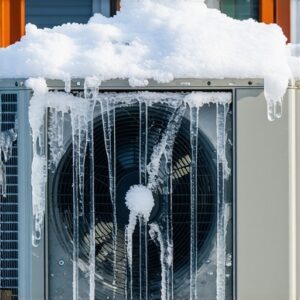
My old mentor, a man who could smell a leak from the curb, used to bark at me, ‘You can’t move heat if you can’t touch it!’ He wasn’t talking about physical contact; he was talking about the boundary layer of air on the evaporator fins. This is why mini-split units fail. People think because they don’t have ducts, they don’t have airflow issues. Wrong. If those filters are choked with dust, the thermodynamic balance shifts. The evaporator coil drops below the dew point, but without enough airflow to provide sensible heat, the latent heat removal goes into overdrive, the coil ices, and the sensors—the ‘nervous system’ of the unit—shut the whole thing down to prevent liquid slugging back to the compressor.
“Equipment shall be sized to satisfy the calculated loads. The selection of equipment shall be based on the local design conditions and the manufacturer’s performance data.” – ACCA Manual S
The Forensic Diagnosis: Why It Won’t Start
When a mini-split won’t turn on, we don’t just start guessing. We follow the voltage. If you’re looking for a heating service or furnace repair, you’re usually looking at a gas valve or an igniter. With a mini-split, you’re looking at a communication handshake. Let’s break down the anatomy of a failure.
Step 1: The High-Voltage Lifeline
First, check the disconnect. I once drove two hours into the desert because a ‘Sparky’ (electrician) had pulled the pull-head at the outdoor unit to work on a nearby outlet and forgot to put it back. Check your breakers. A mini-split is an inverter-driven system. It takes 240V AC, converts it to DC, and then ‘chops’ it to vary the frequency of the compressor. If that incoming juice is dirty or fluctuating, the surge protector (if one was installed correctly) or the main PCB will trip. In the Southwest, our 115°F ambient heat cooks these boards. High sensible heat increases the resistance in the wires, and if the installation used undersized conductors, the voltage drop will kill the brain of the machine before it even tries to ramp up.
Step 2: The Communication Handshake
This is where most ‘Sales Techs’ get lost. They want to sell you a whole new system because they don’t understand the 14/4 AWG stranded wire. Mini-splits use a digital signal sent over the S3 terminal (usually) to talk between the indoor head and the outdoor condenser. If there is a break, a loose wire, or—God forbid—someone used wire nuts instead of a continuous run, the unit will never turn on. It’s like a phone call that won’t connect. If the indoor unit has power but the outdoor unit is dead, check that communication voltage. It should be a fluctuating DC signal. If it’s steady or zero, your ‘handshake’ is broken.
Step 3: The Inverter Board and Error Codes
Modern units are smart. They blip, flash, and beep. Don’t ignore the lights. A sequence of three flashes might mean a thermistor is out of range, while five might mean a DC overcurrent. In a mini-split, the thermistors are the ‘eyes.’ They measure the pipe temperature and the room temperature. If the pipe thermistor thinks the coil is at 150°F because it’s shorted, the system won’t start because it thinks it’s already melting. It’s protecting itself.
“Proper maintenance of heat transfer surfaces is essential for energy-efficient operation and for the longevity of the mechanical components within any HVAC system.” – ASHRAE Standard 180
The Southwest Factor: Heat and Head Pressure
In dry climates like Arizona or Nevada, we deal with extreme high head pressure. When the sun is beating down on that condenser, the refrigerant (the gas) struggles to reject heat. If the condenser coils are filled with desert silt and ‘Pookie’ (mastic) overspray from a lazy tin knocker working nearby, the unit will hit its high-pressure limit and lock out. You’ll think it’s a dead compressor, but it’s actually just a dirty radiator. Wash your coils. It’s the cheapest ‘repair’ you’ll ever do.
Repair vs. Replace: The 2025 Reality
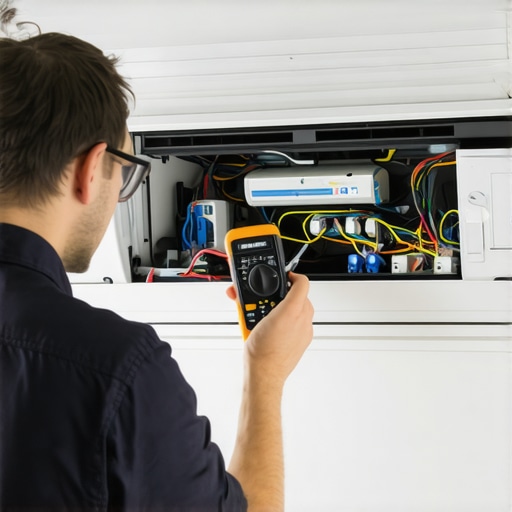
If your board is fried and the unit is ten years old, you’re at a crossroads. With the phase-out of R-410A and the move toward A2L refrigerants, parts for older mini-split units are becoming ‘liquid gold.’ If a tech quotes you $1,200 for a main PCB, they aren’t necessarily scamming you—the manufacturer prices on these boards are skyrocketing. However, if they haven’t even opened the panel to check the fuse on the board, they’re a ‘Sales Tech’ looking for a commission. Real troubleshooting involves a multimeter and a schematic, not a sales brochure.
Summary of the Troubleshooting Flow
1. Check the main breaker and the outdoor disconnect. No power, no play.
2. Look for error codes on the indoor head. Count the flashes.
3. Inspect the communication wiring. Ensure the S3 signal is reaching the condenser.
4. Check the thermistors. A $20 sensor can shut down a $5,000 system.
5. Verify the DC bus voltage on the inverter board. If you have AC in but no DC out, the board is a paperweight.
Comfort isn’t a luxury; in the Southwest, it’s a necessity. Don’t let a simple electrical ghost turn your home into an oven. Understanding the physics of your mini-split is the first step to mastering your environment.