The Ghost in the Ductwork: Why Your Office Zoning is a Tactical Disaster
My old mentor, a man who had more refrigerant in his lungs than oxygen, used to scream at me during my apprenticeship: ‘You can’t cool what you can’t touch!’ He’d stand over a frozen evaporator coil, his face turning the same shade of purple as a high-pressure R-410A tank, and insist that airflow matters more than horsepower. He was right then, and he’s right now. In thirty years of crawling through commercial plenums and smelling the sour, acidic stench of a compressor burnout, I’ve seen one recurring nightmare: the office building zoning system that is effectively at war with itself. You think you have a thermostat problem; what you actually have is a physics problem. When one side of the floor is calling for heating service because they’re shivering in the shadows, and the server room is screaming for AC installation level cooling, the central unit becomes a confused, mechanical mess. It’s trying to satisfy two masters, and in the end, it satisfies none.
“The most expensive equipment in the world cannot overcome a bad duct system.” – Industry Axiom
The Anatomy of the Thermal Battle
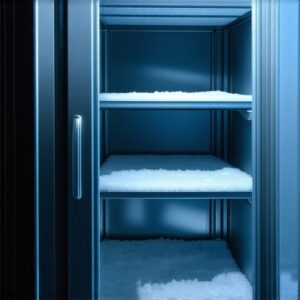
Let’s talk about the ‘bypass damper’—the unsung, often broken hero of the commercial HVAC world. When you have a multi-zone system, the dampers in the ductwork open and close like the valves of a heart. But if your furnace repair technician didn’t balance the static pressure correctly, those dampers are just expensive pieces of flapping tin. When half the zones close, the air has to go somewhere. If it’s forced through the remaining open vents at 1,500 FPM, it sounds like a jet engine taking off in the breakroom. If it gets dumped back into the return through a poorly calibrated bypass, the air temperature entering the coil drops too low (in cooling) or rises too high (in heating), causing the system to trip on high-limit or freeze into a block of ice. This is what we call ‘fighting itself.’ You’ve got the heating coil and the cooling coil essentially trying to negate each other’s existence, while the ‘Sparky’ who wired the control board didn’t set the staging delays correctly. [image_placeholder_1]
Thermodynamic Zooming: Latent vs. Sensible Heat
In our cold Northern climate, we deal with a specific brand of misery. During the winter, your heat exchanger is working overtime. If the airflow is restricted because three zones are satisfied and the fourth is starving, the heat exchanger doesn’t get cooled enough by the returning air. It begins to cycle on the limit switch. This constant expansion and contraction is the primary cause of cracked heat exchangers—a death sentence that necessitates immediate furnace repair or a full swap. We’re talking about sensible heat—the temperature you see on the dial—but in an office full of thirty people breathing and sweating, latent heat (humidity) is the hidden enemy. If the system short-cycles because the zoning logic is flawed, it never runs long enough to drop the evaporator coil below the dew point. You end up with a ‘cold swamp’—an office that is 68 degrees but 70% humidity. It’s clammy, it’s gross, and it’s a breeding ground for mold in the ‘Pookie’—that mastic sealant we use to keep the ‘Tin Knockers’ mistakes from leaking air.
The Regulatory Cliff and the Mini-Split Truce
As we move toward 2025, the industry is shifting away from R-410A to A2L refrigerants like R-454B. These are ‘mildly flammable,’ which means your old, fighting zoning system isn’t just inefficient anymore; it’s becoming a regulatory headache. When I’m called in to fix a ‘lemon’ system, I often find that the best heating service isn’t fixing the old furnace at all—it’s installing a mini-split for the rogue zone. A mini-split allows you to take the server room or the corner office with the floor-to-ceiling windows off the main ‘warfare’ grid. It provides dedicated, inverter-driven cooling or heating without messing with the static pressure of the main trunk. This is the difference between a ‘Sales Tech’ who wants to sell you a new 20-ton RTU and a real mechanic who understands that the airflow manifesto is the only way to achieve true comfort.
“Design systems to meet the actual load, not the theoretical peak, to ensure equipment longevity and occupant health.” – ASHRAE Standard 62.1
The Forensic Diagnosis: When to Pull the Plug
You’ll know your system is losing the war when you hear the ‘oil-canning’—that loud thumping sound of ductwork expanding under pressure. Or worse, when you smell the ‘gas’ (refrigerant) because the vibration of a hunting compressor has rubbed a hole in the suction line. If you’re paying for AC installation every seven years instead of fifteen, your zoning is the killer. Stop looking for a better thermostat; start looking for a better flow. Real comfort is physics, not magic. You need a tech who understands that ‘Beer Can Cold’ on the suction line is a symptom, not a goal. Proper static pressure is the only peace treaty that works in the thermal warfare of a modern office.