The Sound of a Silent Crisis: Why You Can’t Just Flip the Switch
The silence following a summer power outage isn’t peaceful; it’s expensive. You’re sitting there in a 90-degree living room, sweat pooling in places it shouldn’t, waiting for that sweet hum of the compressor. But when the grid finally flickers back to life, your first instinct—to sprint to the thermostat and crank it down to 60—is exactly how you turn a temporary inconvenience into a $10,000 AC installation bill. As a tech who has spent three decades dragging my manifold gauges through crawlspaces and over scorching tar roofs, I’ve seen more compressors killed by ‘eager owners’ than by actual lightning strikes.
My old mentor, a man who smelled permanently of burnt oil and R-22, used to scream at me, ‘You can’t cool what you can’t touch!’ He wasn’t talking about the air; he was talking about the physics of heat transfer. If your system was running full tilt when the power cut, the ‘juice’ (refrigerant) is trapped in a state of high-pressure imbalance. Forcing it to restart immediately is like asking a sprinter to start a 100-meter dash while someone is pushing against their chest with a lead weight. You have to understand the thermodynamic reality of your home before you touch that dial.
The Anatomy of a Surge: What Happens Inside the Box
When the power goes out, the sequence of operations in your HVAC system is violently interrupted. In a standard split system or even a modern mini-split, the compressor is the heart. It pumps the gas, increasing its temperature and pressure so it can dump heat outside. If the power drops, that pressure doesn’t just vanish. It takes time—usually five to ten minutes—for the pressures on the high side (the liquid line) and the low side (the suction line) to equalize. If you try to restart before this equalization happens, the compressor motor faces massive ‘locked rotor’ amperage. This is how you fry a start capacitor or, worse, weld the contactor points together.
“The most expensive equipment in the world cannot overcome a bad duct system or improper electrical sequencing during startup.” – Industry Axiom
In humid climates, like what we see in the South, the stakes are higher. We aren’t just fighting sensible heat (the temperature you see on the thermometer); we are fighting latent heat. Your evaporator coil is designed to drop below the dew point to wring moisture out of the air. When the power cuts, that moisture sits on the coil. If you restart too quickly and the blower kicks on before the compressor is ready to pull heat, you’re just blowing swampy, warm air back into the house, spiking the humidity and making the recovery time twice as long.
Step-By-Step Forensic Restart Protocol
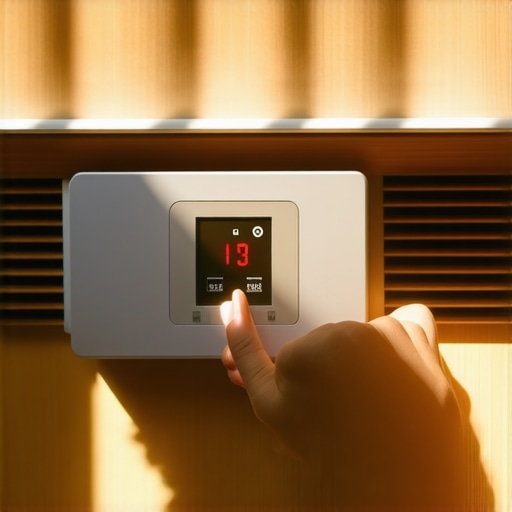
Don’t be a ‘Sales Tech’ victim. If you call a company out after a storm, a dishonest guy will see a blown fuse and tell you that you need a whole new heating service or cooling package. Follow this protocol first: 1. The Hard Shutoff: The moment the power fails, turn the AC system to ‘OFF’ at the thermostat. This prevents a ‘short cycle’ when the utility company is flickering the grid back on. 2. The 30-Minute Rule: Once the lights stay on for good, wait 30 minutes. This allows the internal crankcase heater to warm up the oil in the compressor, ensuring any liquid refrigerant that migrated there is boiled off. Liquid doesn’t compress; if the compressor tries to ‘slug’ liquid, it’s game over. 3. Check the Breakers: Go to your electrical panel. Even if the lights are on, the 240V circuit for the AC might have tripped. Flip it fully to ‘OFF’ and then back to ‘ON’ to reset the internal spring. 4. The Thermostat Handshake: Turn the system to ‘COOL’ and set the temp only 2 degrees below the current room temperature. This prevents the system from overworking itself while the pressures are stabilizing.
The Hidden Dangers: From Burnout to Pookie
If you smell something acidic or sour coming from the vents after a restart, shut it down immediately. That is the smell of a compressor burnout. The motor windings have overheated, melting the insulation and acidifying the oil. If you don’t catch this, the acid will eat through the copper lines, necessitating a full AC installation and a system flush that costs a fortune. Sometimes, the problem isn’t the ‘gas’ at all; it’s the ‘Sparky’ work. Power surges can fry the low-voltage transformer that talks to your thermostat, or it can melt the ‘Pookie’ (mastic) on your ductwork if the blower motor kicks back on with a mechanical jolt, causing leaks in the attic.
“Designers shall ensure that equipment is capable of restarting under the maximum expected load conditions after a power interruption.” – ASHRAE Standard 15
In my thirty years, I’ve seen ‘Tin Knockers’ build beautiful ducts only for a power surge to kill the control board of a high-efficiency furnace repair job. If your unit is older, consider a ‘Hard Start Kit.’ It’s basically a giant capacitor that gives the compressor a kick in the pants to get it moving quickly, reducing the time the motor spends in that high-amperage danger zone. It’s the cheapest insurance policy you can buy for your HVAC system.
When to Admit Defeat and Call the Pros
If you’ve followed the steps and the outdoor unit is just humming or making a ‘thunk-thunk’ sound, your capacitor is likely shot. This is a common heating service or cooling call. A capacitor is a $20 part, but a ‘Sales Tech’ will charge you $400 for it or try to sell you a new unit. Know the signs. If the fan is spinning but the air isn’t cold, or if the ‘suction line’ (the big insulated copper pipe) isn’t ‘beer can cold,’ you have an issue that requires a manifold gauge set and a professional’s touch. Physics doesn’t lie; if the heat isn’t moving from the inside to the outside, the cycle is broken. Keep your coils washed, your filters changed, and your patience high after a storm. Your wallet will thank you.