The silence of a dead furnace in a cold house has a specific weight to it. It’s a heavy, oppressive quiet that usually hits right after the lights flicker back on following a winter storm. You standing there in your parka, staring at the thermostat, waiting for that click-and-whoosh that never comes. As someone who has spent three decades dragging manifold gauges through crawlspaces and explaining the second law of thermodynamics to shivering homeowners, I can tell you that a power outage is more than just a temporary inconvenience for your heating system; it’s a traumatic event for the control board. If your unit isn’t kicking on, don’t just start mashing buttons like a kid at an arcade. You need to understand the sequence of operations or you’re going to end up calling a heating service for a problem you could have handled with a little bit of patience and a lot of safety. My old mentor, a man who had 15% of his lungs replaced by sheet metal dust and smelled perpetually of pipe dope, used to scream at me, ‘You can’t cool what you can’t touch, and you can’t heat what you don’t respect! Airflow and physics don’t care about your feelings!’ He was right. Most ‘broken’ furnaces after a surge are just stuck in a logic loop, terrified of their own sensors.
The Forensic Anatomy of a Post-Outage Lockout
When the grid goes down, your furnace doesn’t just ‘stop.’ It undergoes an abrupt termination of its combustion cycle. If the power cut while the burners were firing, the residual heat in the heat exchanger didn’t get dissipated by the blower motor. This creates a ‘soak-back’ effect. The high-limit switch—a bimetal disc designed to break the circuit if the plenum gets too hot—might have tripped because the blower didn’t run its cool-down cycle. This is a safety feature, not a bug. If that switch doesn’t reset, your furnace is a paperweight. Then there is the ‘Sparky’ factor. If the utility company had a transformer blow and sent a spike through the line before the blackout, your control board’s Metal Oxide Varistor (MOV) might be fried. I see it every year: homeowners thinking they need a total furnace repair when they really just need to clear a software error or reset a tripped breaker.
“The most expensive equipment in the world cannot overcome a bad duct system, nor can the smartest control board overcome a safety lockout caused by thermal inertia.” – Industry Axiom
The Northern Climate Reality: Why Your Heat Pump or Furnace Struggles
In the cold North, from Chicago to the Atlantic coast, we deal with sensible heat in its most aggressive form. When the power dies, the temperature in your heat exchanger drops below the dew point of the ambient air in the basement or utility closet. This can cause flash condensation on the flame sensor. A flame sensor is just a stainless steel rod that relies on ‘flame rectification.’ The board sends out an AC signal, the flame converts it to a tiny DC signal (usually 2 to 5 microamps), and the board says, ‘Okay, we have fire, keep the gas valve open.’ If that sensor is damp or fouled from a sudden shutdown, it won’t read that microamp signal. The furnace will light for four seconds and then die. This is why a proper heating service includes cleaning that rod. If you’re running a mini-split for supplemental heat, you might have it even worse. Those inverter boards are basically high-end computers; they do not like the ‘dirty power’ that often precedes a total blackout. While an AC installation usually focuses on getting the latent heat (humidity) out of the air during the summer, the winter mission is all about managing combustion gases and ensuring that the inducer motor is pulling enough of a vacuum to close the pressure switch.
The Master Tech’s Forensic Reset Procedure
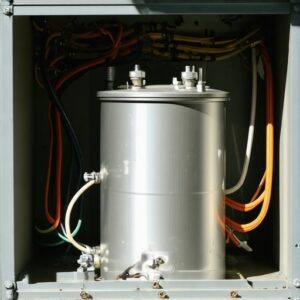
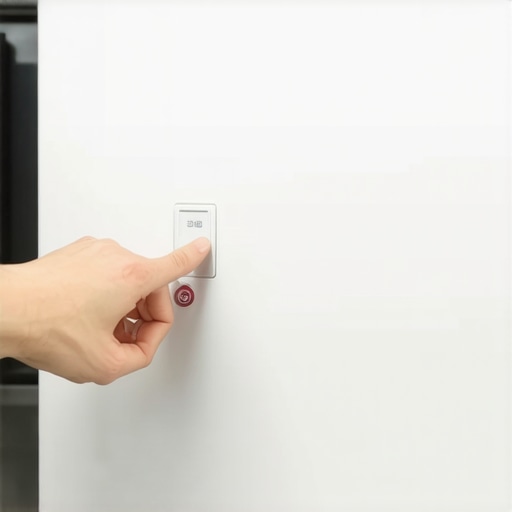
Before you go looking for the ‘reset button’ (which, by the way, usually only exists on oil burners or as a tiny speck on a control board), follow this forensic path. First, check your thermostat. Many high-end thermostats lose their programming or revert to a ‘delay’ mode after a power loss. If the screen is blank, your 24V transformer might be toasted. Second, head to the breaker panel. Don’t just look at the furnace breaker—flip it all the way to ‘OFF’ and then back to ‘ON.’ Breakers can trip without moving the handle to the center. Third, check the service switch on the side of the furnace. It looks like a light switch. Often, in the dark, people bump it or ‘Sparky’ did something weird with the circuit. If the unit has power but isn’t firing, look through the little sight glass on the bottom door. You’re looking for a blinking LED. That’s the furnace’s way of talking to you. A code like ‘three red flashes’ usually means a pressure switch stuck open or a limit circuit lockout.
“A furnace that fails to reset is often a system protecting itself from a catastrophic failure of the heat exchanger or a venting blockage.” – ASHRAE Standards
When a Reset Isn’t Enough: Repair vs. Replace
If you’ve cycled the power and the inducer motor (the small fan that clears the exhaust) starts spinning, but you never get an orange glow from the igniter, you’re looking at a mechanical failure. In our trade, we call the ‘Sales Techs’ the guys who walk in, see a dead igniter, and tell you that you need a $15,000 new unit because the ‘gas is old’ or some other nonsense. Total garbage. A hot surface igniter is a wear item, like spark plugs in a car. However, if your furnace is over 15 years old and the power surge coincides with a cracked heat exchanger (which we find by looking for ‘flame rollout’ or soot near the burners), then it’s time to talk about a new AC installation and furnace combo. Modern units have much higher AFUE (Annual Fuel Utilization Efficiency) ratings. We’re talking 96% efficiency versus the old 80% ‘tin cans’ that wasted 20 cents of every dollar up the chimney. If you are tired of the ‘gas’ (refrigerant/fuel) bills, this might be the moment to look at a dual-fuel system where a high-efficiency heat pump handles the mild days and the furnace only kicks in when it’s ‘polar vortex’ cold.
The Airflow Manifesto: Don’t Kill Your System
A power outage reset is a great time to check the one thing everyone ignores: the filter. I’ve seen 1-inch pleated filters so clogged with pet hair and ‘Pookie’ (mastic) dust that the furnace couldn’t breathe. When the power comes back on and the furnace tries to ramp up to heat a cold house, it will overheat in ten minutes because of low airflow. ‘Static pressure’ is the silent killer of blowers. If you have one room that’s always cold, closing the vents in that room actually makes your furnace work harder and more likely to trip a limit switch during a restart. Keep your vents open, keep your filter clean, and if the furnace won’t reset after three tries, stop. You’re just dumping raw gas into the combustion chamber or wearing out the igniter. At that point, you need a pro to check the manifold pressure and the gas valve’s solenoid. Heating is physics, and physics doesn’t take a day off just because the power went out.