The Sound of a Thousand-Dollar Drip
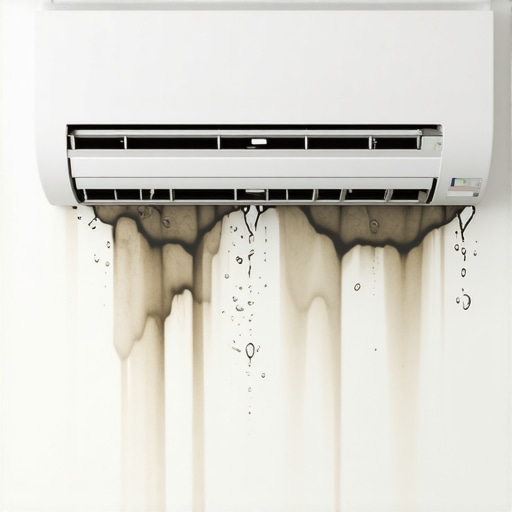
There is a specific sound that makes a seasoned HVAC tech’s skin crawl more than the screech of a dying bearing on a condenser fan. It’s the rhythmic, muffled thump-drip-thump of water hitting a hardwood floor or soaked drywall in the middle of a humid July night. When you invested in a mini-split, you were promised whisper-quiet efficiency and surgical climate control. Nobody mentioned the potential for a localized indoor flood. If you are reading this while staring at a bubbling yellow stain on your paint, you’re witnessing the failure of one of the most basic laws of physics: gravity. But before you call a company to discuss a total AC installation or a brand-new heating service, let’s look at the mechanical anatomy of why these units turn into indoor waterfalls.
The Sales Tech Scam: The Deli Owner’s $12,000 Puddle
I remember following a ‘Sales Tech’—those guys who wear clean white shirts and carry iPads but wouldn’t know a manifold gauge from a toaster—into a local deli last summer. The owner, Bernie, was frantic. His high-wall mini-split was hemorrhaging water over his meat slicer. The previous tech told him the evaporator coil was ‘porous’ and the whole system was junk, quoting him $12,000 for a total replacement. I walked in, pulled the front cover, and found a $5 plastic float switch that had been jammed by a clump of ‘pookie’—duct mastic—left behind by the original ‘tin knocker’ who installed it. I cleared the line, reset the switch, and Bernie was back in business for the cost of a service call. That ‘Sales Tech’ wasn’t looking for a furnace repair or a fix; he was looking for a commission. Understanding your system’s drainage is your best defense against that kind of predatory behavior.
Thermodynamic Zooming: How Humidity Becomes a Hazard
To understand why your mini-split is leaking, you have to understand what it’s actually doing. It doesn’t just ‘make cold.’ It removes heat and, more importantly, latent heat (humidity). When that 410A ‘juice’ (refrigerant) expands inside your evaporator coil, the temperature of the copper and fins drops well below the dew point of the indoor air. As the blower pulls warm, humid air across that coil, the moisture in the air undergoes a phase change, turning from a gas into liquid water. This is exactly like a cold beer can sweating on a porch in Savannah. On a high-humidity day, a single mini-split head can pull gallons of water out of the air. That water has to go somewhere. It collects in a narrow plastic trough called the drain pan, which then funnels into a 5/8-inch drain line. If that line is off by even a fraction of an inch in pitch, or if the ‘suction line’ isn’t insulated properly, you have a disaster waiting to happen.
“The most expensive equipment in the world cannot overcome a bad duct system or improper condensate management.” – Industry Axiom
The Anatomy of the Backup: Sludge, Slope, and Slime
In a mini-split, the drainage system is its Achilles’ heel. Unlike a traditional furnace repair where you have a massive cabinet and a wide 3/4-inch PVC drain, a mini-split is a masterclass in cramped engineering. There are three primary reasons your wall is currently a sponge. First is the ‘Biological Factor.’ Because that drain pan stays damp, it becomes a petri dish for Zooglea—a thick, snot-like microbial slime. This sludge thrives on the dust that bypasses cheap filters. Second is the ‘Pitch Problem.’ Mini-splits are often gravity-drained. If the unit was mounted even slightly out of level, or if the drain hose behind the wall has a ‘belly’ or a trap in it, the water will back up into the pan and overflow. Third is the ‘Condensate Pump Failure.’ If your unit is mounted on an interior wall where gravity drainage isn’t possible, there is a tiny, vibrating pump hidden in the casing. These pumps are notorious for failing, and when they do, the water has nowhere to go but down your wallpaper.
The Climate Context: Why Humid Zones Suffer More
If you live in a high-humidity region, your mini-split is working double duty as a dehumidifier. In these zones, the ‘Short Cycling’ of an oversized unit can actually lead to more drainage issues. If the unit is too big, it cools the room so fast that the coil doesn’t stay cold long enough to let the water reach the drain. Instead, the water hangs on the fins and then gets blown off into the room when the fan kicks back on. This is why proper load calculation is more important than raw horsepower. In the humid South, we see ‘Ice Dams’—if the airflow is restricted by a dirty filter, the coil temperature drops below freezing, turning that condensate into a block of ice. When it finally melts, it’s a flash flood that the tiny drain pan can’t handle.
“Condensation must be conveyed from the drain pan to an approved place of disposal to prevent damage to the building’s structural elements.” – ASHRAE Standard 62.2
The Forensic Diagnosis: How to Stop the Leak
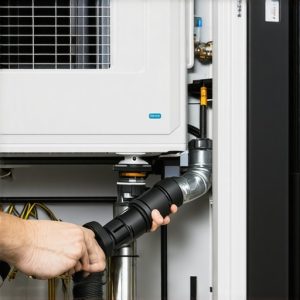
If you’re facing a backup, the first step is to shut down the ‘juice.’ Running the AC while it’s leaking only adds more fuel to the fire. Open the front panel and pull the filters. Are they caked in gray fur? If so, your evaporator coil is likely dirty too, and that dirt is now clogging your drain. Check the drain pan for standing water. If it’s full, you have a blockage. You can sometimes clear these with a shop-vac from the outside termination point, but be careful—if you pull too hard, you can disconnect the internal hose, and then you’re looking at a major AC installation level of repair to fix the hidden leak. If you see a ‘Sparky’ (electrician) has wired the unit but failed to interlock the condensate pump safety switch, that’s a red flag. A properly installed pump should kill the power to the outdoor unit the second the water level gets too high.
The Math: Repair ($300) vs. Drywall Restoration ($3,000)
Many homeowners ignore a small drip, thinking it’s just ‘sweating.’ That is a multi-thousand-dollar mistake. A standard service call to flush a drain line and treat the pan with anti-fungal tablets is relatively cheap. Compare that to the cost of replacing 20 square feet of drywall, remediating black mold, and repainting a room. Furthermore, if water is backing up into the electronics of the indoor head, you risk frying the inverter board—a component that can cost 50% of the price of the entire unit. When we talk about furnace repair or heating service, we focus on gas valves and heat exchangers, but with mini-splits, the humble drain line is the most common point of failure. Don’t let a ‘Sales Tech’ convince you that a clogged pipe requires a whole new system. If the compressor is humming and the ‘Suction Line’ is beer-can cold, the system is fine; the plumbing is just failed.
The Airflow Manifesto: Prevention is Physics
The best way to avoid ruined drywall is to treat your mini-split like the high-performance machine it is. Stop using those ‘one-size-fits-all’ filters if they don’t seal properly. If dust gets to the coil, it creates a mud that will inevitably clog the 5/8-inch drain. Every spring, before the heat hits, pour a cup of distilled white vinegar or a specialized HVAC pan cleaner into the trough. This prevents the ‘Zooglea’ slime from ever taking root. Ensure your ‘Tin Knocker’ or installer used ‘Pookie’ to seal the hole where the lineset goes through the wall; otherwise, warm humid air from the outside will enter the back of the unit, condense on the cold plastics, and drip behind the wall where you can’t see it until the mold starts to smell. Comfort is physics, and physics requires a clear path for the water to leave your home.