The Sound of a Dying Heat Pump
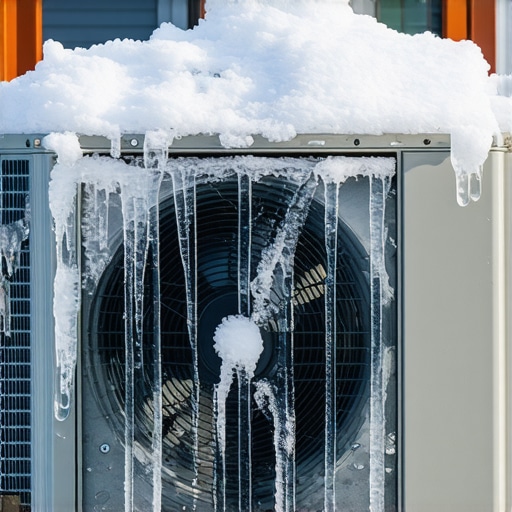
It was 2:00 AM on New Year’s Eve, the thermometer in the yard was shivering at a brutal -8°F, and my phone was screaming. I wasn’t at a party; I was staring at a customer’s outdoor mini-split unit that looked less like a high-tech heating service solution and more like a prop from the movie Frozen. The homeowner was panicked, pointing at a solid six-inch block of opaque ice that had completely engulfed the coil, the fan guard, and was beginning to crush the aluminum fins like a soda can in a vice. The sound was the worst part—a rhythmic, sickening thwack-thwack-thwack as the fan blades clipped the encroaching ice. This wasn’t just a ‘frozen unit.’ This was a thermodynamic failure in progress. Most guys—those fresh-faced ‘Sales Techs’ who only know how to read a brochure—would have looked at this glacier and told the poor guy he needed a $15,000 AC installation to replace the whole system. I didn’t. I grabbed my gauges and my Fluke meter because I know that physics doesn’t lie, even when the equipment is throwing a tantrum.
The Anatomy of the Ice: Understanding Latent Heat
To understand why your mini-split is becoming an ice sculpture, we have to talk about what’s actually happening inside that copper. When you’re in heating mode, your outdoor unit is technically the evaporator. It’s trying to extract heat from the freezing outside air to pump it indoors. This is where most people get confused: they think if it’s 30°F outside, there’s no heat. Wrong. There is heat energy all the way down to absolute zero (-459.67°F). But to grab that heat, the refrigerant inside the outdoor coil has to be even colder than the ambient air. We’re talking 10 to 15 degrees colder. As that freezing juice (refrigerant) circulates through the fins, it drops the temperature of the metal below the dew point. If there is even a breath of moisture in the air, it condenses on those fins. Because the coil is below 32°F, that condensation turns into frost. This is normal. What isn’t normal is when that frost doesn’t go away and turns into a thick, suffocating ice jacket.
“The most expensive equipment in the world cannot overcome a bad duct system or a failure to respect the laws of thermodynamics during low-ambient operation.” – Industry Axiom
The Forensic Diagnosis: Why the Defrost Failed
Every mini-split is supposed to have a built-in ‘self-preservation’ mode called the defrost cycle. Think of it as a temporary furnace repair for the outdoor unit. The system is designed to periodically reverse itself—turning back into an air conditioner for a few minutes—to send hot gas into the outdoor coil and melt the frost. If your unit is a block of ice, that process has broken down. Here is the forensic breakdown of the usual suspects. First, we look at the thermistors. These are little resistors that change their electrical resistance based on temperature. If the coil thermistor is out of whack, it tells the control board the coil is at 40°F when it’s actually at 15°F. The board thinks everything is fine, so it never triggers the defrost. I’ve seen sparky (the electrician) mistakes where the communication wire is picking up interference, but 90% of the time, it’s a failed sensor or a stuck reversing valve. The reversing valve is the heart of the system; if that internal slider doesn’t move, the hot gas never reaches the ice.
The Math of the Repair: Is It Worth It?
When I find a frozen mini-split, I have to weigh the options for the homeowner. If the unit is encased in ice because the refrigerant charge is low—meaning there’s a leak—we’re looking at a serious conversation. A ‘starved’ evaporator coil will run much colder than it should, causing flash-freezing of any moisture it touches. If you have a leak in a ten-year-old system using R-410A, you’re looking at high costs for the gas alone, not to mention the labor to find the hole. However, if it’s just a $200 sensor or a $400 control board, you fix it. You don’t let a Sales Tech talk you into a full replacement because of a component failure. But, if the compressor has been slugging liquid refrigerant because the ice was so thick it couldn’t evaporate the juice, the internal valves might be toast. That’s when we talk about a new AC installation. You have to look at the ‘Static Pressure’ of your wallet versus the longevity of the machine.
“Proper refrigerant charge and airflow are the dual pillars of heat pump longevity; neglect one, and the other will inevitably fail the compressor.” – ACCA Manual J Supplement
The Climate Context: The Polar Vortex Problem
In the North, we deal with a specific type of icing called ‘Refreeze.’ This happens when the unit successfully defrosts, the water drips down, but the drain holes in the bottom of the pan are plugged with dirt or ‘Pookie’ (mastic). That water freezes in the pan, the next defrost adds more water, and eventually, the ice builds from the bottom up until it hits the fan blades. This is why I always tell my customers: keep the unit off the ground. If your mini-split is sitting on a pad in the dirt in Chicago or Maine, you’re asking for a glacier. It needs to be on a stand—at least 12 to 24 inches up—so the defrost water has somewhere to go. I’ve spent more hours than I care to admit with a pressurized steamer, melting ice off units just because a tin knocker or an amateur installer didn’t think about drainage. If the moisture can’t leave the cabinet, the cabinet becomes an ice tray.
Preventive Maintenance vs. The Scam Tune-Up
The best way to avoid a 3 AM emergency heating service call is simple: clean your damn coils. A dirty coil reduces the ability of the refrigerant to exchange heat with the air. This forces the system to run longer and colder, which accelerates ice buildup. Don’t fall for the ‘Sales Tech’ tune-up where they just spray some foam and leave a $100 bill. You want a tech who checks the thermistor resistance against the manufacturer’s chart and ensures the ‘Suction Line’ is behaving as it should. If you see frost, don’t panic. If you see a block of ice that obscures the metal fins, turn the unit off and call a veteran. Running an iced-up unit is the fastest way to kill the most expensive part of the system: the inverter compressor. We are in a transition period with new refrigerants like R-454B coming in 2025, and equipment prices are only going up. Taking care of the unit you have today isn’t just a good idea; it’s a financial necessity. Comfort isn’t a miracle; it’s just physics, and physics requires a clear path for airflow.