The Smell of a Failing System and the Physics of Neglect
I’ve spent thirty-five years crawling through attics that would cook a Thanksgiving turkey and basements that felt like a damp tomb. After three decades, your nose becomes a precision diagnostic tool. When you walk into a room and smell that sour, metallic, wet-sock odor, you aren’t just smelling dirt; you’re smelling the failure of thermodynamics. Most people think their mini-split is a ‘magic box’ that creates cold air. It doesn’t. It’s a heat mover. And if your evaporator coils are caked in a biofilm of dust and skin cells, you aren’t moving heat—you’re just wasting money. In my experience, 90% of the units I see that ‘aren’t cooling like they used to’ don’t need more juice. They don’t need a new compressor. They need a technician who understands that airflow is the lifeblood of the system. But the ‘Sales Techs’ out there won’t tell you that; they’d rather quote you a $6,000 AC installation because they get a 10% commission on the hardware.
The Forensic Diagnosis: Why Your Mini-Split is Wheezing
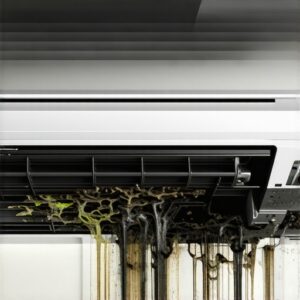
Let’s talk about the ‘Ghost Leak’ scenario. Last August, I followed a guy from one of those big-box HVAC companies to a house in the suburbs. He had told a young couple that their three-year-old mini-split had a micro-leak in the evaporator and that the ‘gas’ (refrigerant) was low. He quoted them for a full unit replacement. When I arrived, I pulled the plastic casing off. The evaporator coil wasn’t leaking; it was suffocating. The aluminum fins were so clogged with pet hair and kitchen grease that the suction line was freezing up, mimicking the symptoms of low refrigerant. I spent forty-five minutes doing a deep clean, and the Delta-T (the temperature difference between the return and supply air) jumped from a pathetic 8 degrees to a crisp 22 degrees. Total cost to the customer? A fraction of that new unit quote. This is why you need to understand the anatomy of your system before you let a ‘Sparky’ or a Sales Tech near your wallet.
“Maintenance of heat transfer surfaces is essential to ensure the designed energy efficiency of the system is maintained throughout its life cycle.” – ASHRAE Standard 180
Thermodynamic Zooming: How a Dirty Coil Kills Efficiency
To understand why you need to clean your coils, you have to understand latent heat. In a humid climate, your mini-split isn’t just lowering the air temperature (sensible heat); it’s stripping water out of the air (latent heat). As the warm, humid room air passes over the freezing evaporator fins, the temperature drops below the dew point. Water condenses on the fins and runs into the drain pan. If your fins are dirty, that water gets trapped. It creates a swampy ecosystem where mold thrives. This ‘biofilm’ acts as an insulator. Instead of the refrigerant inside the copper tubes absorbing the heat from your room, it stays cold and travels back to the compressor as a liquid. We call this ‘slugging,’ and it’s a death sentence for a compressor. A clean coil ensures that the boundary layer of air is stripped of its heat efficiently, keeping the ‘gas’ in a gaseous state and your compressor happy.
The Mess-Free Method: The Veteran’s Way
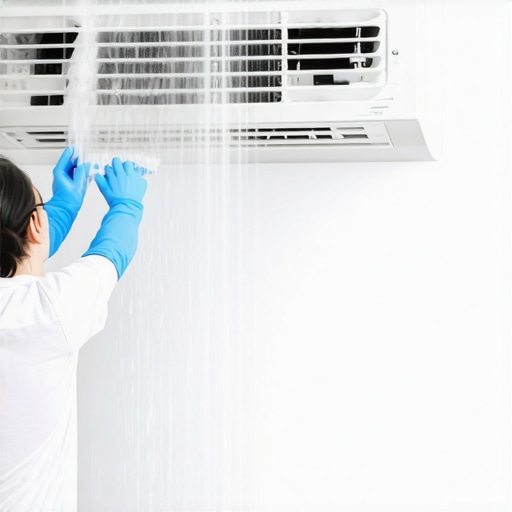
Most DIYers are terrified of cleaning their mini-split because they think they’ll ruin their drywall or short out the control board. Here is how you do it without making a disaster. First, kill the power at the disconnect. Don’t just turn it off with the remote; you don’t want the fan motor kicking on while your hands are in there. You’re going to need a ‘Bib Kit’ or a ‘Clean Guard.’ This is a specialized plastic funnel that clips onto the wall-mounted unit and drains into a five-gallon bucket. Forget using a spray bottle and a rag; you need volume to flush the gunk out of the back of the coil. Use a non-acidic, alkaline-based coil cleaner. Acidic cleaners (the bright pink stuff) eat away the aluminum over time, which is a rookie mistake. Spray the cleaner deep into the fins, let it sit for five minutes to break down the grease, and then use a pressurized water sprayer—not a pressure washer, which will flatten your fins like a pancake—to rinse it from the top down. Watch the bucket. The black sludge you see coming out? That was your ‘bad AC’ problem.
“The most expensive equipment in the world cannot overcome a bad duct system or restricted heat exchange surfaces.” – Industry Axiom
Static Pressure and the Blower Wheel
While you’re in there, look at the blower wheel (the long cylindrical fan). If the tips of those fan blades have even 1/16th of an inch of dust, your static pressure is shot. The fan has to work twice as hard to move half the air. This leads to the motor overheating and eventually failing. I’ve seen ‘Tin Knockers’ argue about duct design for hours, but in a ductless mini-split, the ‘duct’ is the unit itself. Use a small brush to knock the heavy stuff off the wheel before you rinse it. If you skip the wheel, you’re only doing half the job. Once it’s clean, treat the coil with a pan tablet to prevent algae growth in the condensate line. This prevents the dreaded ‘Pookie’ (mastic/slime) buildup that leads to water dripping down your wall.
The Reality of Professional Maintenance
If you’re in a high-humidity zone, this isn’t an optional ‘spring cleaning’ task. It’s a survival tactic for your equipment. Oversized units are especially prone to this; they ‘short cycle,’ meaning they turn off before they’ve had a chance to properly drain the moisture from the coils, leaving them perpetually damp. If you don’t feel comfortable doing this yourself, call a local shop for a heating service or AC installation check-up, but tell them specifically you want a ‘chemical coil cleaning.’ If they show up with just a vacuum, send them packing. You can’t vacuum out the deep-seated biological growth that lives in the center of those fins. Real maintenance is messy, technical, and requires an understanding of psychrometrics, not just a sales pitch. Keep your airflow high, your coils clean, and your juice inside the lines, and that mini-split will outlast your mortgage.