The $12,000 Hole in the Wall
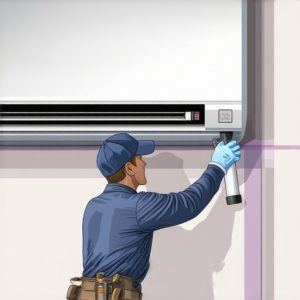
Last February, I got called out to a house in the suburbs where a ‘Sales Tech’ from one of those big-box franchises had just finished telling a homeowner she needed a full furnace repair and a complete replacement of her upstairs mini-split. His reasoning? ‘The unit is undersized, ma\’am. It can\’t keep up with the load.’ He quoted her $12,000 for a new system. I walked in, felt the draft near the indoor head, and pulled the unit off its bracket. Behind it was a three-inch hole leading straight to the freezing outdoors, stuffed with nothing but a raggedy piece of old fiberglass insulation. The wind was blowing directly onto the unit’s return air thermistor, tricking the computer into thinking the room was 40 degrees colder than it actually was. A $10 can of high-expansion foam and some ‘Pookie’ (mastic) saved that woman twelve grand. This is why I hate sales techs; they don’t understand physics, they only understand commissions.
Airflow is the King of Comfort
You can buy the most expensive, high-SEER Japanese inverter on the market, but if you don’t respect the building envelope, you\’re just pissing ‘juice’ (refrigerant) into the wind. Most mini-split installations fail not at the compressor or the flare fittings, but at the wall penetration. When a ‘tin knocker’ or a ‘sparky’ runs that line set through your siding, they leave a massive gap. If that gap isn’t sealed, you’ve created a thermal bridge that invites the ‘Stack Effect’ to ruin your day. In the winter, warm air rises and escapes through your attic, sucking cold, dry air through that unsealed hole behind your mini-split. This doesn’t just make the room cold; it creates a condensation point inside your wall cavity where mold loves to breed.
“Proper sealing of all penetrations through the building envelope is mandatory to maintain the integrity of the pressure boundary.” – ACCA Manual J
Thermodynamic Zooming: The Latent Heat Nightmare
Let’s talk about the physics of that hole. When you have an unsealed penetration in a humid climate, you aren’t just letting in heat; you’re letting in latent heat (moisture). Your mini-split evaporator coil is designed to drop below the dew point to pull humidity out of the air. When raw, humid outdoor air leaks in directly behind the head unit, it bypasses the filtration and hits the back of the coil or the drain pan. This leads to the ‘sweat’ that causes water to run down your wallpaper. It messes with the sensible heat ratio, forcing the compressor to work twice as hard to achieve the same perceived cooling. You think you need an AC installation upgrade, but you actually just need to seal your gaps.
Step-by-Step: Sealing the Line Set Hole
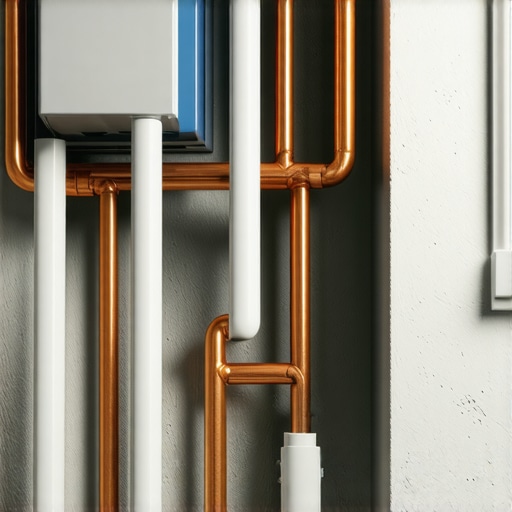
First, get rid of those cheap plastic wall caps that come in the kit. They’re just for show. You need to seal the interior and the exterior. Inside, behind the mounting plate, use a high-quality silicone or a specialized wall sleeve. If the hole is oversized, use closed-cell spray foam, but be careful—over-expanding foam can put pressure on the drain line and cause a backup. Outside, where the line set exits the structure, you need to apply a thick layer of HVAC mastic, often called ‘Pookie.’ This stuff stays flexible and won’t crack when the copper pipes vibrate or expand and contract with the temperature of the gas. Cover the mastic with a UV-rated line set cover (Slimduct) to protect the insulation from birds and sun rot. If you’re doing a furnace repair or heating service at the same time, check your vent penetrations too; the physics are the same.
“Air leakage is often the single largest cause of energy loss in residential buildings.” – ASHRAE Standard 90.1
The Physics of the ‘Beer Can Cold’ Suction Line
When I check a system, I’m looking for that suction line to be ‘beer can cold’ and properly insulated all the way through the wall. If air is leaking into the penetration, it warms the copper before it reaches the coil, reducing the efficiency of the entire refrigeration cycle. This is why ‘topping off the Freon’ is a scam. If the system is low, it has a leak. If it\’s not cooling, it\’s likely an airflow or insulation issue. Don’t let a sales tech talk you into a new unit until you\’ve checked that three-inch hole behind the head. Comfort isn’t magic; it’s the management of air pressure and thermal transfer.