The Sound of a Silent House: A Forensic Investigation
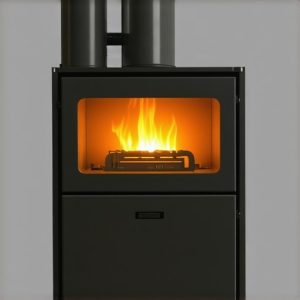
The silence is what gets you first. It is 3 AM on a Tuesday in the middle of a February freeze in Minnesota, and that rhythmic whir of your inducer motor has vanished. You walk down to the basement, expecting the warmth of a reliable furnace repair, but instead, you find a cold, dead box. You cycle the power, flicking the service switch on and off, but the control board remains as dark as a coal mine. This is where most people panic. This is where the ‘Sales Techs’—those guys who carry a clipboard more comfortably than a multimeter—start smelling commission. They see a dark board and immediately tell you that the brain of your system is fried and you need a $15,000 unit replacement or a $1,200 board swap. But I have been in this game for 30 years, melting in summer attics and losing feeling in my fingers in winter crawlspaces, and I am here to tell you: check the 3-amp fuse first.
The Narrative: The Case of the Commission-Breath Technician
I remember following one of these ‘comfort advisors’—that is the fancy name corporate firms give their high-pressure salesmen—on a job during a polar vortex. A sweet couple was huddled around a space heater because their furnace had given up the ghost. The previous tech had spent ten minutes in the basement before declaring the control board ‘digitally compromised’ and handed them a quote for a full furnace and AC installation. I stepped in, opened the blower compartment, and saw it immediately. The little purple 3-amp automotive fuse on the board was scorched. A $5 part. I tracked the short to a thermostat wire that had been rubbed raw against a sharp edge of the return plenum—the work of a sloppy ‘tin knocker’ from years ago. I wrapped the wire in electrical tape, popped in a new fuse, and the inducer motor roared to life instantly. The ‘Sales Tech’ was long gone, but the acidic smell of his greed still lingered. That is why I do what I do; because airflow is king and physics does not lie.
The Mechanical Anatomy: The Brain and the Nervous System
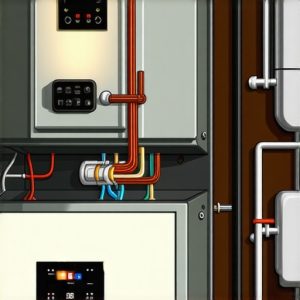
Your furnace control board, or the Integrated Furnace Control (IFC), is essentially a traffic cop. It manages the sequence of operations through a series of relays and logic gates. When the thermostat calls for heat, the board sends ‘juice’ to the inducer motor. This motor clears the heat exchanger of any residual gases and creates a negative pressure. This is not just mechanical movement; it is thermodynamic safety. If the pressure switch does not ‘make,’ the board stops the process to prevent carbon monoxide from backing up into your home. Once the switch confirms airflow, the board energizes the igniter—usually a silicon carbide or silicon nitride element—until it glows a brilliant orange, hitting temperatures that would make a welder blink. Then, the gas valve clicks open. The flame sensor, a simple stainless steel rod, uses a process called flame rectification to tell the board, ‘Yes, we have fire.’ Only then, after the heat exchanger has warmed up to prevent a cold draft, does the board kick on the blower motor. If that 3-amp fuse is blown, this entire nervous system is paralyzed. No heartbeat, no heat.
“The most expensive equipment in the world cannot overcome a bad duct system.” – Industry Axiom
The 3-Amp Fuse: The $5 Savior
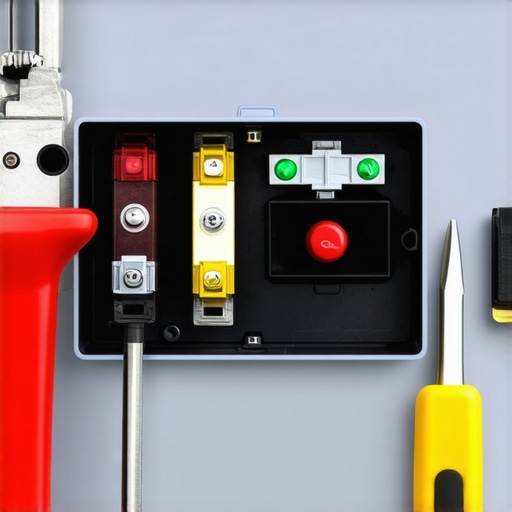
Why does this fuse exist? It is there to protect the 24-volt transformer from a low-voltage short. If a ‘sparky’ or a previous technician was careless, or if a mouse chewed through your low-voltage wiring, the surge would normally fry the transformer or the board itself. The fuse takes the hit instead. Most modern boards use a standard automotive blade fuse (the purple ones are 3-amp, the tan ones are 5-amp). If you see that your board has no LED lights—not even a heartbeat flash—pull that fuse. Hold it up to the light. If the metal bridge inside is broken, you have found your culprit. But here is the catch: fuses do not just die of old age. They die for a reason. If you replace it and it pops again immediately, you have a short in your contactor coil, your thermostat wire, or the board itself is internally shorted. This is where real heating service begins, not just part-changing.
Thermodynamic Zooming: Why Efficiency Matters
In the North, where we live and die by our AFUE (Annual Fuel Utilization Efficiency) ratings, we are often pushing these systems to their limits. An 80% furnace vents through a metal chimney, losing 20% of its sensible heat up the flue. A 96% high-efficiency unit uses a secondary heat exchanger to pull latent heat out of the combustion gases, turning water vapor into liquid condensate. This is why you see PVC pipes instead of metal vents. If your furnace is short-cycling—turning on and off rapidly—it might not be the board. It could be that your ductwork is too small, causing the high-limit switch to trip because the heat exchanger cannot shed its thermal load. As we say in the trade, ‘You cannot cool—or heat—what you cannot touch.’ If the air cannot get across that metal, the system will commit suicide to save itself from melting.
“Residential heating equipment must be sized to meet the calculated heat loss of the structure at the outdoor design temperature.” – ACCA Manual S
Repair ($500) vs. Replace ($8,000): When to Pull the Plug
Is your furnace 15 years old with a failed control board? If it is just a fuse or a single relay, fix it. But if the heat exchanger is showing signs of ‘flame rollout’ or heavy rusting, you are looking at a carbon monoxide factory. I have seen ‘tin knockers’ try to patch these things with ‘pookie’ (mastic), but that is a death sentence. When considering a new furnace or a mini-split for those hard-to-reach rooms, remember that the brand name on the box matters less than the guy who installs it. A Trane, Carrier, or Goodman will all fail if the static pressure is too high because the return air drop was sized for a closet instead of a house. If you are moving toward a mini-split, you are entering the realm of inverter technology, where the boards are far more complex than a simple 3-amp fuse setup. Those systems are delicate; they need clean power and ‘juice’ (refrigerant) levels that are precise to the ounce.
The Airflow Manifesto
Most comfort issues are not equipment issues; they are physics issues. If your second floor is a sauna while your basement is a meat locker, no control board change will fix that. You need to look at your static pressure. If your blower motor is fighting against restrictive filters or crushed flex ducts, it will draw more amps, run hotter, and eventually burn out. It is like trying to run a marathon while breathing through a cocktail straw. Proper heating service involves checking the temperature rise across the heat exchanger and ensuring the suction line is ‘beer can cold’ during the summer months. Do not let a salesman talk you into a variable-speed ‘super-system’ if your ducts are leaking 30% of your conditioned air into the attic. That is like putting a Ferrari engine in a lawnmower.
Conclusion: Trust the Physics, Not the Pitch
Next time your furnace fails, do not just reach for your wallet. Put on your headlamp, pull the door off the blower compartment (make sure to hold the door switch in), and look at that little purple fuse. If it is blown, you might have just saved yourself $10,000. Real HVAC work is about understanding the relationship between air, heat, and electricity. It is about knowing that ‘gas’ is not just something you top off—it is a vital component of a sealed thermodynamic cycle. Stay cynical, keep your coils washed, and never trust a tech who does not have some pookie on his work pants. “, “image”: {“imagePrompt”: “A close-up, high-detail photo of a purple 3-amp automotive fuse held between two grease-stained fingers in front of a blurry furnace control board with wires and relays. The lighting is dim, resembling a basement setting, with a flashlight beam illuminating the broken filament inside the fuse.”, “imageTitle”: “Blown 3-Amp Furnace Fuse Diagnosis”, “imageAlt”: “A technician inspecting a blown 3-amp fuse from a furnace control board to identify a low-voltage short.”}, “categoryId”: 0, “postTime”: “”}