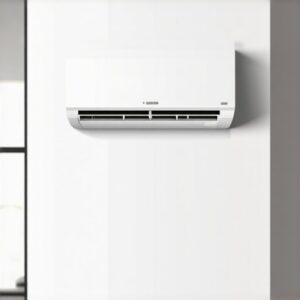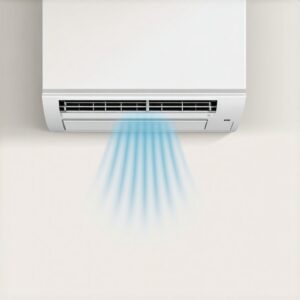
The Silent Assassin of Productivity: Why Your Office HVAC is Screaming
You are sitting there, mid-sentence in a high-stakes video call, and suddenly it sounds like a 747 is taxiing through your spare bedroom. That is the sound of a traditional HVAC system—or a poorly installed mini-split—fighting against the laws of physics. As a tech who has spent three decades dragging my bones through crawlspaces and wrestling with furnace repair calls in the dead of a Great Lakes winter, I can tell you: comfort shouldn’t have a soundtrack. In my thirty years, I have seen too many ‘Sparkies’ try to moon-light as HVAC guys, and the result is always a rattling, whistling mess that drives homeowners to the brink of insanity.
The Airflow Manifesto: Lessons from the Old Guard
My old mentor, a man who could diagnose a bad contactor by the smell of the ozone alone, used to scream at me, ‘You can’t cool what you can’t touch, and you can’t hear what you’ve actually balanced!’ This is why airflow matters more than horsepower. He’d grab me by the collar of my greasy uniform and point at a vibrating duct. ‘That’s not cooling, kid. That’s a mechanical failure waiting to happen.’ In the world of high-efficiency heating service and AC installation, the biggest lie told to consumers is that ‘bigger is better.’ It isn’t. In a home office, ‘smaller and smarter’ is the secret to that elusive silence.
“The most expensive equipment in the world cannot overcome a bad duct system or improper load calculation.” – Industry Axiom
Thermodynamic Zooming: The Physics of the Whisper
To understand why a mini-split is the king of the home office, we have to look at the evaporator coil. In a standard AC installation, the system is either 100% on or 100% off. When it kicks on, the sudden rush of ‘juice’ (refrigerant) into the coil and the immediate high-speed fan engagement creates a wall of sound. A mini-split, however, uses an inverter-driven compressor. Think of it like a dimmer switch versus a standard light switch. It doesn’t just slam on; it ramps up. It removes latent heat—that’s the sticky humidity that makes your skin crawl—by keeping the coil just below the dew point for longer periods. By avoiding the ‘short cycle,’ we keep the fan speeds low and the decibels even lower. When you are doing a mini-split install, you are managing sensible heat (temperature) and latent heat (moisture) with surgical precision.
The North Zone Challenge: Heat Pumps vs. The Polar Vortex
In cold climates like Chicago or the Northeast, the home office often becomes a meat locker because the central furnace repair was done by someone who didn’t understand ‘static pressure.’ They added a vent to the office but didn’t add a return. Now, the room is pressurized, and no new air can get in. A mini-split bypasses this entire ‘tin knocker’ nightmare. However, in the North, we deal with the ‘defrost cycle.’ This is where the outdoor unit reverses its cycle to melt ice off the coils. If the unit isn’t mounted on a proper snow stand or if the lineset isn’t sealed with enough ‘pookie’ (mastic), that vibration will telegraph right through the wall studs into your ears while you’re trying to type. You need a tech who understands that a heat pump in 10-degree weather is a different beast than one in a temperate zone.
The ‘Secret’ is in the Mounting and the Gas
The real secret to quiet operation isn’t just the brand of the unit; it’s the installation mechanics. First, the ‘suction line’—that’s the larger copper pipe—needs to be ‘beer can cold’ when running in cooling mode, but it also needs to be isolated. If that copper touches a wooden stud, it acts like a tuning fork. I’ve gone behind ‘Sales Techs’ who quoted a $10,000 replacement for a ‘noisy’ unit when all I had to do was insert a $2 rubber grommet to stop the resonance. Second, the refrigerant charge (the ‘gas’) must be exact. If a system is overcharged, the compressor will labor and growl. If it’s undercharged, you’ll hear a ‘hissing’ sound at the head unit, which is the sound of liquid refrigerant ‘flashing’ into a gas too early. It’s a sound that tells an experienced tech the system is starving.
“Design for the total external static pressure of the system, including the internal resistance of the coils and filters.” – ACCA Manual D
Why Your ‘Sales Tech’ Wants You to Fail
I despise the modern ‘Sales Tech’ model. These guys show up in clean uniforms with iPads and try to sell you a whole new system because a capacitor died. They don’t want to fix your airflow; they want their commission. When you’re looking at a mini-split for an office, they’ll try to oversell the BTU capacity. An oversized unit in a small office will ‘short cycle.’ It will blast the room with cold air, shut off before it pulls the humidity out, and then kick back on ten minutes later. That constant on-and-off is what ruins your concentration. You want a unit that stays in a low-frequency ‘cruise’ mode. That is how you achieve the 19-decibel rating that the manufacturers brag about.
The Final Diagnosis: Maintenance and Longevity
Finally, let’s talk about the blower wheel. In a mini-split, the fan is a long, cylindrical barrel. If you don’t get a regular heating service or AC checkup, dust builds up on the leading edge of those tiny blades. This throws the wheel out of balance. Now, instead of a whisper, you have a rhythmic ‘thump-thump-thump’ that no amount of white noise can drown out. Keep your filters clean and ensure your ‘tin knocker’ or HVAC tech actually pulls the cover to inspect the wheel. Comfort is physics, not magic. It’s about managing pressures, temperatures, and vibrations until the machine disappears and only the environment remains.