How to Vet an AC Installer for a Multi-Zone System: The Expert Guide
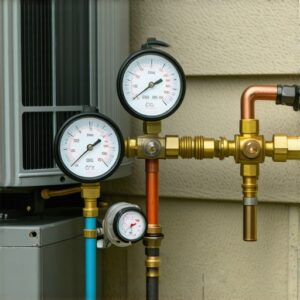
I followed a so-called ‘Senior Comfort Advisor’ last February in a suburb just outside of Chicago. A homeowner, let’s call her Mrs. Gable, was shivering in a house where the upstairs was a meat locker and the downstairs felt like a sauna. The sales tech—who wouldn’t know a manifold gauge from a toaster—had already written a quote for a $22,000 multi-zone system replacement. He told her the furnace heat exchanger was ‘stressed’ and the AC was ‘tired.’ I spent twenty minutes in the crawlspace and found a disconnected 10-inch flex duct and a stuck damper actuator. A $300 fix saved her $21,700. That is the reality of this trade. If you are looking for an AC installation or a heating service for a multi-zone setup, you are entering the most technically demanding arena of residential HVAC. Most guys are just box-mounters; they can swap a unit, but they can’t balance a system to save their lives.
The Airflow Manifesto: Why Zoning Is Physics, Not Magic
In a multi-zone system, the biggest enemy is static pressure. Think of your ductwork like arteries. When a zone damper closes because the master bedroom is satisfied, the furnace repair issues of the future are born. That air has to go somewhere. If your installer doesn’t understand ‘Total External Static Pressure’ (TESP), they are going to kill your compressor. When you restrict airflow, the evaporator coil temperature plunges. If it drops below the dew point too aggressively without proper volume, it freezes. You end up with a block of ice in your plenum and a suction line that isn’t ‘beer can cold’ but rather ‘solid ice block.’ This is why I tell people that the tin knocker who designs the ductwork is more important than the brand name on the condenser.
“The most expensive equipment in the world cannot overcome a bad duct system.” – Industry Axiom
Thermodynamic Zooming: The Latent Heat Struggle
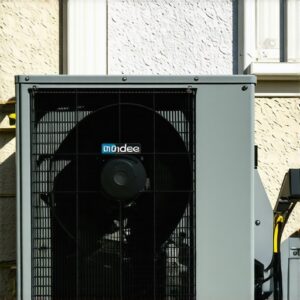
In our climate, we deal with massive temperature swings. A multi-zone system must handle sensible heat (the temperature you see on the thermostat) and latent heat (the humidity that makes your skin crawl). In a multi-zone AC installation, the equipment needs to modulate. If the installer suggests a single-stage 5-ton unit for a three-zone house, run away. When only one zone calls for cooling, that 5-ton monster will ‘short cycle.’ It will satisfy the temperature in five minutes, but it won’t run long enough to pull the moisture out of the air. You’ll be left with a ‘cold swamp’ effect. You need variable-speed blowers and multi-stage compressors that can ramp down to 25% capacity. This is where mini-split technology often wins because each head is its own evaporator, allowing for true independent control without the ductwork headaches.
The Multi-Zone Vetting Checklist
When interviewing a contractor for a complex heating service or AC overhaul, ask them these specific questions to see if they are a real tech or just a guy in a clean shirt. First, ask for the Manual J and Manual D calculations. If they say, ‘I’ve been doing this 20 years, I can size it by square footage,’ show them the door. Square footage doesn’t account for window U-factors, ceiling heights, or insulation R-values. Second, ask how they handle the excess air when only one zone is active. If the answer is just a ‘bypass damper’ dumped back into the return, they are taking the easy way out. A bypass damper can overheat a furnace repair job in the winter by recycling hot air back over the heat exchanger, potentially cracking it and leaking carbon monoxide.
“Standard 62.2-2019 defines the minimum ventilation requirements for acceptable indoor air quality, which many multi-zone systems fail to meet when improperly balanced.” – ASHRAE Standards
The 2025 Refrigerant Cliff
You need to know that the ‘juice’ is changing. We are moving away from R-410A to A2L refrigerants like R-454B. These new gases are ‘mildly flammable.’ A veteran installer will explain the need for new leak sensors and specialized recovery tanks. If they are trying to dump old R-410A inventory on you without a massive discount, they are clearing their warehouse at your expense. A real pro will discuss the mini-split options that are already ahead of these regulatory curves. They will also talk about ‘Pookie’—the mastic sealant we use to ensure every joint in your multi-zone plenum is airtight. Tape fails; Pookie is forever.
The Verdict on Equipment Brands
I’ve spent nights on rooftops in the middle of a polar vortex fixing heat pumps that couldn’t keep up. For multi-zone systems, the brand matters less than the sparky who wired the control board and the tech who set the dip switches on the blower motor. Whether it’s a Trane, Carrier, or a high-end Mitsubishi mini-split, the logic resides in the zone controller. Ask your installer what brand of zone board they use. If they say ‘Honeywell TrueZONE’ or ‘ZoneFirst,’ they are likely on the right track. If they look confused, they are going to leave you with a system that hunts for a signal while your electric bill skyrockets.