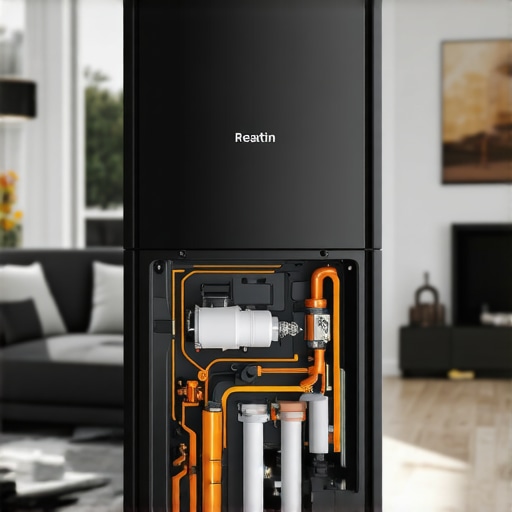
The Anatomy of a Midnight No-Heat Call
Listen, if you are waking up at 3 AM in the middle of a January freeze and your registers are spitting out air that feels like a ghost’s breath, you aren’t just looking at a ‘glitch.’ You are looking at a system that has failed its primary thermodynamic mission. I have spent thirty years in the trade, mostly in the frozen trenches of the Northeast where a furnace failure isn’t a nuisance—it’s a survival situation. I’ve seen furnace repair jobs botched by ‘Sales Techs’ who couldn’t tell a manifold from a manifold absolute pressure sensor, trying to upsell a $12,000 unit when the fix was sitting right in front of them. My old mentor, a grizzly guy who’d forgotten more about combustion than most engineers ever learn, used to scream at me, ‘You can’t heat what you can’t touch!’ He was talking about the boundary layer of air on a heat exchanger, but the logic holds: if the physics of your airflow or the chemistry of your flame is off, you’re just blowing cold air and burning money.
“Residential furnace heat exchangers shall be inspected for cracks, soot, and corrosion that could lead to combustion product leakage into the building air stream.” – ASHRAE Standard 103
1. The Flame Sensor: The $20 Hero
When your furnace starts up, you hear the inducer motor (the ‘lungs’) kick in, you see the glow of the igniter, the gas valve clicks, and you get fire—for about three seconds. Then, click, it’s dead. This is almost always the flame sensor. This little rod of stainless steel doesn’t just ‘see’ the light; it uses a process called flame rectification. It sends a microampere signal through the flame back to the board. If that rod has a microscopic layer of carbon or silica buildup from the gas, the signal fails. The board thinks there’s no fire and shuts the gas off to prevent your house from becoming a crater. In 2026, with the move toward higher-efficiency furnaces and tighter tolerances, these sensors are more sensitive than ever. Cleaning it with a dollar bill is a temporary fix, but by the time it’s failing, you’re better off swapping it for a fresh one during your heating service visit.
2. The Hot Surface Igniter (HSI): The Glowing Heart
If you don’t even get fire, look at the igniter. These are often made of Silicon Nitride or Silicon Carbide. Think of them like the filament in an old lightbulb. They get blasted with 120 volts until they glow white-hot to light the gas. Every time they cycle, they expand and contract. Over hundreds of cycles in a brutal Chicago winter, they develop microscopic cracks. Eventually, the resistance gets too high, or the ‘Sparky’ (electrician) who worked on your panel caused a surge that snapped it. If you see a tiny black smudge on that gray element, it’s toast. Swapping this part is essential for 2026 reliability, especially as we see more intermittent pilot and direct spark systems replacing older standing pilots. [image_placeholder_1]
3. The Inducer Motor: The Guardian of Static Pressure
Before the board allows the ‘juice’ to hit the gas valve, it has to prove that the exhaust is actually leaving the building. That’s the job of the inducer motor. If this motor’s bearings are screeching like a banshee or if the wheel is clogged with bird nests or ‘Pookie’ (mastic) scraps left by a lazy tin knocker, you won’t get heat. In 2026, as we transition to even stricter AFUE (Annual Fuel Utilization Efficiency) ratings, these motors are often variable speed. If they aren’t hitting the exact RPMs required to create the right static pressure, the pressure switch won’t close, and your furnace will just blow cold air from the blower motor trying to ‘clear the air.’ It is a mechanical anatomy lesson in frustration.
4. The Run Capacitor: The Blower’s Invisible Crutch
Even if the fire is burning hot, if the blower motor isn’t spinning at the right speed, you won’t get that heat into the rooms. The blower motor usually relies on a run capacitor to provide the phase shift necessary for torque. Capacitors are like small batteries that wear out. If your capacitor is rated for 10 microfarads but it’s only pushing 6, your motor will run hot, slow, and eventually shut down on internal thermal overload. You’ll feel lukewarm air because the ‘Sensible Heat’ isn’t being moved fast enough off the heat exchanger. This is why a proper AC installation or furnace overhaul always includes a fresh cap.
“The most expensive equipment in the world cannot overcome a bad duct system or failing electrical components.” – Industry Axiom
The 2026 Reality: Repair or Replace?
We are seeing a massive shift in the industry toward mini-split systems for supplemental heating, but for those in cold climates, the furnace remains the backbone. By 2026, the cost of R-410A refrigerant will make old AC installation units look like antiques, but the furnace side is also changing with more electronics and ‘smart’ safeties. If your furnace is 15 years old and the heat exchanger is showing signs of ‘flame rollout’ or soot, don’t let a ‘Sales Tech’ scare you, but do look at the math. A $500 repair on a cracked exchanger is a death wish. Swapping these four parts is preventive medicine, keeping the ‘Gas’ flowing and the air ‘Beer can cold’ (or in this case, toaster hot) when you need it most.