The $12,000 Misunderstanding in the Desert Heat
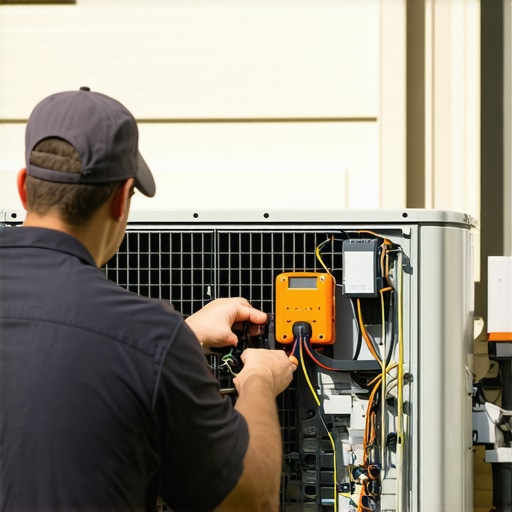
I followed a ‘Sales Tech’—one of those guys with a crisp white shirt and a tablet who’s never actually wiped oil off a manifold gauge—into a home in Scottsdale last July. He’d just quoted a retired schoolteacher $14,800 for a full AC installation because her compressor was ‘dead.’ I walked in, saw the ‘Sparky’ had already disconnected the whip, and pulled the service panel. The compressor wasn’t dead; it was just struggling against 118°F ambient heat and a slight voltage drop from the grid. It was trying to start, humming for three seconds, and tripping the thermal overload. I slapped on a high-quality hard start kit—a $80 part—and that ‘dead’ compressor kicked over and started humming a sweet 14-amp tune. That’s the difference between a technician who understands the physics of a startup and a salesman looking for a commission. As we move into the 2026 regulatory landscape, this distinction is going to cost homeowners thousands if they aren’t careful.
The Thermodynamic Reality of the 2026 Transition
We are currently standing on the edge of the ‘Regulatory Cliff.’ By 2026, the industry will have fully shifted away from R-410A (the ‘Juice’ we’ve used for decades) toward A2L refrigerants like R-454B. These new gases are ‘mildly flammable,’ which means your new AC installation now comes with leak sensors and logic boards that look more like something out of a SpaceX rocket than a cooling box. But here is the problem: while the technology gets more ‘sophisticated,’ the basic physics of the reciprocating or scroll compressor haven’t changed. In high-sensible heat environments like the Southwest, the head pressure on these units during a 2 PM startup is astronomical. If your technician isn’t talking about inrush current and torque, they are failing you.
“Equipment shall be sized according to the heating and cooling loads calculated using ACCA Manual J or another approved methodology.” – ACCA Manual J, Section 1
While Manual J tells us how much heat to remove, it doesn’t account for the brutal mechanical stress of starting a compressor against 400 PSI of pressure.
Why Your New 2026 Unit Needs a Hard Start Kit
A hard start kit is essentially a ‘shot of adrenaline’ for your compressor. It consists of a start capacitor and a potential relay. When the thermostat calls for cooling, the potential relay engages the start capacitor to provide a massive boost of starting torque. Once the compressor reaches about 75% of its rated speed, the relay drops the capacitor out of the circuit. Without it, the compressor windings soak up massive amounts of heat every time they struggle to turn over. In places like Phoenix or Las Vegas, where a unit might cycle 40 times a day, that heat builds up. It degrades the oil, turns it acidic, and eventually leads to the dreaded ‘sour smell’ of a burnout. Modern manufacturers are stripping these kits out of base models to save $30 on their manufacturing costs and to hit specific SEER2 ratings that are tested in controlled labs, not in 115°F reality. If you are getting a new AC installation in 2026, and that quote doesn’t include a factory-authorized hard start kit, you are essentially buying a car without a heavy-duty battery in the middle of a blizzard.
The Airflow Manifesto: Why Horsepower is Irrelevant Without Static Pressure
As a veteran, I’ve seen thousands of furnace repair calls and cooling failures that had nothing to do with the ‘gas’ and everything to do with the ‘Tin Knocker’ who didn’t understand physics. You can put a 5-ton unit on a 3-ton duct system, and all you’ve done is create a very expensive ice machine. The evaporator coil must drop below the dew point to remove latent heat (humidity), but if the airflow is restricted because your return air drop is too small or your ‘Pookie’ (mastic) has dried up and cracked, the pressure imbalances will kill the compressor faster than any heat wave.
“The design of the duct system shall be based on the airflow requirements of the equipment selected.” – ASHRAE Standard 62.2
If your tech doesn’t pull out a manometer to check static pressure during your heating service or AC install, they are just guessing. We see this often with mini-split installs too; people think they are ‘plug and play,’ but if the line set isn’t vacuumed down to 500 microns to remove non-condensables, the ‘Suction Line’ will never get that ‘beer can cold’ feel, and your efficiency goes out the window.
The Hard Truth About 2026 Pricing
Between the new A2L refrigerant requirements and the mandated sensor arrays, the cost of a basic AC installation has nearly doubled in five years. This is why preserving your existing compressor is more vital than ever. If you’re calling for a furnace repair or a seasonal tune-up, ask the tech to measure the ‘Inrush Current’ on your compressor. If that number is spiking, that $80 kit is the best insurance policy you can buy. Don’t let a ‘Sales Tech’ tell you that a struggling compressor is a ‘dead’ one. In this trade, we use our meters, not our sales brochures. Real comfort isn’t about the brand name on the cabinet; it’s about the thermodynamics of the liquid line, the integrity of the ductwork, and ensuring that the compressor has the electrical ‘oomph’ to fight the heat when the sun is trying to melt the shingles off your roof.