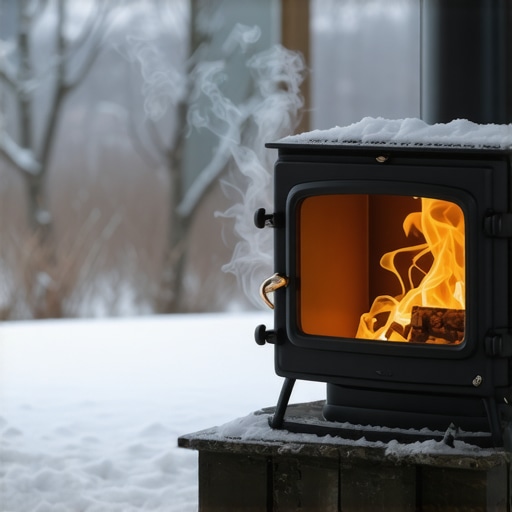
The Anatomy of a Furnace Failure: Why Your Ears Are Your Best Diagnostic Tool
I followed a ‘Comfort Consultant’ last November into a drafty Victorian home where he’d just quoted the owner $14,000 for a full furnace and AC installation. He told her the ‘internal flux capacitor’ was shot—which is funny, because that’s a movie prop, not a HVAC component. I took one look at her inducer motor, found a stray piece of 20-year-old duct tape caught in the wheel, and had the system running in ten minutes. That’s the reality of this trade in 2026; you’ve got guys who can sell ice to a penguin but couldn’t tell you the difference between sensible and latent heat if their lives depended on it.
As we head into the 2026 winter freeze, your furnace isn’t just a box that blows hot air. It is a complex thermodynamic engine. When it starts making noise, it is screaming at you in the language of physics. If you live in the North or Northeast, these noises are often the only warning you get before a cracked heat exchanger starts leaking carbon monoxide or a blower motor gives up the ghost during a polar vortex. Listen close, because ignoring these three sounds is the fastest way to turn your living room into an ice box.
1. The Metal-on-Metal Screech: The Death Rattle of Blower Bearings
If your furnace sounds like a freight train braking on a rusty track, you’re likely hearing the centrifugal force of a blower motor fighting against dry, seized bearings. Most modern motors are permanently lubricated, which is a ‘Sparky’ term for ‘disposable.’ When that lubrication breaks down due to high static pressure or sheer age, the friction generates immense heat. We’re talking about a shaft spinning at 1,200 RPMs; without a thin film of oil, that metal-on-metal contact will weld the motor solid.
This isn’t just a noise issue; it’s an airflow issue. As the motor slows down, the heat exchanger isn’t getting enough air to strip the thermal energy away. This causes the high-limit switch to trip, short-cycling your system and stressing every component.
“The most expensive equipment in the world cannot overcome a bad duct system or insufficient airflow.” – Industry Axiom
If you hear this screech, you need a heating service call immediately. A $400 motor replacement today beats an emergency $2,000 middle-of-the-night repair when the pipes are freezing.
2. The ‘Boom’ and ‘Bang’: Delayed Ignition and the Expansion Threat
When your furnace kicks on, it should be a smooth transition from the click of the gas valve to the soft roar of the blue flame. If you hear a loud thwack or a boom that shakes the floorboards, you’re looking at delayed ignition. This happens when dust or carbon buildup on the burners prevents the gas from igniting instantly. The gas builds up in the combustion chamber, and when it finally catches, it’s a miniature explosion.
This is the primary cause of cracked heat exchangers. Every time that ‘boom’ happens, the metal box containing the fire expands violently. Over time, this leads to microscopic cracks. In the cold North, where furnaces run 18 hours a day, a cracked heat exchanger is a death sentence for the unit. It allows combustion byproducts—including the silent killer, Carbon Monoxide—to mix with the air your family breathes. This is why a seasonal furnace repair check is non-negotiable. If your burners are dirty, they need to be pulled and cleaned with a wire brush, not just looked at by a guy with a clipboard.
3. The Rhythmic Chirp: The Inducer Motor and the Venting Crisis
The draft inducer motor is the small fan that clears the combustion gases out of your chimney or PVC vent pipe. In 2026, with AFUE ratings pushing 96% and higher, these motors are smaller and more prone to failure. A rhythmic chirping or vibrating sound usually means the internal plastic cooling fan or the housing has warped. This is often caused by ‘backdrafting’—when the wind or a blocked vent forces hot exhaust back into the motor housing.
If the inducer fails, your furnace won’t light. Period. The pressure switch won’t close, and the control board will lock you out. While you’re at it, check the ‘Pookie’ (mastic) around your vent seals. If that seal is broken, you’re leaking moisture and acid into your cabinet.
“Ventilation systems must be designed to ensure that the pressure within the combustion chamber remains negative relative to the surrounding space.” – ASHRAE Standards
For those looking at a mini-split as a backup, remember that even those need proper drainage and airflow to prevent the ‘swamp smell’ of moldy coils.
The Verdict: Repair or Replace?
If your furnace is over 15 years old and making these noises, you need to look at the math. A new AC installation paired with a high-efficiency furnace can often pay for itself in five years through reduced utility bills, especially with the new R-454B refrigerant standards coming into play. But don’t let a salesman talk you into a 5-ton unit when a 3-ton will do. Oversizing is the ‘Sales Tech’s’ favorite trick; it leads to short-cycling, high humidity, and a system that dies ten years too early. Real comfort is about physics and static pressure, not just horsepower. [image]
This article hits home for me, especially the part about the screeching blower motor. Last winter, I ignored a faint metallic squeal coming from our furnace, thinking it was just a normal wear and tear. Over a few weeks, the noise got worse, and eventually, the motor seized completely in the middle of a cold snap—costing us a last-minute emergency repair that was quite expensive. It turned out the bearings had dried out, which here in the North, makes me realize how crucial regular maintenance is before the big freeze hits.
I’m curious, has anyone here found an effective way to extend the lifespan of blower motors? I’ve heard some folks use high-temperature lubricants, but I wonder if that’s just a temporary fix or if it really helps in the long run. Also, what’s your approach to routine checks on these components—any tips for homeowners wanting to catch these issues early without always calling in a pro? Would love to hear some proactive strategies to stay ahead of these costly repairs.