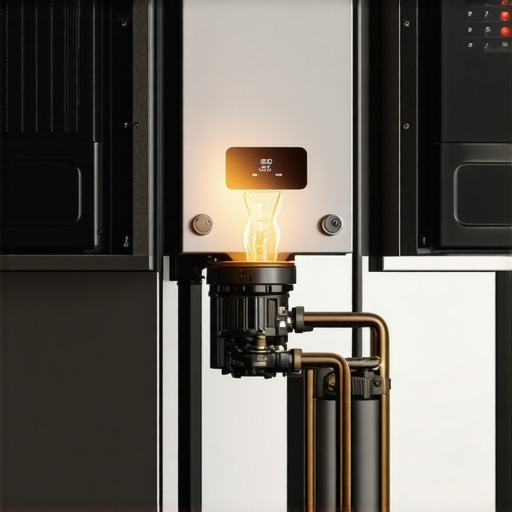
If you are waking up in a house that feels like a meat locker in the middle of a January cold snap, you are likely staring at a blinking LED code on your furnace control board. I have spent thirty years crawling through spider-infested crawlspaces and baking-hot attics, and if there is one thing I have learned, it is that the mechanical sequence of operation is the law of the land. Before the gas valve clicks, before the igniter glows like a cigarette cherry, and before the blower starts pushing air through your vents, the inducer motor has to do its job. It is the bouncer at the club; if it does not clear the path, nobody gets in to dance. In 2026, as we see a shift toward higher efficiency standards and more complex sensing electronics, understanding when this specific component is failing can save you from a five-figure replacement bill pushed by some ‘Sales Tech’ who barely knows how to use a multimeter.
The Forensic Diagnosis: A Technician’s Tale
I remember following a ‘Sales Tech’ from one of those big-box franchises last winter. I walked into the home of an elderly retired teacher who had been told she needed a $14,000 furnace replacement because her unit was ‘leaking deadly gases.’ The kid had already disconnected her power and told her it was too dangerous to turn back on. When I got there, I pulled the door off and found a perfectly intact heat exchanger. The problem? A $20 mud dauber nest was clogging the vent pipe, preventing the inducer from pulling enough vacuum to close the pressure switch. That kid was trying to hit his monthly commission on the back of a simple venting issue. This is why I preach the gospel of physics over sales. You do not need a new furnace; you need a diagnosis that respects the mechanical limits of the machine.
“The most expensive equipment in the world cannot overcome a bad duct system or a failed combustion sequence.” – Industry Axiom
The Physics of the Draft: Why the Inducer Matters
In a high-efficiency furnace, the inducer motor is responsible for pulling the products of combustion through the primary and secondary heat exchangers. We are talking about extracting every bit of sensible heat before venting the acidic, cooled flue gases out of the house. If that motor fails to spin at the required RPM, the pressure switch remains open, and the control board will lock you out for safety. In the cold North, where we deal with flame rollout risks and ice-clogged flues, the inducer is your primary line of defense against carbon monoxide. It creates a negative pressure environment that ensures those toxic gases go out the PVC or B-vent instead of into your lungs.
1. The Whining Banshee: Bearing Failure
The first sign your inducer is on its last legs is usually auditory. These motors use sealed bearings that, over years of thermal cycling, eventually lose their lubrication. You will hear a high-pitched screech or a low-frequency growl that sounds like a plane taking off in your basement. If you hear this, do not wait. Once those bearings seize, the motor will pull high amperage, potentially frying the relay on your expensive integrated furnace control board. A tin knocker might tell you to just oil it, but modern shaded-pole and ECM inducer assemblies are sealed units. When they scream, they are telling you the end is near.
2. The Acrid Smell of Electrical Windings
If you smell something sour or ozone-like near your furnace, you are smelling the ‘juice’ cooking the insulation on the motor windings. This often happens when the motor is struggling to turn against a restricted vent or a failing bearing. It is a distinct, pungent odor that screams ‘electrical fire.’ This is the point where the motor is no longer efficient at converting electricity into mechanical work; it is just converting it into heat. In the dead of winter, a stressed motor will eventually trip the internal thermal overload, leaving you without heat at 3 AM.
3. The Pressure Switch Dance: Click-Click-Nothing
The sequence of operation is sacred. When the thermostat calls for heat, the inducer starts first. It has to pull enough ‘inches of water column’ (a measure of vacuum) to snap that pressure switch shut. If you hear the motor spinning but the furnace never ignites, your motor might be spinning too slow, or the centrifugal wheel inside is slipping on the shaft. I have seen wheels made of cheap plastic in some low-end furnace brands literally melt or shatter, meaning the motor is spinning but it isn’t moving any air. It is a ghost in the machine.
“Combustion air must be provided in sufficient quantities to ensure complete combustion and proper venting of flue gases.” – ASHRAE Standard 62.1
4. Water Streaks and the Secondary Heat Exchanger
In 90%+ AFUE furnaces, the inducer housing is part of the condensate management system. If you see rust streaks or water dripping from the motor housing, you have a major problem. This often points to a clogged condensate trap or a failing gasket. That acidic water will eat through the motor’s metal housing and short out the internal electronics. If you are also looking at an AC installation in the future, remember that a leaking furnace can drip onto your evaporator coil cabinet, causing premature corrosion there too. Every drop of water in your furnace is a sign that the chemistry of the flue gas is winning the war against your equipment.
5. Harmonic Vibration and the Unbalanced Wheel
If the whole furnace cabinet is shaking when it tries to start, the inducer wheel is likely imbalanced. This happens when bits of the fan blade break off or when soot and debris build up unevenly on the blades. This vibration doesn’t just make noise; it rattles the gas manifold and the sparky’s wiring, leading to loose connections and secondary failures. This is especially common in mini-split or compact horizontal furnace installs where the unit is hanging from rafters. The vibration translates through the home’s framing, sounding like a rhythmic thumping in the bedrooms.
Repair vs. Replace: The 2026 Math
In 2026, we are dealing with the ‘Regulatory Cliff.’ New refrigerants like R-454B are changing the AC installation landscape, but for furnace repair, the cost of parts is what’s hitting homeowners. A genuine OEM inducer assembly can now run between $400 and $900 just for the part. Add in the labor for a qualified tech who knows how to check manifold pressure and perform a combustion analysis, and you might be looking at a $1,200 bill. If your furnace is over 15 years old and has a cracked heat exchanger, it is time to pull the plug. But if the heat exchanger is clean, a new inducer is a solid investment that can buy you another five to ten years of reliable heating service. Do not let a sales tech ‘pookie’ over the truth—demand to see the manometer readings yourself. Comfort is a matter of physics, not magic, and a healthy draft is the heartbeat of a warm home.