The Sound of a Cold House and the Smell of a Sales Pitch
The January wind doesn’t just blow in the North; it bites through the sheathing and hunts for any weakness in your thermal envelope. When that 3 AM silence hits—the kind where you don’t hear the comforting hum of the inducer motor—you know you’re in trouble. By 8 AM, you’ve called for a heating service, and by 10 AM, a guy in a pristine white uniform is standing in your basement telling you that your entire system is a ‘death trap.’ As a tech who has spent thirty years crawling through spider-infested crawlspaces and getting ‘pookie’ (mastic) in my hair, I’ve seen the industry shift from mechanical mastery to predatory sales. In 2026, the scams have evolved. We are in the middle of the A2L refrigerant transition, and the ‘Sales Techs’ are using the new regulations to pick your pocket.
The Anatomy of a 2026 Scam: A Forensic Case Study
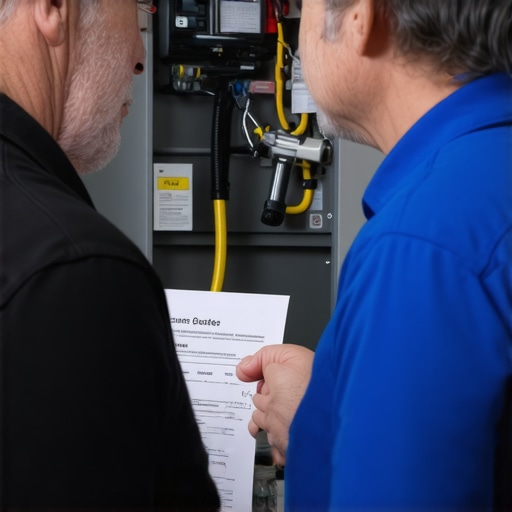
I followed one of these ‘Comfort Advisors’ (a fancy word for a guy who couldn’t tell a capacitor from a contactor if his life depended on it) out to a job last month. An elderly homeowner had been told her heat exchanger was ‘leaking lethal levels of carbon monoxide’ and she needed a $14,000 furnace repair and AC installation immediately. The salesman had even ‘red-tagged’ the unit, shutting off the gas. When I arrived, I pulled out my calibrated combustion analyzer. The CO levels? Zero. The ‘crack’ he showed her on a blurry borescope? A strand of lint. All the unit needed was a thorough cleaning of the flame sensor—a five-minute fix. This is the reality of the 2026 landscape. They aren’t fixing machines anymore; they are selling fear.
“The most expensive equipment in the world cannot overcome a bad duct system.” – Industry Axiom
1. The R-410A ‘Illegal to Repair’ Scare
The biggest lie you will hear in 2026 is that your R-410A system is ‘illegal’ or ‘unrepairable.’ With the shift to R-454B and other A2L refrigerants, the ‘gas’ (juice) for older systems has become more expensive, but it is not gone. If a tech tells you that a simple leak in your coil requires a full 15 SEER2 replacement because of ‘government bans,’ they are lying. While the EPA Section 608 regulations are tightening, we can still service these units. They want you to panic-buy a new system because the margins on a $12,000 install are much better than a $600 leak repair.
2. The ‘Ghost Crack’ in the Heat Exchanger
In cold climates, the heat exchanger is the heart of the furnace. It’s where the combustion happens, separating deadly gases from the air you breathe. Sales techs love to use ‘thermal stress’ as a buzzword. They will show you a grainy photo of a ‘crack’ that is often just a manufacturing seam or a bit of dust. Physics doesn’t lie: if a heat exchanger is truly cracked, the flame rollout switch will usually trip, or the combustion analysis will show a massive spike in CO when the blower motor kicks on. If they can’t prove the leak with a calibrated tool, they are fishing in your wallet. They know you’re scared of ‘the silent killer,’ and they use that fear to bypass your logic.
3. The Oversized Mini-Split Upsell
Mini-split systems are incredible pieces of engineering, especially for supplemental heating, but they are the new favorite tool for the ‘Sales Tech’ scam. I’ve seen quotes where a tech suggests ‘ditching the ductwork’ and installing five heads in a small home. Here is the thermodynamic reality: if you don’t account for Manual J load calculations, an oversized mini-split will ‘short cycle.’ It will blast the room with heat, shut off before the structural mass of the room is warm, and leave you with cold spots and a massive electric bill.
“Equipment shall be sized in accordance with ACCA Manual J.” – ASHRAE Standards
If they didn’t bring out a tablet and measure your windows, they aren’t quoting you a system; they are quoting you a commission.
4. The A2L ‘Sensor Maintenance’ Fee
The 2026 units come with new A2L refrigerant sensors designed to detect leaks of the ‘mildly flammable’ refrigerants. Some companies are now adding mandatory $300 ‘Sensor Calibration’ fees to their heating service contracts. Here is the ‘Sparky’ (electrician) truth: these sensors are largely ‘plug-and-play’ or have long lifespans. They do not need ‘calibration’ every six months. It’s a junk fee, plain and simple, designed to pad the bill on what should be a routine furnace repair.
5. The Static Pressure Deception
Airflow is king. If your furnace is overheating and tripping the high-limit switch, a ‘Tin Knocker’ (duct guy) knows it’s probably a restrictive filter or an undersized return air drop. However, a scamming tech will blame the ‘internal metallurgy’ of the furnace and suggest a replacement. They ignore the fact that the new furnace will have the exact same problem because the ductwork is too small. You can’t squeeze ten pounds of air through a five-pound pipe. They’d rather sell you a new furnace with a ‘variable speed motor’ that will just burn itself out trying to overcome the static pressure of your crappy old ducts.
The Math of Repair vs. Replace in 2026
When do you actually pull the plug? If your furnace is over 15 years old and the repair cost exceeds 50% of its value, replacement makes sense. But if it’s a failed inducer motor or a bad capacitor on a 10-year-old Trane or Carrier, fix it. Don’t let them tell you that the ‘new technology’ is so much more efficient that it pays for itself in a year. The physics of AFUE (Annual Fuel Utilization Efficiency) means a 96% furnace is only marginally better than an 80% furnace when you factor in the $8,000 price tag and the complexity of the secondary heat exchanger. Stay cynical, check their ‘math’ against your actual utility bills, and never sign a contract when you’re shivering. A real tech wants to see your house warm; a salesman just wants to see your credit score.