The Sound of the Regulatory Cliff
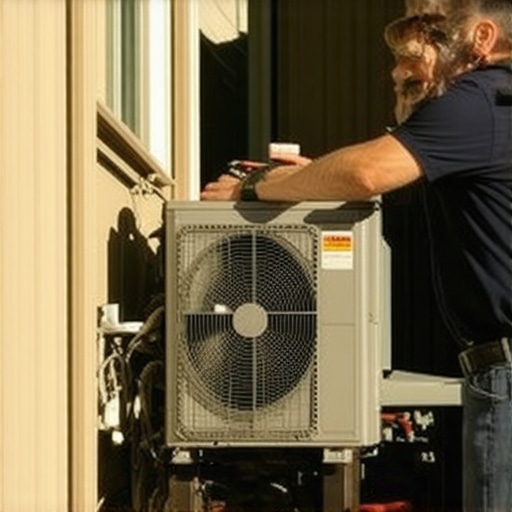
If you listen closely to a condensing unit outside a suburban home in late 2025, you aren’t just hearing the hum of a scroll compressor or the whir of a condenser fan blade. You are hearing the death knell of an era. We are standing on the edge of the R-410A sunset, and for most homeowners, 2026 is going to feel like a punch to the wallet. I’ve spent thirty years smelling burnt oil and crawling through fiberglass-filled knee-walls, and I’ve never seen a transition this messy. We are moving to A2L refrigerants—what the industry calls ‘mildly flammable’—and the complexity of the new sensors and mitigation boards is driving equipment costs through the roof.
The Narrative Matrix: The ‘Condemned’ Inducer Motor Scam
I remember a rainy Tuesday in November when I followed a ‘Comfort Consultant’ (that’s a fancy word for a salesman with a clipboard) to a house where the owner had been told her entire system was a ticking time bomb. The sales tech told her the furnace repair was impossible because parts for her 2018 unit were ‘obsolete’ and she needed a full $18,000 AC installation with a new heat pump. I walked into that mechanical room, pulled the inducer motor, and found a single stray pebble from a recent roof job lodged in the wheel. Five minutes of work and she was back in business. He wanted a commission; I wanted the system to actually move air. That is the reality of the 2026 market: everyone will use the new EPA regulations as a boogeyman to scare you into overpaying. Don’t fall for it.
“Equipment shall be sized in accordance with ACCA Manual J based on local design conditions; oversizing leads to poor dehumidification and premature component failure.” – ACCA Manual J Standards
1. The ‘Pookie’ Strategy: Downsizing via Airflow
Most ‘Tin Knockers’ just want to hang metal and leave, but the secret to saving $400 or more isn’t in the brand of the box—it’s in the ‘Pookie’ (mastic). If you seal your ductwork properly, you reduce the static pressure and the total cooling load of the house. I have seen homes where sealing the return air drops allowed us to drop from a 4-ton unit to a 3.5-ton unit. That half-ton difference is often exactly $400-$600 in equipment cost. You aren’t just buying ‘Juice’ (refrigerant); you are buying the ability to move BTUs. If the air leaks into the attic, you’re cooling the squirrels, not your bedroom.
2. The Furnace Repair Symbiosis
Before you commit to a 2026 AC installation, look at your existing blower motor. A lot of folks think they can just slap a high-efficiency 16-SEER2 coil on an old furnace. If your furnace repair needs aren’t addressed first—specifically that aging PSC motor—you’ll never hit the efficiency ratings promised. By upgrading your furnace blower to an ECM motor during the off-season, you can often negotiate a ‘matched system’ discount that far exceeds the $400 mark. You want that ‘Beer Can Cold’ suction line, and you only get that with consistent, calibrated airflow.
3. The A2L Inventory Clearance Gambit
2026 is the year the EPA mandates the transition to A2L refrigerants like R-454B. These new systems require leak sensors and specialized ‘Sparky’ (electrician) work for integrated safety circuits. However, contractors will be sitting on ‘old’ R-410A inventory that must be installed. If you aren’t afraid of the previous generation of tech, you can find massive price breaks on R-410A units that ‘must go.’ These units are proven, the ‘Gas’ is cheap to find for now, and the installation is less labor-intensive.
4. Mini-Split Zoning for ‘Ghost’ Rooms
Stop trying to cool the whole house. If you have a guest room that feels like a sauna, don’t upsize your main AC installation. That leads to ‘Short Cycling,’ where the compressor doesn’t run long enough to hit the dew point on the evaporator coil. When the coil doesn’t get below the dew point, it can’t remove latent heat—the humidity. Instead, install a small mini-split for that one room. It allows you to keep the main central system smaller and cheaper, easily saving you several hundred dollars on the primary unit’s capacity price jump.
5. Thermodynamics of the ‘Suction Line’ Insulation
I’ve seen $10,000 systems crippled by $5 worth of missing insulation. If your suction line (the big copper pipe) is sweating in the sun, you are losing sensible cooling capacity before the refrigerant even reaches the coil. In the 2026 pricing model, every BTU counts. Ensuring your line set is properly insulated and the ‘Suction Line’ remains ‘Beer Can Cold’ means the system runs for shorter durations, extending the life of your contactors and capacitors.
6. The ‘Sparky’ Pre-Emptive Strike
The new 2026 high-efficiency heat pumps and AC units often have higher ‘Minimum Circuit Ampacity’ requirements. If you wait until the day of the AC installation to find out your electrical panel is maxed out, the contractor will upcharge you 30% for an emergency electrician. Hire a ‘Sparky’ now to check your lugs and breaker space. It’s a $150 service call that prevents a $1,000 emergency change-order during the heat of July.
“Thermal comfort is that condition of mind that expresses satisfaction with the thermal environment and is assessed by subjective evaluation.” – ASHRAE Standard 55
7. Timing the Heating Service Window
Never buy an AC in June. That is when the ‘Sales Techs’ are hungry and the ‘Tin Knockers’ are exhausted. Schedule your installation during the ‘Heating Service’ peak in January. When we are out doing furnace repair all day, the AC units are sitting in the warehouse collecting dust. I’ve seen owners shave $400 off a quote just by being the only ‘cool’ job on a sub-zero day. It’s basic supply and demand, and in the HVAC world, the demand follows the thermostat.
The Physics of Comfort: Why It Matters
At the end of the day, HVAC isn’t about ‘magic cold air.’ It’s about the phase change of refrigerant. When the liquid refrigerant hits the expansion valve, it flashes into a low-pressure vapor, dropping the temperature of the evaporator coil. As the warm, moist house air passes over that cold copper, the heat is absorbed (sensible heat) and the water vapor condenses into the drain pan (latent heat). If your ductwork is restricted, or your ‘Juice’ is low, that process fails. 2026 equipment will be more sensitive to these variables than anything we’ve seen before. Don’t pay for high-tech ‘toys’ if your airflow is garbage. Stick to the physics, seal your ducts with ‘Pookie,’ and keep your money in your pocket.