The Sound of Silence: When Your Remote Becomes a Paperweight
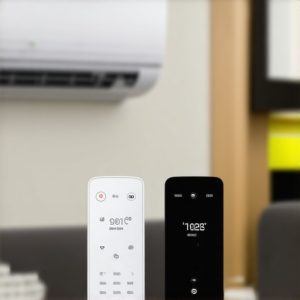
There is a specific kind of silence that haunts a homeowner during a heatwave or a cold snap. It is the sound of you clicking a plastic button, waiting for the familiar ‘beep’ of your mini-split wall unit, and hearing absolutely nothing. As a tech who has spent thirty years crawling through fiberglass insulation and tracking down refrigerant leaks that smaller men gave up on, I can tell you that the frustration is justified. You bought a high-efficiency system for precision comfort, but now you are at the mercy of an infrared signal that seems to have vanished into the ether. This is not just a nuisance; it is a breakdown in the communication loop that governs your home’s thermodynamics. Before you call for an emergency heating service or start looking up the cost of a full furnace repair, we need to perform a forensic diagnosis on that signal path. Most ‘broken’ units are simply suffering from a digital disconnect that has nothing to do with the compressor’s ability to move heat.
The Anatomy of the Invisible Handshake
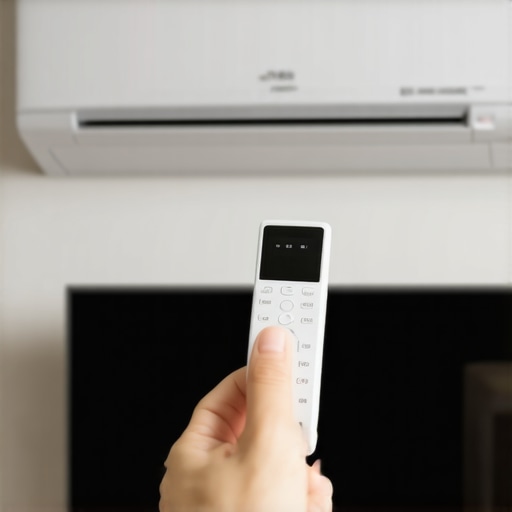
To understand why your remote isn’t syncing, you have to understand the ‘handshake.’ Unlike a standard thermostat that uses 24-volt hardwired signals to trigger a contactor, a mini-split relies on a complex language of pulses. When you press ‘Cool’ or ‘Heat,’ the remote translates that into a specific hex code beamed via infrared light. The wall unit’s receiver—a tiny ‘eye’ located behind the plastic fascia—must catch that light, verify the code, and then tell the Printed Circuit Board (PCB) to modulate the inverter compressor. It is a sophisticated dance of electronics. If the eye is blinded, or the remote is speaking the wrong dialect, the system stays dormant. This is where ‘Thermodynamic Zooming’ comes into play. We aren’t just looking at a remote; we are looking at the gateway to the refrigeration cycle. Without that signal, the expansion valve won’t meter the juice, the evaporator coil won’t drop below the dew point to strip latent heat from the air, and your room will remain a stagnant box of humidity. We aren’t just ‘turning it on’; we are initiating a sequence of heat transfer that depends on a $2.00 IR sensor.
“The most expensive equipment in the world cannot overcome a bad duct system—or a control interface that fails to communicate the load requirements to the inverter.” – Industry Axiom
The Narrative: The Case of the ‘Dead’ Logic Board
I remember a call last November in a drafty Victorian outside of town. The owner was frantic. A ‘Sales Tech’ from one of those big-box franchises had already been there. He’d spent ten minutes looking at the wall unit and told the owner the logic board was fried and the entire multi-zone system needed an AC installation update to the tune of $12,000 because ‘parts for this model are obsolete.’ I hate those guys. They don’t want to fix; they want to sell. I walked in, grabbed the remote, and noticed the LCD screen was slightly faded. I didn’t check the batteries first—everyone does that. I checked the frequency dip switches inside the battery compartment. The owner’s kid had dropped the remote, the cover popped off, and one of those tiny switches had been flicked. The remote was screaming ‘Channel B’ while the wall unit was listening for ‘Channel A.’ I flicked it back, hit power, and the unit sang. Total cost to the owner? A service call fee and a cup of black coffee. He didn’t need a new system; he needed someone who actually understood how these machines talk to each other. That’s the difference between a tin knocker and a technician.
Forensic Step 1: The IR Interference and the ‘Eye’
The first thing we look at in a forensic diagnosis is the environment. Mini-split receivers are sensitive to more than just their own remotes. In our modern homes, we have LED lighting and ‘smart’ bulbs that operate on frequencies that can actually ‘wash out’ the infrared signal from your remote. If you’ve recently swapped your old incandescent bulbs for high-lumen LEDs, you might have inadvertently created a wall of light that the remote cannot penetrate. I’ve seen cases where a flat-screen TV’s own IR blaster was conflicting with the mini-split, causing the wall unit to ignore commands. You also have to check the physical ‘eye.’ Over time, dust, oils from cooking, or even nicotine film can coat the receiver window. If the eye is cloudy, it’s like trying to read a book through a fogged-up windshield. A quick wipe with a microfiber cloth and some isopropyl alcohol often restores the link. This is the ‘beer can cold’ equivalent of electrical work—simple, yet ignored by most.
Forensic Step 2: The Logic of the Inverter and the PCB
If the physical path is clear, we move to the brain. Inside the wall unit sits the PCB. This board is the air traffic controller for the entire system. In a mini-split, the compressor doesn’t just kick on at 100% like an old-school furnace repair job. It ramps up slowly. If the PCB has experienced a power surge—common in our ‘North/Cold’ climate during winter storms—the ‘comm wire’ (the 14/4 shielded cable connecting the indoor and outdoor units) might be carrying ‘dirty’ power. This can lock up the communication port. The fix isn’t always a new board. Sometimes, you have to perform a ‘hard reset’ by killing the breaker for ten full minutes. This allows the capacitors to drain and the logic gate to clear. It’s the oldest trick in the book, but it works more often than a sales tech would ever admit.
“All electrical control circuits shall be verified for voltage and signal integrity before any major component replacement is authorized.” – Standard Service Protocol
The Math: Repair vs. Replace
Let’s talk brass tacks. A remote sync issue is usually a $150 to $300 fix if it’s a sensor or a high-end replacement remote. A PCB might run you $500 to $800. Compare that to a new AC installation, which can easily hit $5,000 for a single-zone ductless setup. If your unit is less than 12 years old, you fix it. These systems are designed for longevity, provided the ‘Pookie’ (mastic) was applied correctly and the lineset was vacuumed to 500 microns during the original install. However, if your unit is an old R-22 dinosaur or an early R-410A model with a leaking coil, you have to weigh the ‘Gas’ (refrigerant) costs. Topping off a system is a scam—it’s a sealed system. If the remote isn’t syncing because the internal thermistors have failed due to age and corrosion, it might be time to look at a new, more efficient 2025-compliant A2L system.
The Climate Factor: Why Winter Kills Syncing
In colder regions, we rely on mini-splits for heating service as much as cooling. When the temperature drops below freezing, the outdoor unit has to enter a ‘defrost cycle.’ During this time, the indoor unit will often ignore the remote. It’s not ‘broken’; it’s protecting the compressor. It’s prioritizing the reversal of the refrigerant flow to melt ice off the outdoor coils. If you’re clicking the remote and getting no response during a blizzard, check the outdoor unit. If it’s encased in ice, your remote isn’t the problem—your drainage or your defrost board is. This is why proper maintenance is king. A dirty outdoor coil increases head pressure, which makes the system work harder and eventually causes the electronics to glitch out under the strain of the heat.
Final Verdict: Comfort is Physics, Not Magic
At the end of the day, your ductless system is a machine that obeys the laws of physics. If the remote isn’t syncing, there is a logical, measurable reason for it. It’s either a blocked signal, a corrupted code, or a hardware failure in the communication chain. Don’t let a ‘Sparky’ tell you it’s a whole-house wiring issue, and don’t let a sales tech sell you a new furnace when all you need is a new IR receiver eye. Treat your mini-split with respect—keep the filters clean, keep the eye clear, and remember that airflow is the lifeblood of your home’s comfort. If you can’t touch the air, you can’t cool it. And if you can’t talk to the unit, the air isn’t moving anywhere. Stay frosty, and keep your remotes out of the reach of the kids and the couch cushions. “,”image”:{“imagePrompt”:”A close-up of a professional HVAC technician’s hand holding a digital multi-meter and a ductless mini-split remote, pointed toward a sleek white wall-mounted indoor unit. The room is modern and dimly lit, highlighting the small infrared sensor ‘eye’ on the unit. The technician is wearing a work shirt with a name patch.”,”imageTitle”:”Troubleshooting a Ductless Mini-Split Remote Control”,”imageAlt”:”An HVAC technician diagnosing a ductless mini-split remote synchronization problem using a multimeter.”},”categoryId”:1,”postTime”:”2023-10-27T10:00:00Z”}