The Acrid Reality: Why Your AC Smells Like a Chemical Fire
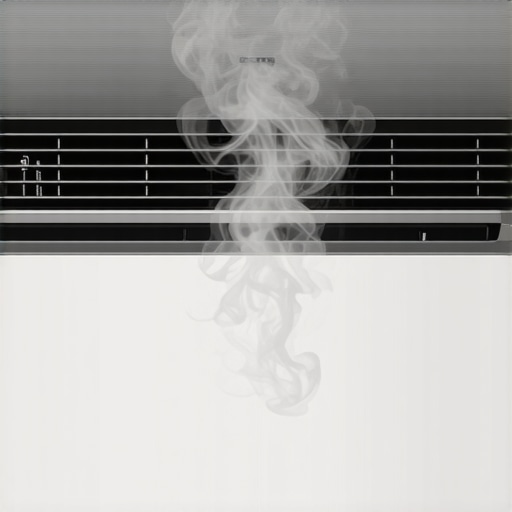
That smell isn’t just a nuisance; it’s the scent of polymer breakdown and impending financial regret. When you walk into your living room and get hit with that sharp, stinging aroma of melting wire insulation or scorched phenolic resins, your system is screaming at you. As a technician who has spent thirty years pulling charred contactors out of condensing units in the middle of a swamp-heavy July, I can tell you that ignoring this smell is the fastest way to turn a $200 service call into a $12,000 AC installation disaster. You aren’t just losing cooling; you are witnessing the thermal degradation of the very components that make modern life bearable. Most homeowners panic and call the first ‘Sales Tech’ they see on a billboard, but before you let some guy in a crisp, un-stained uniform tell you that you need a whole new system, you need to understand the forensic anatomy of what is actually happening inside that cabinet.
“The most expensive equipment in the world cannot overcome a bad duct system.” – Industry Axiom
I remember following a ‘Sales Tech’—let’s call him Chasing-Commission-Charlie—who had just quoted a young couple $18,500 for a full system replacement because their mini-split was ‘leaking toxic electrical smoke.’ I walked in, saw the couple white-knuckled and terrified, and headed straight for the evaporator. It took me five minutes to find a loose lug nut on the terminal block. The resistance from that loose connection was creating a localized ‘hot spot’ that was melting the plastic housing of the terminal. A 10-cent wire nut and a bit of stripping and crimping, and that unit was back to pulling latent heat out of the air. Charlie wasn’t a technician; he was a vulture. This is why you need to know the difference between a total system failure and a mechanical component reaching its thermal limit.
The Forensic Anatomy of the Melt: Why the Smell Happens
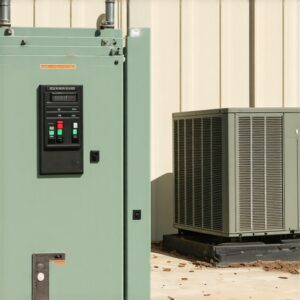
In the high-humidity environments of the South, the air is heavy with latent heat. For your AC to cool the house, the evaporator coil must drop below the dew point of the indoor air to wring out the moisture. If your unit is oversized—a common sin in AC installation—it cycles on and off rapidly. This is ‘short-cycling.’ Every time that compressor kicks on, it draws a massive ‘inrush’ of current, often five to six times its running amperage. This surge of ‘juice’ flows through the contactor and the capacitor. Over time, those silver-plated contacts pit and carbonize, creating resistance. Resistance creates heat. Heat melts plastic. If you smell burning plastic, you are likely smelling the housing of a contactor that has finally decided it’s had enough of the 50-amp surges.
Then there is the blower motor. If you haven’t changed your filter and your static pressure is through the roof, that motor is working against a wall of resistance. The windings inside the motor start to cook their own varnish. That’s a very specific, slightly sweet but acrid smell. It’s the smell of a ‘Sparky’ (electrician) having to be called because the motor has finally shorted to ground. If you have a mini-split, the electronics are even more sensitive. These units use inverter boards with hundreds of tiny capacitors and resistors. If one of those pops, it smells like a dead computer. It doesn’t always mean the compressor is dead, but it does mean your ‘Tin Knocker’ or service tech needs to be a board-swapper who actually understands DC voltage.
“Design conditions shall be based on the 99% heating and 1% cooling design temperatures.” – ACCA Manual J
The Math of the Melt: Repair vs. Replace
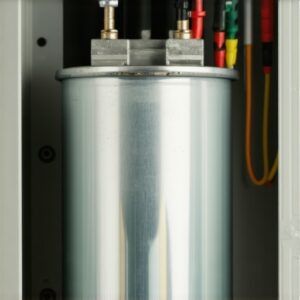
When the smell hits, the first thing I do is check the ‘suction line.’ It should be ‘beer can cold.’ If it’s warm and the unit is humming and smelling like a tire fire, you’ve got a seized compressor or a dead run capacitor. A capacitor is a $50 part. A compressor is a $3,000 job. The ‘Sales Techs’ love to conflate the two. They’ll see a scorched wire and tell you the ‘juice’ has leaked out and the whole unit is ‘acidic.’ While it’s true that a compressor burnout can create acid that ruins a system, a simple burnt wire at the contactor is a minor surgery. However, if your unit is more than 12 years old and you’re looking at a furnace repair or evaporator replacement, the math starts to lean toward a new AC installation, especially with the 2025 transition to A2L refrigerants like R-454B. These new gases are ‘mildly flammable,’ which sounds scary but really just means the industry is finally moving away from high-GWP (Global Warming Potential) ‘gas’ like R-410A.
Thermodynamic Zooming: Heat is Energy in Transit
You have to realize that your AC doesn’t ‘create cold.’ It moves heat. If the heat cannot escape—because your condenser coils are caked in ‘Pookie’ (mastic), dirt, or dryer lint—the high-side pressure skyrockets. High pressure equals high temperature. When the ‘liquid line’ (the smaller copper pipe) gets hot enough to burn your hand, the insulation on the wires inside the cabinet starts to off-gas. This is the ‘Burning Plastic’ smell. You are literally cooking the guts of your machine because it can’t breathe. This is why I preach airflow over horsepower every single day. I’ve seen 2-ton units outperform 5-ton units simply because the 2-ton unit had a proper return air drop and wasn’t choking on its own heating service history of neglect.
If the smell is coming through your vents during the winter, you’re likely dealing with furnace repair issues. In an electric furnace, the ‘heat strips’ can get coated in dust during the off-season. The first time they kick on, they incinerate that dust—that’s normal. But if it smells like a melting Lego set, you’ve got a sequencers or a limit switch that’s failing to cut power, and you are inches away from a localized fire. Shut it down at the breaker. Not the thermostat—the breaker. A thermostat is just a low-voltage suggestion; the breaker is the law.
Summary of Emergency Steps
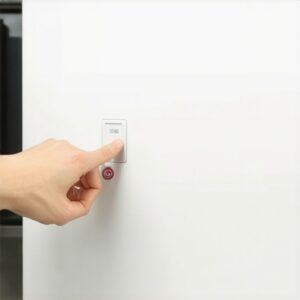
- Kill the Power: Go to the electrical panel and flip the breaker. Don’t trust the ‘OFF’ switch on the wall.
- The Sniff Test: Is the smell stronger at the indoor air handler or the outdoor condenser? Indoor usually means blower motor or heat strips; outdoor means contactor or compressor.
- Visual Inspection: Look for ‘Pookie’ or tape that might have fallen onto a heat element. Check for charred wire nuts.
- Check the Filter: If it looks like a wool blanket, you’ve found your culprit for motor strain.
Ultimately, a burning smell is a diagnostic gift. It’s a physical manifestation of an electrical problem before it becomes a structural one. Don’t let a salesman use that smell to scare you into a mortgage-sized 15-SEER2 system if all you need is a fresh set of wires and a new capacitor. Physics doesn’t lie, even if the guy with the clipboard does.