The Sound of a Failing Heart: When Your Sanctuary Turns Into a Meat Locker
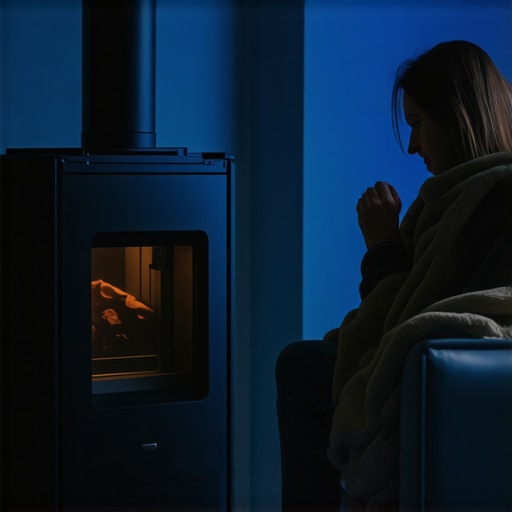
There is a specific kind of silence that hits you at 3 AM in the middle of a January cold snap. It is not the peaceful silence of a sleeping house; it is the heavy, ominous silence of a dead inducer motor. Then, the blower kicks on, but instead of that sweet, 120-degree heat, you get a face full of 60-degree basement air. You are experiencing a sudden furnace failure, and as someone who has spent three decades crawling through frozen crawlspaces in the Northeast, I can tell you: your furnace isn’t just ‘broken.’ It’s likely protecting itself from a catastrophic failure. Before you call for a heating service and pay the emergency after-hours tax, let’s look at the mechanical anatomy of this failure through the lens of thermodynamics, not a sales brochure.
The Physics Lesson: My Mentor’s Airflow Manifesto
My old mentor, a grizzly guy named Miller who could sniff out a cracked heat exchanger from the driveway, used to grab my shoulder and growl: ‘Kid, fire is easy. It’s the breath that’s hard.’ He was right. Most homeowners think a furnace is just a big torch, but in reality, it is a complex air-exchange machine. If the air cannot move, the fire cannot stay. We call this ‘Static Pressure,’ and it is the silent killer of 90% of the systems I see. If your furnace is blowing cold air suddenly, it’s usually because the safety circuit has tripped. The system ‘thinks’ it’s going to melt or explode, so it cuts the gas and keeps the blower running to cool down the internal components. You can’t heat what you can’t touch, and if the air isn’t moving across that heat exchanger properly, the physics simply stop working. This isn’t magic; it’s a calculated dance of BTUs and CFMs.
“Equipment shall be sized to meet the calculated sensible and latent loads… but no amount of burner capacity can compensate for a restricted return air path.” – ACCA Manual J Standards
The Sequence of Operations: The Forensic Trail
To understand why the air is cold, you have to understand the ‘Order of Operations.’ Every furnace follows a strict logical path. First, the thermostat calls for heat. Then, the inducer motor (that little fan) purges the heat exchanger. Next, the pressure switch proves the vent is clear. Then the ignitor glows, the gas valve clicks, and the flame sensor ‘sees’ the fire. Only after all that does the big blower motor start pushing air through your vents. If your furnace starts blowing cold air after it was already running, you have a ‘Limit Trip.’ This means the internal temperature hit a ceiling (usually around 140-170°F) and the ‘High Limit Switch’ opened. This kills the ‘gas’ (the fuel) but keeps the blower running to prevent the heat exchanger from cracking. If it’s cold from the start, the sequence never finished. You might have a dirty flame sensor—a common $5 fix that furnace repair ‘Sales Techs’ will use to try and sell you a $12,000 AC installation and furnace combo. Don’t fall for it.
The North Zone Reality: Condensate and Carbon Monoxide
In cold climates like Chicago or the Northeast, we deal with the ‘90% Plus’ furnaces. These are high-efficiency units that produce liquid water (condensate) as they extract every last bit of heat from the flue gases. If your drain line is clogged with ‘Pookie’ (mastic) or debris, or if the PVC exhaust pipe outside is buried in a snowdrift, the pressure switch will stay open. No switch, no fire. I’ve seen countless homeowners spend hundreds on a heating service call just for me to go outside and kick the snow away from their vent pipe. Furthermore, in these zones, we worry about the heat exchanger. If your furnace is old and blowing cold, I’m looking for flame rollout. If the heat exchanger is cracked, the blower motor pressure can actually ‘blow out’ the burner flame, causing the sensor to kill the gas. This is a Carbon Monoxide nightmare. We don’t play games with that. If I see a crack, the unit is Red-Tagged. Period.
The Forensic Diagnosis: Blueprints of Failure
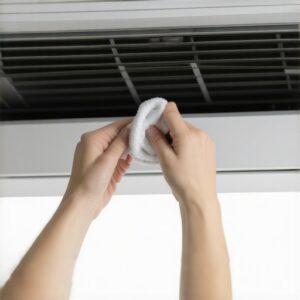
Let’s break down the likely suspects. First, check your filter. A 1-inch pleated filter that hasn’t been changed in six months is basically a brick. It chokes the airflow, the unit overheats, and the limit switch trips. Second, look at the flame sensor. It’s a small metal rod that sits in the path of the flame. Over time, it gets coated in carbon. It can’t ‘see’ the flame, so it shuts the gas off after 3 to 5 seconds. I’ve cleaned thousands of these with a piece of Scotch-Brite and saved people a fortune. Third, check the thermostat batteries. It sounds stupid, but a ‘Sparky’ (electrician) isn’t needed to tell you that a dead screen means a dead furnace. If you’ve checked the basics and it’s still cold, you’re looking at a bad capacitor or a failing blower motor. A failing bearing will screech like a banshee before it dies, a sound I know all too well from my years on the ‘Tin Knocker’ side of the business.
“Total external static pressure must be measured to ensure the blower is operating within the manufacturer’s programmed fan curve.” – ASHRAE Standard 152
The 2025 Regulatory Cliff: To Repair or Replace?
Now, let’s talk about the ‘Trap.’ We are currently entering the A2L transition. The old R-410A refrigerant (the ‘Juice’) is being phased out for R-454B and others that are ‘mildly flammable.’ If your furnace is 20 years old and the heat exchanger is shot, you’re facing a decision. Do you put $1,000 into a furnace repair on a dinosaur, or do you look at a new AC installation? If you’re in a climate that doesn’t hit -20°F often, a mini-split heat pump might be the answer. They are insanely efficient and handle both heating and cooling without the massive ductwork losses. But if you stick with gas, make sure the tech does a ‘Manual J’ load calculation. Most units are oversized, which causes ‘short cycling’—the unit turns on and off so fast it never removes the humidity in the summer or stays warm enough in the winter, leading to that ‘cold swamp’ feeling. True comfort is physics, not a brand name on a box.
The Professional Verdict
If your furnace is blowing cold air suddenly, don’t panic. Check your intake pipes for snow, change your filter, and reset the power. If it happens again, you need a technician who understands static pressure and the psychrometric chart, not someone looking to hit a monthly sales quota. Remember: your furnace is a sealed system of thermodynamic exchange. If the airflow is king, the ductwork is his kingdom. Keep the kingdom clear, and the heat will follow.