The Sound of a Choked System: Why Your AC Turned Into a Refrigerator
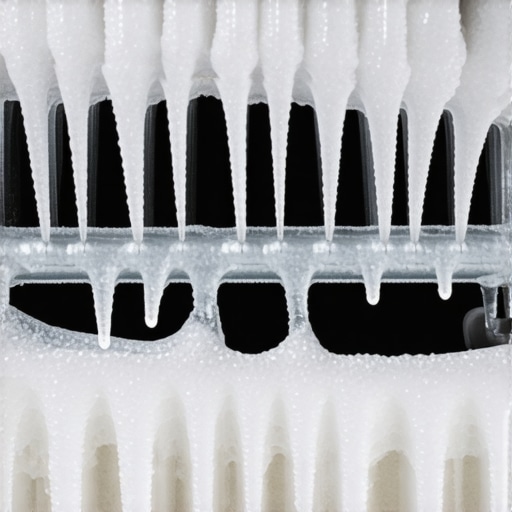
I remember my old mentor, a man who smelled like burnt electrical contactors and stale coffee, screaming at me in the middle of a crawlspace in 1992. My mentor used to scream, ‘You can’t cool what you can’t touch!’ This is why airflow matters more than horsepower. He was right then, and he’s right now. When you walk outside and see that copper suction line—the big one that’s supposed to be ‘beer can cold’—wrapped in a layer of white frost, your first instinct is to panic. You think you need more ‘juice’ or a whole new AC installation. But before you call some heating service outfit that sends a 19-year-old kid in a shiny wrap-around truck to sell you a $15,000 system, you need to understand the forensic anatomy of a frozen coil. An evaporator coil doesn’t just freeze because it’s ‘working too hard.’ It freezes because the delicate balance of thermodynamics has been violated. In the humid South, where the air is thick enough to chew, your AC is a dehumidifier first and a cooler second. When that process breaks, you aren’t just losing comfort; you’re killing your compressor.
“Proper airflow is the fundamental requirement for heat transfer in any vapor-compression cycle.” – ACCA Manual J
The Physics of the Freeze: Thermodynamic Zooming
To understand why your unit is a block of ice, we have to look at the evaporator coil’s job. It’s not ‘creating cold.’ There is no such thing as cold; there is only the absence of heat. The refrigerant—the ‘gas’ as the old-timers call it—enters that coil as a low-pressure liquid. As the warm, humid air from your home is pushed over those fins by the blower motor, the refrigerant boils. This phase change absorbs a massive amount of latent heat. If everything is working, the moisture in your air hits the coil, reaches its dew point, turns into liquid water, and drips into the primary drain pan. But here is the kicker: the refrigerant needs to stay above 32°F. If the pressure inside that coil drops, the boiling point drops. Suddenly, you have a 28°F coil. That condensation doesn’t drip; it flash-freezes. Within an hour, you have a solid wall of ice. Now, no air can pass through. Your blower is screaming, your house is 80°F, and your compressor is slugging liquid refrigerant, which is the fastest way to turn a $2,000 part into a boat anchor.
The Usual Suspects: Airflow vs. Charge
Ninety percent of the time, the culprit isn’t a mysterious leak. It’s a lack of airflow. I’ve seen furnace repair calls where the homeowner hadn’t changed their 1-inch pleated filter in six months. That filter becomes a brick. When the blower can’t pull air through, the coil gets too cold. It’s that simple. Then there’s the ‘Tin Knocker’ factor. If your ductwork was sized by someone who didn’t know a mini-split from a toaster, your static pressure is going to be through the roof. High static pressure means low CFM. Low CFM means a frozen coil. I’ve gone into attics where the Pookie (mastic) was slapped on so thick it was blocking the transition, or where the return air drop was half the size it needed to be. You can have the highest SEER2 unit on the market, but if the ductwork is garbage, the physics will fail you every time.
“The most expensive equipment in the world cannot overcome a bad duct system.” – Industry Axiom
The Forensic Diagnosis: Finding the Root Cause
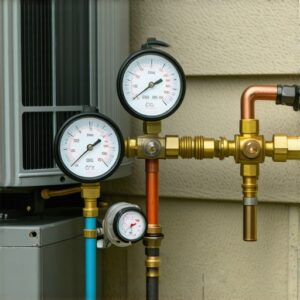
If your filter is clean and your blower is spinning, we have to look at the refrigerant circuit. This is where the ‘Sales Techs’ love to pounce. They’ll hook up their digital gauges, show you a low suction pressure, and tell you you’re ‘low on gas.’ But a restricted metering device—like a stuck TXV (Thermal Expansion Valve)—will mimic a leak perfectly. It starves the coil, the pressure drops, and the ice starts forming. A real tech will check the superheat and subcooling. If the subcooling is high but the suction pressure is low, you don’t have a leak; you have a restriction. Adding more R-410A to a restricted system is like trying to fix a clogged artery by pumping more blood into the body. It’s going to end in a blowout. And speaking of blowouts, we are sitting on a regulatory cliff. By 2025, R-410A is being phased out for A2L refrigerants like R-454B. If your coil is leaking and it’s ten years old, you’re looking at a serious math problem. A heating service repair could run you $2,000 for a new coil and the ‘juice’ to fill it, or you could invest in a new AC installation before the equipment prices jump 20% due to the new sensor requirements for flammable refrigerants.
Don’t Let the Sparky or the Salesman Fool You
Sometimes the issue is electrical. If your ‘Sparky’ (electrician) or a previous tech installed a capacitor that’s starting to bulge, your blower might not be reaching its full RPM. It sounds like it’s running, but it’s not moving the mass of air required to keep that coil above freezing. It’s a subtle failure. You might even have a dirty evaporator coil. If you’ve been running the system without a filter, or if the filter wasn’t seated right, the ‘Pookie’ and dust create a gray mat on the fins. This acts as insulation. The air can’t touch the metal. No heat transfer happens. The refrigerant stays cold, the pressure stays low, and the ice machine begins. When you see ice, turn the system to ‘Fan Only’ immediately. Let it melt for four hours. Don’t try to scrape it with a screwdriver unless you want to puncture a copper line and watch $500 of refrigerant hiss into the atmosphere. Once it’s melted, check the basics. If the airflow is clear and it freezes again, you need a technician who knows how to use a psychrometric chart, not one who just knows how to use a credit card reader. Comfort isn’t magic; it’s a balance of pressure, temperature, and volume. Respect the physics, and your system will respect your wallet.