The High Price of the ‘Visual Inspection’ Scam
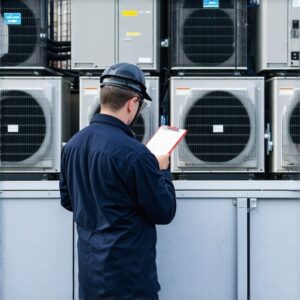
I followed a guy last Tuesday—let’s call him a ‘Sales Tech’ because he wore a crisp white shirt and couldn’t tell a manifold gauge from a meat thermometer. He’d just quoted a local warehouse manager thirty-eight thousand dollars for three new rooftop units (RTUs). His diagnosis? ‘Old age and tired compressors.’ When I climbed the ladder and pulled the panels, I didn’t see terminal failure. I saw a quarter-inch of cottonwood dander and grease choking the condenser coils. The high head pressure was causing the compressors to trip on their internal overloads. A hundred bucks in foaming coil cleaner and a garden hose later, those units were pulling a beautiful 20-degree split. That manager was about to set forty grand on fire because his ‘maintenance contract’ was nothing more than a clipboard-carrying kid walking past the units once a quarter.
The Thermodynamic Reality of Commercial Cooling
In the commercial sector, we aren’t just moving air; we are managing mass. When we talk about AC installation for a business, we have to look at the latent heat load—the moisture generated by people, processes, and infiltration. Most commercial contracts ignore the psychrometrics. They check the belt tension and call it a day. But if your tech isn’t measuring the wet-bulb temperature of the entering air, they don’t know if that evaporator coil is actually dropping below the dew point. If it isn’t, you aren’t dehumidifying; you’re just blowing cold, damp air that leads to ‘Dirty Sock Syndrome’ in your ductwork. This is especially true with mini-split systems used in server rooms or offices. Those tiny blowers have zero tolerance for static pressure. A little dust on the fan wheel and your CFM (Cubic Feet per Minute) drops through the floor, leading to a frozen coil and a flooded ceiling.
“Maintenance is not an event; it is the continuous preservation of designed heat transfer coefficients.” – ASHRAE Standard 180
The 2025 Regulatory Cliff: R-410A and the A2L Transition
If you think your current contract is expensive, wait until 2025. The EPA is phased out R-410A, the ‘juice’ we’ve used for twenty years. We are moving to A2L refrigerants like R-454B and R-32. These are ‘mildly flammable.’ That means new AC installation projects will require leak sensors in the evaporator cabinets and specialized spark-proof contactors. If your maintenance provider isn’t talking to you about the A2L transition, they are already behind. A leak in a 20-ton system five years from now won’t just be an environmental fine; it will be a logistical nightmare because R-410A prices will be higher than a ‘Tin Knocker’ on a payday Friday. Your contract needs to include proactive leak searches using ultrasonic detectors, not just ‘topping off the gas.’ Remember, a system that needs gas is a system with a hole. Period.
Heating Service and the Ghost of Carbon Monoxide
When the season flips and you need heating service, the stakes get lethal. Commercial furnaces and RTUs often live in harsh environments where vibration and thermal expansion do a number on the heat exchangers. I’ve seen furnace repair tickets where the tech just cleaned the flame sensor and left. They missed the hairline crack in the second stage of the heat exchanger. When that blower kicks on, the pressure differential can push carbon monoxide into the building’s supply air. A real maintenance audit requires a combustion analysis. I want to see the O2 levels, the CO parts per million, and the stack temperature. If your tech isn’t sticking a probe in the flue, they aren’t doing a heating service; they’re guessing with your employees’ lives.
“The most expensive equipment in the world cannot overcome a bad duct system.” – Industry Axiom
The Airflow Manifesto: Why Static Pressure is King
You can have the most efficient 25-SEER heat pump on the market, but if the ‘Sparky’ who wired the building or the ‘Tin Knocker’ who hung the mains didn’t calculate the Total External Static Pressure (TESP), you’re losing money. High static pressure is the silent killer of ECM motors. It forces the motor to ramp up its RPMs to overcome the resistance of undersized ducts or ‘Pookie’-smeared filters, which triples your electrical consumption. A quality maintenance contract should include an annual static pressure test. We look at the pressure drop across the coil and the filter. If the ‘suction line’ isn’t ‘beer can cold’ because of an airflow restriction, you’re slugging liquid refrigerant back to the compressor, and that’s a death sentence for the heart of your system. Stop paying for ‘visual inspections’ and start paying for physics. Your bottom line—and your compressor—will thank you.