I’ve spent three decades dragging my manifold gauges through dusty attics and cramped crawlspaces, and if there is one thing that gets my blood boiling faster than a slugged compressor on a 100-degree day, it is the ‘Sales Tech’ mentality. Last August, I followed behind one of these suit-and-tie ‘technicians’ who had just told a local bakery owner that his five-year-old system was a total loss because of ‘aluminum rot.’ The kid quoted him eighteen grand for a full AC installation. I walked in, saw the unit, and realized the evaporator coil wasn’t rotting; it was just choked with a decade’s worth of flour and grease because the filter hadn’t been changed since the Bush administration. A bottle of alkaline cleaner and a soft brush later, the pressures stabilized, and the suction line was sweating like a marathon runner. That’s the difference between someone who understands the physics of heat transfer and someone who just wants a commission.
The Great Material Debate: Why Your Coil Matters
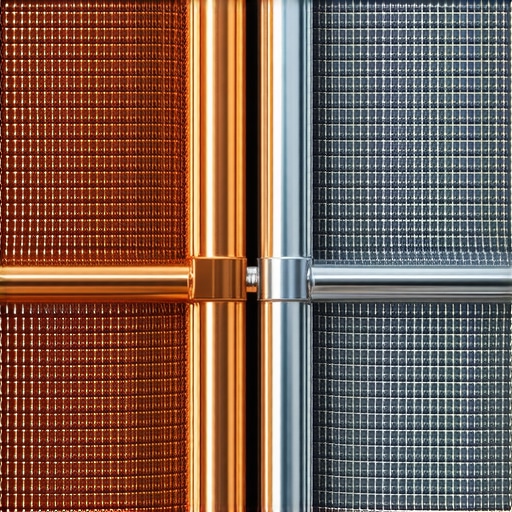
In the old days, copper was king. We liked it because it was easy to braze, had fantastic thermal conductivity, and felt substantial. But then the industry hit a wall: Formicary corrosion. This is a specific type of microscopic pitting that eats through copper tubes, often caused by the very cleaning products and building materials we keep in our homes. When the industry shifted toward all-aluminum coils, the old-timers cried foul. But here is the thermodynamic truth: while copper conducts heat slightly better, aluminum is far more resistant to that ‘ant-nest’ corrosion that was killing R-410A systems prematurely. During a new AC installation, the choice of coil material isn’t just about price; it’s about the chemical reality of your home’s environment.
“Heat is not ‘cooled’; it is moved. The efficiency of that movement is dictated by the thermal bridge of the coil material and the integrity of the vapor cycle.” – ASHRAE Fundamentals Handbook
Thermodynamic Zooming: How Heat Actually Leaves Your House
Most homeowners think an AC ‘blows cold air.’ Wrong. An AC is a heat-moving machine. Your evaporator coil—whether it’s aluminum or copper—must drop below the dew point of the air passing over it. This is where we talk about latent heat. In a humid climate like the South, the coil’s job is as much about squeezing water out of the air as it is about lowering the temperature. If your coil is improperly sized or if the tin knocker who built your plenums didn’t account for static pressure, the air moves too fast. When air moves too fast, it doesn’t stay in contact with the cold fins long enough to reach the dew point. The result? Your house is 72 degrees but feels like a Louisiana swamp. This is why we obsess over CFM (Cubic Feet per Minute) and duct design.
The 2025 Regulatory Cliff: R-454B and the Death of R-410A
We are currently standing on the edge of the biggest shift in HVAC history since we moved away from R-22. The EPA is phasing out R-410A in favor of A2L refrigerants like R-454B. These new gases are ‘mildly flammable,’ which means the new units coming off the assembly line are packed with sensors and spark-proof controls. If you are looking at an AC installation today, you need to understand that the ‘cheap’ aluminum coil system you buy now might be an orphaned technology in five years. The price of ‘juice’ (refrigerant) for older systems is going to skyrocket. This shift is also affecting how we handle heating service and furnace repair, as modern coils are often integrated into complex communicating systems that talk to your variable-speed blower motor.
“The most expensive equipment in the world cannot overcome a bad duct system.” – Industry Axiom
The Mini-Split Revolution and the Aluminum Advantage
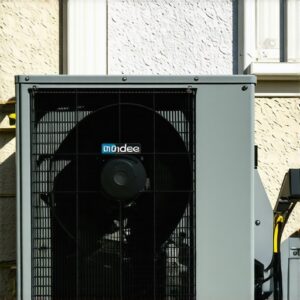
If you’re looking at a mini-split for a bonus room or a garage, you’re almost certainly looking at aluminum microchannel technology. These coils are incredible at shedding heat but they are a nightmare if they get a leak. Unlike the old copper coils where a sparky or a seasoned tech could braze a patch, aluminum usually requires a full component swap. This is why filtration is non-negotiable. Whether it’s a standard furnace repair or a high-end mini-split install, if you let dirt get into those fins, you’re effectively insulating the coil against the very air it’s trying to condition.
The Airflow Manifesto: Physics Doesn’t Care About Your Warranty
I’ve seen $20,000 systems die in three years because the return air drop was too small. You can have the best copper-finned, gold-plated coil in the world, but if the ‘tin knocker’ didn’t give the system enough return air, the compressor is going to slug liquid and die. When we perform a heating service or look at a furnace repair, we aren’t just looking at the flame; we are looking at the static pressure. High static pressure is the ‘silent killer’ of HVAC. It makes the blower motor work harder, consumes more ‘gas’ (electricity), and eventually cracks the heat exchanger. Don’t let a sales tech talk you into a bigger unit without checking your ducts first. In the world of airflow, bigger is rarely better; right-sized is the only way to win.