The Acrid Scent of a System in Crisis
You’re sitting in your living room, finally relaxing after a long shift, when that unmistakable metallic, ozone-heavy stench hits you. It’s not the smell of a burnt steak or a dusty candle; it’s the smell of melting plastic and high-voltage resistance. In thirty years of crawling through spider-infested crawlspaces and balancing on ice-slicked rooftops for a heating service call, I’ve learned that the nose is a technician’s most valuable tool. When your AC starts smelling like electrical smoke, your system isn’t just ‘acting up’—it’s undergoing a chemical and physical breakdown that could lead to a catastrophic AC installation bill if you don’t act within the next sixty seconds.
The Forensic Diagnosis: Why Your Vents Are Projecting a Fire Hazard
Before you call a furnace repair specialist or an electrician, you need to understand the anatomy of the failure. I remember a call back in ’98, following behind a ‘Sales Tech’ from one of those big-box franchises. He’d told a young couple their entire system was a ‘ticking time bomb’ and quoted them $14,000 for a full mini-split conversion because of a ‘burnt-out’ control board. I walked in, pulled the service disconnect, and found a $0.50 wire nut that had vibrated loose on the contactor. The high resistance had melted the insulation, creating that terrifying smoke smell. I stripped the wire, put on a new nut, and the unit purred like a kitten. That ‘Sales Tech’ wasn’t looking for a fix; he was looking for a commission. Don’t let them hustle you when you’re smelling ozone.
“Equipment must be sized to meet the calculated sensible and latent loads… failure to maintain proper electrical clearances and wire integrity leads to premature component failure.” – ACCA Manual J Standards
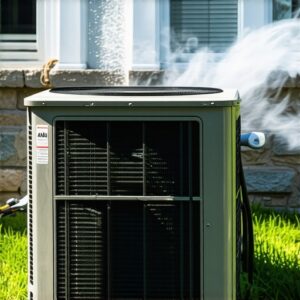
When you smell smoke, it’s usually one of three culprits: the capacitor, the contactor, or the blower motor. Think of the capacitor like a massive battery that kicks the compressor into gear. When it fails, it can bulge and leak dielectric fluid that smells like a chemical spill. The contactor is a high-voltage switch; if the points get pitted or ‘chatter,’ they create an arc—a literal lightning bolt inside your cabinet—that fries the wiring. Then there’s the blower motor. If the bearings seize because some tin knocker didn’t balance the ductwork 20 years ago, the motor works harder, draws more ‘juice,’ and eventually the windings melt their lacquer coating. That’s the ‘electrical fire’ smell you’re detecting.
Thermodynamic Zooming: The Physics of the Burn
In our northern climate, where we transition from a humid summer to a brutal winter requiring heating service, our systems take a beating. When your evaporator coil—that’s the indoor part that gets ‘beer can cold’—doesn’t get enough airflow because of a clogged filter, the pressure in the suction line drops. This causes the compressor to work outside its design envelope. The compressor is cooled by the returning refrigerant ‘gas.’ If the airflow is restricted, the compressor overheats. Eventually, the internal insulation on the motor windings reaches its flashpoint. This is a ‘burnout.’ It creates a highly acidic sludge that ruins the entire system. You aren’t just losing cooling; you’re witnessing the chemical death of your equipment.
“Thermal overload protection is a secondary defense; the primary defense is a balanced system operating within its specified voltage and amperage parameters.” – ASHRAE Standard 15
The Emergency Protocol: Steps to Save Your Home
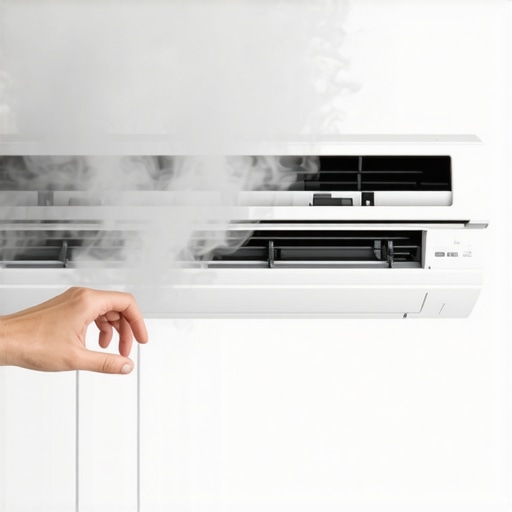
Step 1: The Kill Switch. Don’t mess with the thermostat. Go straight to the breaker panel or the outdoor disconnect. If you see actual wisps of smoke coming from the vents, you have a high-voltage arc. Shut it down immediately. Step 2: The Sensory Check. Is the smell coming from the indoor air handler or the outdoor condenser? If it’s the indoor unit, it could be your heat strips (if you have an electric furnace) or the blower motor. If it’s outside, it’s likely your compressor or capacitor. Step 3: Check the ‘Pookie’. No, really. Look at the mastic (we call it ‘pookie’) and tape around your plenums. If it’s charred or discolored, you have a heat issue that’s migrated to the structure.
The Math of the Melt: Repair vs. Replace
Is it worth a furnace repair or a new AC installation? If your unit is over 12 years old and the compressor has ‘grounded out’ (the electrical windings are touching the metal casing), it’s over. The labor to flush the acid out of the lines and install a new compressor will eat up 60% of the cost of a new, high-efficiency unit. However, if it’s just a contactor or a transformer that’s toasted, you’re looking at a few hundred bucks. The key is finding a tech who actually knows how to use a multimeter, not just a clipboard. If he doesn’t check the ‘static pressure’ of your ducts, he’s not a tech—he’s a salesman in a work shirt. AC installation shouldn’t be a panic buy; it should be a calculated decision based on your home’s heat load.
Ultimately, airflow is king. Most electrical failures start as airflow problems. A restricted return air duct makes every component in your system work 20% harder, drawing more amperage and creating more heat. If you want to avoid that smoky smell next season, stop buying those ‘purple’ high-MERV filters that choke your system and stick to a standard pleated filter changed every 30 days. Your compressor, and your wallet, will thank you. If you’re currently smelling smoke, stop reading this and go flip that breaker. Now.