Stop Using Cheap Spray Foam to Seal Mini-Split Wall Holes
If I see one more ‘handyman’ or sales-driven ‘technician’ blast a can of yellow expansion foam into a three-inch hole in a customer’s siding, I’m going to lose my mind. I’ve spent thirty years in the dirt, crawling through crawlspaces and sweating through my shirt on rooftops, and I can tell you this: the details aren’t just details—they are the physics of your home. When you hire someone for a mini-split installation, you aren’t just paying for the compressor and the air handler. You’re paying for the integrity of the thermal envelope. Using that cheap, off-the-shelf spray foam is a lazy man’s way to invite disaster into a wall cavity.
I followed a so-called ‘Senior Comfort Consultant’ out to a job last winter in the middle of a brutal Nor’easter. This homeowner was terrified because her heating service was failing—the unit was a solid block of ice and the indoor head was spitting water. The salesman from the other company had already been there and quoted her $12,500 for a total system replacement, claiming the ‘internal refrigerant chassis’ had suffered a catastrophic breach. He didn’t even pull his tools out of the truck. I showed up, popped the plastic shroud off the indoor unit, and found the culprit. The original installer had used cheap, open-cell spray foam to seal the wall penetration. Over three years, that foam had degraded into a brittle, porous sponge. Field mice had tunneled through it, using the line-set insulation for nesting material, and eventually chewed the communication wire. The system wasn’t dead; it just couldn’t talk to itself. A $14,000 ‘fix’ was actually just a bad sealing job and a $5 wire repair. That is why I despise sales techs; they sell equipment because they don’t understand the furnace repair and AC installation fundamentals.
“The most expensive equipment in the world cannot overcome a bad duct system… or a hole in the side of the house.” – Industry Axiom
Let’s talk about the thermodynamic reality of that hole in your wall. When we perform an AC installation, we are managing two types of heat: sensible and latent. Sensible heat is what you see on the thermometer. Latent heat is the moisture in the air. In a cold climate like the Northeast, during the summer, that mini-split evaporator coil drops well below the dew point to wring moisture out of the air. If that wall penetration is sealed with cheap foam, you are creating a direct straw that sucks humid, unconditioned air into the back of the unit. This moisture hits the ‘beer can cold’ suction line and condenses instantly. Because cheap foam is often open-cell, it holds that water against your plywood sheathing and the juice (refrigerant) lines. You aren’t just cooling your bedroom; you are actively growing a mold colony inside your wall.
Furthermore, we are standing on the edge of a Regulatory Cliff. By 2025, the industry is moving away from R-410A to A2L refrigerants like R-454B. These new gases are ‘mildly flammable,’ which means installation standards are about to get a lot stricter. These systems will soon require leak sensors. If you have a poorly sealed wall hole, the pressure differential in your home can pull outdoor fumes or moisture past those sensors, causing nuisance trips or, worse, masking a real leak. You can’t just ‘pookie’ a hole shut and hope for the best anymore. ‘Pookie’—or mastic duct sealant—is for the tin knocker working on galvanized trunks, not for sealing a structural wall penetration for a high-efficiency heat pump.
“Air leakage through the building envelope can account for up to 40% of the energy used to heat and cool a structure.” – ASHRAE Fundamentals
The solution isn’t a $5 can of foam. A real professional uses a wall sleeve—a rigid plastic tube that protects the line set from the sharp edges of the siding and prevents the wall from collapsing on the insulation. We then seal that sleeve with high-grade, non-hardening duct seal putty or a specialized UV-rated silicone. This allows for the expansion and contraction of the copper pipes as the heating service cycles on and off. If you use rigid foam, the vibrating pipes will eventually create a gap anyway, rendering the ‘seal’ useless within one season. If your tech doesn’t carry a bag of grey putty, he’s not a technician; he’s a part-swapper. Proper AC installation requires understanding that the house is a system, and every hole we poke in it is a liability. Don’t let a ‘Sparky’ or a fly-by-night installer compromise your home’s efficiency with a can of foam just because it’s faster. Demand a wall sleeve and high-density sealant. Your heat exchanger and your wallet will thank you when the polar vortex hits and your system actually stays running.
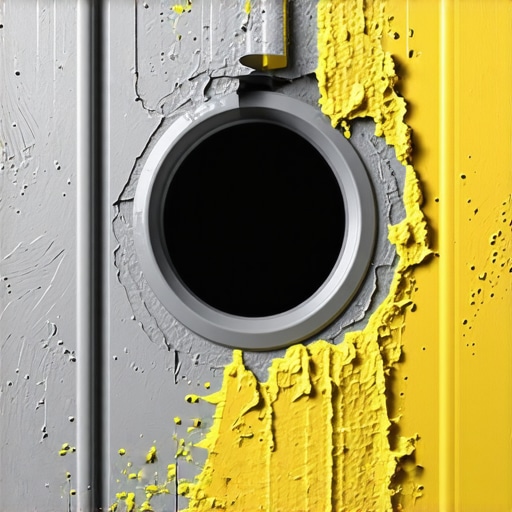
“, “image”: {“imagePrompt”: “A close-up, high-contrast photo of a poorly sealed HVAC wall penetration with crumbling, yellowed spray foam around copper refrigerant lines, showing signs of moisture and degradation on the exterior siding.”, “imageTitle”: “Degraded Spray Foam on Mini-Split Wall Penetration”, “imageAlt”: “Close-up of failing spray foam sealant on an HVAC line set penetration through a house wall.”}, “categoryId”: 0, “postTime”: “”}