The Forensic Diagnosis: Unmasking the Cracked Heat Exchanger Myth
I’ve spent over thirty years dragging my tool bag through cramped, frozen crawlspaces and balancing on joists in attics that feel like a pre-heated oven. I’ve seen the industry shift from heavy cast-iron boilers to these thin-walled, high-efficiency furnaces that rely more on sensors than iron. Most importantly, I’ve seen the rise of the ‘Sales Tech’—those guys who walk into your house with a clean polo shirt and a clipboard, more interested in your credit score than your static pressure. They’ll tell you that any speck of rust on a heat exchanger is a ‘deadly crack’ and you need a $15,000 AC installation and furnace replacement before the sun goes down. But here’s the truth from someone who’s actually turned a wrench: a heat exchanger is a robust piece of engineering, but when it fails, it’s a physics problem, not a sales pitch.
The Sales Tech Scam: A Forensic Tale
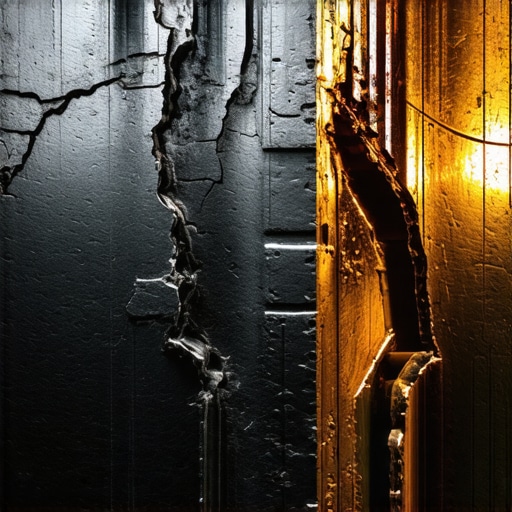
Last February, during a polar vortex that had every furnace in the county screaming for mercy, I followed up on a ‘second opinion’ call. A young tech from one of those big-box franchises had told a retired schoolteacher that her 12-year-old 80% AFUE furnace had a ‘catastrophic’ crack. He’d even shown her a grainy photo on his smartphone of what looked like the Grand Canyon in steel. He quoted her for a full system overhaul, including a mini-split for her sunroom she didn’t even use. When I pulled the blower motor out—a task the first guy clearly skipped because the Pookie (mastic) on the seams was undisturbed—I found nothing but a minor surface discoloration from a previous leaky humidifier. There was no crack. The ‘Sales Tech’ had used a red Sharpie on a piece of scrap metal and took a photo of it to scare her. I cleaned her flame sensor, checked her manifold pressure, and she was back in business for the cost of a standard heating service call. This is why you need to understand the thermodynamics of your system.
“The most expensive equipment in the world cannot overcome a bad duct system.” – Industry Axiom
Thermodynamic Zooming: The Physics of the Heat Exchanger
To understand a crack, you have to understand the violence happening inside that box. When your thermostat calls for heat, the inducer motor kicks on, creating a negative pressure. The gas valve opens, the igniter glows, and suddenly you have a 2,500°F flame shooting into a steel tube. This is where furnace repair gets technical. The heat exchanger’s job is to transfer that thermal energy to the air blowing over it without letting the combustion byproducts—Carbon Monoxide (CO), Nitrous Oxide, and soot—mix with your breathing air. This is a process of ‘sensible heat’ transfer. The steel expands rapidly as it heats. When the blower kicks in, it strips that heat away, causing the steel to contract. Over twenty years, that expansion and contraction happens thousands of times. It’s metallurgical fatigue. If your ‘Tin Knocker’ (the duct guy) didn’t size your return air properly, the heat exchanger can’t shed that heat fast enough. It stays too hot, expands too far, and eventually, the molecular bonds in the steel fail. That is your crack.
The Forensic Signs of a Real Failure
You don’t always need a $2,000 borescope to find a failure. If you suspect you need a heating service, look for these three ‘tells’ that the physics of your furnace have gone sideways. First, watch the flame. When the indoor blower fan kicks on, if the blue flames start dancing, flickering, or turning bright yellow, you have a pressure differential issue. The ‘good air’ is leaking into the ‘bad air’ side through a breach. This is often accompanied by ‘flame rollout,’ where the fire actually reaches out of the burner box because it’s looking for oxygen. Second, look for the ‘soot ghost.’ If you see black carbon buildup around the registers or on the furnace cabinet, your combustion is incomplete, often due to a clogged or cracked secondary heat exchanger in high-efficiency units. Third, the sensory check: a cracked heat exchanger often produces a distinct, metallic, sweet-yet-sour smell—that’s the scent of unburnt gas mixed with overheated steel. If your CO alarm is chirping, don’t call a salesman; call a technician who knows how to use a combustion analyzer.
“Equipment shall be sized in accordance with ACCA Manual J or other approved heating and cooling calculation methodologies.” – International Residential Code (IRC)
Climate Context: The Northern Polar Vortex
In the cold Northeast and Midwest, we don’t just deal with heat; we deal with extreme temperature swings. A furnace in Chicago works harder in one week than a furnace in Georgia works in a year. This constant cycling makes the heat exchanger the primary point of failure. If you’re considering a new AC installation or upgrading to a mini-split, remember that in northern climates, your furnace is the heart of the home. A cracked heat exchanger in 10°F weather isn’t just an inconvenience; it’s a life-safety issue. Proper furnace repair in these zones requires checking the AFUE (Annual Fuel Utilization Efficiency) rating and ensuring the venting is clear of ice and snow. If your secondary heat exchanger (the one that handles the acidic condensate) is plugged, it will back up and rot the primary cell from the inside out. It’s a slow-motion car crash made of water and fire.
The Math: Repair vs. Replace
When I find a real crack, the conversation turns to the checkbook. Replacing a heat exchanger cell is labor-intensive. You have to gut the furnace, pull the evaporator coil (be careful with the Juice/refrigerant), and rebuild the unit from the inside out. Usually, that’s a $2,000 to $4,000 job. If the unit is over 15 years old, you’re better off putting that money toward a new high-efficiency system. But if the unit is only 8 years old and under a parts warranty, a real technician (not a Sales Tech) will do the swap. Don’t let a ‘Sparky’ or a general handyman touch it; gas manifold pressure needs to be clocked perfectly, or you’ll just crack the new one in three years. Comfort is physics, and physics doesn’t take shortcuts.