The Sound That Keeps Me Awake: The Rhythmic Drip of a Failed Drain Pan
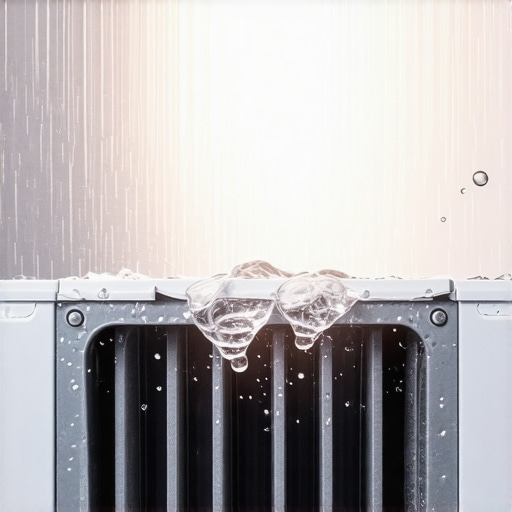
I’ve spent thirty years crawling through blown-in insulation and dodging wasps on scorching rooftops, and if there’s one thing I’ve learned, it’s that water is more patient than any technician. You can have the most expensive AC installation in the neighborhood, but if the physics of condensate management fail, that $10,000 investment is just a very heavy paperweight sitting over a ruined ceiling. Most homeowners don’t think about their drain pan until the drywall in the hallway starts looking like a topographical map of the Florida Everglades. By then, the damage isn’t just a repair; it’s a renovation.
My old mentor, a grizzly veteran named Smitty, used to scream at me whenever I’d rush a maintenance call. ‘You can’t cool what you can’t touch!’ he’d bark, referring to the airflow over the evaporator coil. But his second favorite line was even more important: ‘If it’s wet where it shouldn’t be, the physics are fighting you.’ He taught me that an AC system isn’t just about moving heat; it’s about managing the massive amounts of water that the ‘juice’—the refrigerant—strips out of your indoor air. When you’re dealing with high-humidity climates, your evaporator coil is basically a rain machine. If the pan catching that rain has a hairline crack, you’ve got a slow-motion disaster on your hands.
“The removal of latent heat from the conditioned space is a primary function of the cooling system, requiring the collection and disposal of significant volumes of condensate water.” – ASHRAE Standards
Thermodynamic Zooming: How Latent Heat Becomes Your Enemy
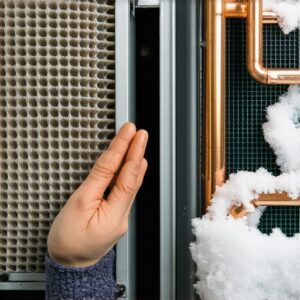
To understand why a tiny crack in a plastic pan is a big deal, you have to understand the phase change happening inside your air handler. As the 410A refrigerant (the gas) boils inside your evaporator coil, the coil surface drops well below the dew point of the air in your home. When your warm, humid return air hits that freezing coil, the water vapor loses its energy and turns into liquid. This is latent heat removal. In a typical humid afternoon, a five-ton unit can pull several gallons of water out of the air every single hour. All that water has to go somewhere. It drips off the fins into the primary drain pan. From there, gravity is supposed to take it through the PVC drain line to the outside. But plastic pans are subject to the same laws of thermal expansion and contraction as everything else. Over years of being subjected to 50°F water and then 130°F attic air during the off-cycle, the polymer chains in that pan start to fatigue. That’s when the hairline cracks—invisible to the naked eye when dry—begin to form.
The Forensic Diagnosis: How to Spot the Invisible
A ‘Sales Tech’ will walk into your attic, see a damp spot, and immediately tell you that the whole coil is shot and you need a new system. That’s a scam. If you’re looking at a potential leak, you need to be a detective, not a salesman. First, shut off the power at the disconnect. You don’t want the blower motor kicking on while you’re elbow-deep in the cabinet. Look at the primary pan—the one built into the coil housing. If it’s galvanized steel, you’re looking for rust pockmarks. If it’s plastic, you’re looking for ‘stress whitening,’ where the plastic has turned a pale color before it actually splits. To find a hairline crack, you can’t just look; you have to use the ‘Flashlight and Dye’ method. I like to dry the pan completely with a rag, then pour a small amount of water mixed with UV dye or even just food coloring into the pan. If you see that color bleeding through to the underside of the pan or into the emergency secondary pan, you’ve found your culprit. These cracks often hide around the threaded drain port where the PVC ‘Pookie’ (mastic) and fittings are under the most mechanical stress.
“Condensate piping shall be transitioned to the exterior of the building or to an approved drain in a manner that prevents structural damage.” – ACCA Manual J / Building Codes
The Anatomy of the Secondary System
In a proper AC installation, you should have a secondary drain pan sitting underneath the entire unit. This is your safety net. If you see water in this pan, your primary system has already failed. Most of the time, it’s just a clogged drain line, which any heating service or AC pro can clear with a CO2 blast. But if the line is clear and the primary pan is still leaking, it’s that hairline crack. Don’t ignore it. I’ve seen homeowners try to ‘Sparky’ their way out of this by just putting a brick in the secondary pan to displace the water. That’s a fool’s errand. Water in the secondary pan will eventually lead to biological growth—that ‘slime’ or ‘algae’ that smells like a wet basement. This isn’t just about a leak; it’s about the air you breathe. If the water sits, the spores get pulled into the return air and distributed throughout your house. This is why mini-split units are so sensitive; their internal pans are tiny, and even a slight tilt can cause an overflow that mimics a crack.
When to Repair and When to Pull the Plug
Can you fix a cracked pan? If it’s a secondary pan, maybe. Some high-grade waterproof sealants can buy you time. But if it’s the primary pan inside the coil cabinet, you’re usually looking at a replacement. Why? Because to get to it, a tin knocker or technician has to pump down the system, cut the copper lines, and pull the entire evaporator coil out. The labor alone makes ‘patching’ a bad financial move. If your system is over 12 years old and the pan is disintegrating, this might be the moment you consider furnace repair or a full system upgrade, especially with the 2025 refrigerant changes looming. But if the unit is young, just replace the pan. It’s a $100 part and a few hours of labor vs. a $15,000 bill from a Sales Tech. Always check your float switch while you’re in there. If that switch isn’t wired to the ‘R’ terminal to kill the thermostat when the water rises, it’s useless. I’ve seen more ‘pro’ installs with bypassed float switches than I care to count. It’s lazy, it’s dangerous, and it’s how ceilings end up on the floor.