The Sound of a Dying System: Why Your Copper Lines are Screaming for Help
I’ve spent thirty years melting in attics where the temperature hits 140°F and freezing on commercial rooftops in sleet that would make a polar bear stay home. If there is one thing I’ve learned, it’s that homeowners—and unfortunately, a lot of greenhorn ‘Sales Techs’—don’t understand the basic physics of the refrigeration cycle. They think an AC installation is just about swapping out the white box outside and the silver box inside. It’s not. It’s about the copper veins that connect them. My old mentor used to scream at me, ‘You can’t cool what you can’t touch!’ He was right. If your refrigerant gas is picking up heat from the Texas sun or a Georgia attic before it even reaches the evaporator coil, you aren’t just losing money; you are murdering your compressor.
The Thermodynamic Zoom: Why That Insulation Isn’t Just ‘Foam’
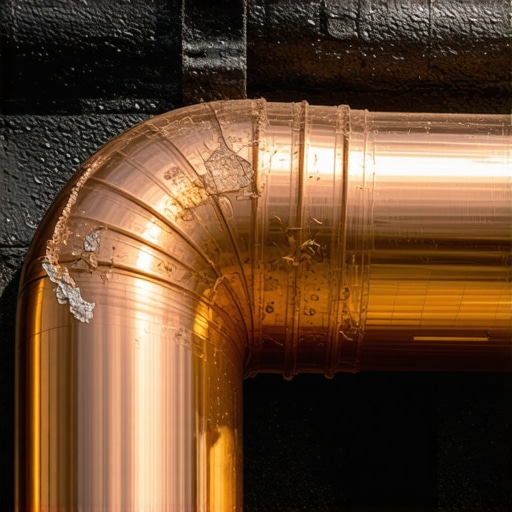
Let’s talk about thermodynamics. Your AC doesn’t actually ‘create’ cold. It moves heat. The big copper line—the one we call the suction line—carries cold, low-pressure gas back to the outdoor unit. In the trade, we like to see that line ‘beer can cold.’ But here is the problem: when that cold copper is exposed to humid, 95-degree air, physics takes over. This is where latent heat comes into play. If that line isn’t insulated perfectly, it starts sweating. That condensation isn’t just water; it’s a sign that your heating service or AC unit is absorbing ‘unwanted superheat.’ The gas inside the line expands. By the time it hits the compressor, it’s less dense. The compressor has to work twice as hard to move the same amount of refrigerant. It’s like trying to run a marathon while breathing through a cocktail straw.
“The most expensive equipment in the world cannot overcome a bad duct system or compromised refrigerant delivery.” – Industry Axiom
The Forensic Diagnosis: The Three Insulation Sins
When I walk up to a unit for a furnace repair or an AC tune-up, I look at the line set first. Most of the time, I see one of three disasters. First, the ‘Sun-Rot.’ Standard black Armaflex insulation is basically toasted by UV rays within three years if it isn’t painted or covered. It becomes brittle, flakes off, and leaves the copper naked. Second is the ‘Gap Trap.’ If the tin knocker or installer left even a half-inch gap at the service valves, that’s a thermal bridge. Third, and the most common during a cheap mini-split install, is using insulation that is too thin. In a high-humidity environment like Houston or Florida, thin insulation reaches its dew point instantly. The insulation itself gets saturated with water. Wet insulation has an R-value of basically zero. It’s like wearing a wet wool sweater in a blizzard—it’s actually making you colder by pulling heat out of your body, or in this case, putting heat into your juice.
The Climate Reality: Humid vs. Dry Physics
In the South, the enemy is humidity. If your line set insulation is compromised, your unit will ‘Short Cycle.’ It cools the air enough to satisfy the thermostat, but because it’s struggling with the extra heat load on the lines, it never runs long enough to pull the moisture out of the air. You end up with a house that’s 72 degrees but feels like a swamp. In the Southwest, like Arizona, the 115°F ambient heat will cook a compressor in a single season if that suction line isn’t protected. We see head pressures skyrocket, and before you know it, some Sparky is out there replacing a blown capacitor or, worse, I’m quoting you for a full system because the compressor valves cooked themselves to death.
“Designers shall ensure that suction lines are insulated to prevent condensation and reduce heat gain to the refrigerant gas.” – ASHRAE Standard 15
The Fix: More Than Just Tape and Prayer
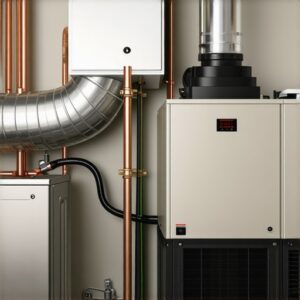
Don’t let a Sales Tech tell you that you need a whole new $15,000 high-efficiency inverter because your bills are high. Start with the basics. Check your line set. If I’m on a job, I don’t just throw some tape on it. I use high-quality, closed-cell elastomeric foam. I seal the joints with Pookie (mastic) or specialized weather-resistant tape. If the lines are outdoors, they get a PVC or aluminum jacket. This isn’t ‘extra’ work; it’s the job. Proper insulation can improve system efficiency by as much as 10-15% without touching a single mechanical part. If you’re looking at a mini-split setup, this is even more critical because the line sets are often longer and more exposed. Whether it’s a routine heating service check or a full AC installation, the integrity of that copper line insulation is the difference between a system that lasts 20 years and one that dies at year seven.