The sound isn’t a mechanical failure. It isn’t the screech of a blower motor bearing or the rhythmic thumping of an imbalanced fan blade. It’s a rhythmic drip, drip, drip echoing from the attic or the mechanical closet. For a homeowner, that sound is the precursor to a five-figure insurance claim. For me, it’s usually the result of a ‘Sales Tech’ trying to push a full AC installation when all that was needed was a $40 safety device and a shot of nitrogen. I remember following one of these ‘comfort advisors’—a guy who spent more time polishing his shoes than checking static pressure—to a house in the humid suburbs where he’d quoted a retired schoolteacher $14,000 for a new system because of ‘catastrophic moisture failure.’ I crawled into that 130°F attic, found a bypassed float switch and a primary drain line choked with algae ‘snot,’ and had the unit running safely in twenty minutes for the cost of a service call. That’s the difference between a salesman and a technician who understands thermodynamic reality.
The Thermodynamics of the Sweat: Why Water Happens
In a humid climate, your air conditioner is a massive dehumidifier. We aren’t just moving ‘cold’ into the house; we are removing latent heat. As the refrigerant—the ‘juice’ or ‘gas’ as some old-timers call it—boils inside the evaporator coil at roughly 40°F to 45°F, it drops the surface temperature of the fins below the dew point of the return air. Moisture undergoes a phase change from vapor to liquid. On a standard 3-ton AC installation, that coil can pull several gallons of water out of the air every single hour.
“The removal of latent heat through condensation is as critical to human comfort as the reduction of sensible temperature.” – ASHRAE Fundamentals Handbook
That water has to go somewhere. It falls into the primary drain pan, exits through a 3/4-inch PVC pipe, and ideally, disappears into your home’s plumbing or a dedicated exterior drain. But physics is a cruel mistress. Gravity, surface tension, and biological growth (algae) are constantly conspiring to block that path. This is where the float switch—the unheralded hero of the HVAC world—steps in.
Anatomy of the Float Switch: The Reed and the Magnet
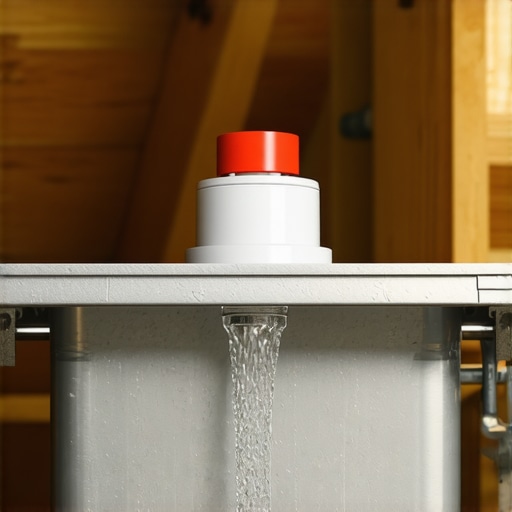
A float switch is a deceptively simple device. It’s usually a housing containing a magnetic float and a reed switch. When the water level in the secondary pan or the primary drain line rises, the float lifts. Once it reaches the trip point, it opens the 24V circuit (usually the ‘R’ or ‘Y’ wire) to your condenser. This kills the cooling cycle immediately. It doesn’t fix the clog, but it stops the production of condensate. No more cooling, no more water. It’s the difference between a minor inconvenience and a collapsed drywall ceiling. If you’re looking at a furnace repair during the winter, remember that high-efficiency condensing furnaces produce acidic condensate that requires the same level of vigilance. A cracked heat exchanger is the nightmare, but a secondary heat exchanger’s clogged drain can be just as disruptive to your system’s operation.
Mini-Splits and the Condensate Trap
When we talk about a mini-split, the drainage physics get even more precarious. These units often rely on tiny, internal condensate pumps to lift water to a gravity drain. If that pump fails or the small-diameter tubing kinks, the water goes straight down your wall behind the head unit. I’ve seen ‘tin knockers’ install these without a secondary safety, and six months later, the hardwood floors are buckled. A proper heating service or cooling check-up must include a ‘flood test’ of these lines. We pour water into the internal tray to ensure the float triggers before the water overflows the chassis.
The Math: Protection vs. Procrastination
Think of a float switch as an insurance policy with a 1,000% ROI. A secondary drain pan float switch costs a fraction of a new AC installation. Yet, I see them bypassed or missing on half the ‘budget’ installs I inspect. A tech gets lazy, the ‘Pookie’ (mastic) gets messy, and they just want to get off the roof. But without that switch, that ‘beer can cold’ suction line is just a ticking time bomb for your ceiling.
“The most expensive equipment in the world cannot overcome a bad duct system or a failure to manage condensate.” – Industry Axiom
When you call for a heating service or an AC tune-up, ask the tech to ‘trip the float.’ If the unit keeps running when the float is lifted, your safety system is dead. You’re flying without a parachute.
The Maintenance Reality: Beyond the Switch
A float switch is the last line of defense, but the primary goal is keeping the lines clear. We use ‘gallons’ of nitrogen to blow out the lines, or sometimes a shop vac on the exterior exit point. But the real secret is the ‘P-Trap.’ Without a properly vented trap, the negative pressure from the blower motor can actually hold the water in the pan, preventing it from draining while the fan is running. It only drains when the unit cycles off—leading to a slow-motion flood that many homeowners mistake for a ‘frozen coil’ or a refrigerant leak. Proper maintenance isn’t just about ‘topping off the gas’—it’s about ensuring the fluid dynamics of the system are as sound as the electrical ones.