The Physics Lesson: Why Airflow is King
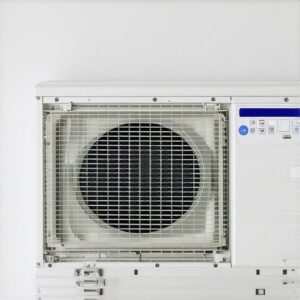
My old mentor, a man who had more refrigerant in his blood than blood, used to slam his manifold gauges onto the tailgate of his truck and yell at me, ‘You can’t cool what you can’t touch!’ He wasn’t talking about the customer’s wallet; he was talking about the molecular dance on the surface of the evaporator coil. In 30 years of crawling through spider-infested crawlspaces and baking on black rubber roofs, I’ve learned that the flashiest AC installation is nothing more than a giant paperweight if the airflow isn’t dialed in. Most techs today are just ‘parts changers.’ They see a code, they swap a board, and they leave. But the real magic—the stuff that actually lowers your utility bill and stops the ‘cold swamp’ feeling—happens in the binary logic of the dip switches on that outdoor inverter board.
“The most expensive equipment in the world cannot overcome a bad duct system or improper configuration.” – Industry Axiom
The Ghost in the Machine: What Are Dip Switches?
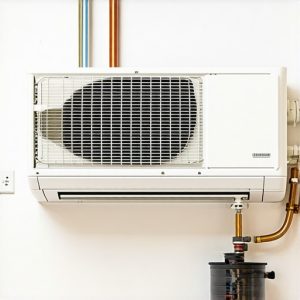
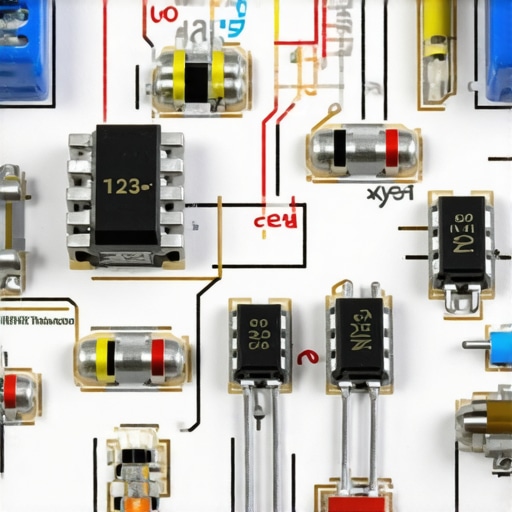
When we talk about mini-split technology, we are talking about sophisticated inverter-driven compressors that vary their speed like a dimmer switch rather than an on-off light. However, out of the box, these units are set to ‘factory defaults.’ These defaults are designed to work ‘okay’ everywhere but ‘perfectly’ nowhere. The dip switches are tiny toggles on the printed circuit board (PCB) that tell the unit’s brain how to behave in your specific climate. If you are in a Northern climate requiring a heating service that can handle a polar vortex, those switches are your best friend. If your tech didn’t flip them, you’re basically driving a Ferrari in first gear.
The Climate Logic: Fighting the Frost in the North
In regions like Chicago or the Northeast, the enemy isn’t just heat; it’s the ice. During a furnace repair call, I often see homeowners who switched to heat pumps but complain they aren’t warm enough. This is usually because the ‘Low Ambient Heating’ dip switch wasn’t engaged. In the cold, the unit needs to know when to enter a defrost cycle and how hard to push the compressor. If the dip switch for the heating curve is set incorrectly, the unit will cycle off just when you need it most. We’re talking about the difference between a cozy living room and a frozen suction line. Properly configured switches allow the unit to utilize its maximum Hz output at sub-zero temperatures, ensuring the latent heat is extracted even when the air feels like a freezer.
The Static Pressure Trap: Ducted vs. Ductless
For those opting for a concealed mini-split (the ducted kind), dip switches are even more critical. These units have ‘ESP’ or External Static Pressure settings. If your tin knocker didn’t size the ducts perfectly—and let’s be honest, they rarely do—the blower motor needs to be told to ramp up its RPM to overcome the resistance. Without flipping that specific switch, you’ll get ‘dead spots’ in the house, and your coil will eventually turn into a block of ice because the air can’t move fast enough to move the heat. This is where I see most AC installation projects fail. The tech leaves, the unit ‘blows cold,’ but three hours later, the ‘gas’ (refrigerant) isn’t evaporating correctly because of poor static pressure management.
“Designers shall use the procedures outlined in Manual J to ensure equipment capacity matches the building load under peak conditions.” – ACCA Manual J
The Regulatory Cliff: R-410A and the A2L Transition
We are currently standing on a cliff. The old ‘juice’ we’ve used for years, R-410A, is being phased out for A2L refrigerants like R-454B. These new systems are even more sensitive. They have sensors that can detect a leak and shut the system down to prevent a ‘sparky’ (electrician) from accidentally igniting the mildly flammable gas. If you think dip switches were important before, just wait. The new boards will require precise configuration to calibrate these leak sensors. Buying the cheapest unit you can find this year might leave you with a system that no one knows how to service in 2026. This is why a professional heating service is shifting from being about wrenches to being about software and logic.
[image placeholder]
The Forensic Diagnosis: Why Your Remote is Lying to You
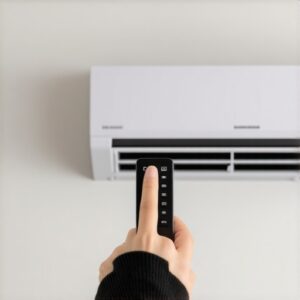
Have you ever set your mini-split to 72 degrees, but the room feels like 68? That’s not a broken unit; it’s a dip switch issue. Most mini-splits sense the temperature at the indoor unit, which is usually high on a wall where the air is warmer. There is a dip switch for ‘Temperature Compensation’ that tells the unit to offset that reading by 4 or 6 degrees. Without this, the unit ‘thinks’ it has reached the target temperature and throttles down the ‘juice’ before the room is actually comfortable. A real technician—not a ‘Sales Tech’ looking for a commission—will check the ‘Pookie’ (mastic) on your duct joints and then dive into the PCB to calibrate that offset. Precision is the difference between comfort and a high electric bill.
Maintenance vs. The Scam Tune-Up
I despise the ‘$29 Tune-Up’ specials. They are just a foot in the door for a salesman to tell a grandmother she needs a $15,000 system because her capacitor is slightly out of spec. Real furnace repair and AC maintenance involve checking the thermistors and ensuring the dip switch settings haven’t been reset by a power surge. It’s about cleaning the ‘beer can cold’ suction line and ensuring the condensate pump isn’t backed up with slime. If your tech doesn’t open the electrical panel of the outdoor unit to look at the PCB, they aren’t doing a maintenance; they’re doing a walk-through. Real HVAC work is messy, technical, and requires a deep understanding of thermodynamics, not just a clean shirt and a clipboard.