The Sound of a Sleeping Giant: Why Your Mini-Split Won’t Stop Popping
My old mentor used to scream, ‘You can’t cool what you can’t touch!’ at the top of his lungs while we were hunched over a steaming condenser in the middle of a swampy July afternoon. He wasn’t just being a cranky old man; he was hammering home the most fundamental rule of thermodynamics. This is why airflow matters more than horsepower. If the air isn’t moving across that evaporator coil correctly, you aren’t just losing efficiency—you’re inviting a symphony of mechanical groans and pops that will keep you awake at 3:00 AM. When a homeowner calls me complaining about a mini-split making a crackling sound at night, they usually think the unit is about to explode. In reality, it is often a battle between physics and the materials used to build the indoor head. Unlike a traditional furnace repair where a loud bang might mean a cracked heat exchanger, the crackle of a mini-split is usually a story of thermal expansion, latent heat, and sometimes, the inevitable buildup of ice.
The Forensic Diagnosis: Anatomy of a Nighttime Crackle
To understand the crackle, you have to look at the mechanical anatomy of the indoor unit. Inside that sleek plastic housing is a high-density evaporator coil, a blower wheel, and a complex network of refrigerant lines. When you’re running the unit in cooling mode, that coil is dropping well below the dew point of the room. This is the ‘Thermodynamic Zoom’ in action: the coil is busy removing latent heat—that’s the humidity—from the air. As the temperature of the coil drops from 75°F to 40°F in a matter of minutes, the materials around it react. The plastic chassis of the unit, which is often held against the wall by a metal mounting plate, begins to contract. Because plastic and metal have different coefficients of thermal expansion, they rub against each other. This creates a rhythmic popping or crackling sound. It’s not a malfunction; it’s the sound of the machine adjusting to the massive Delta-T you’re demanding from it.
“The most expensive equipment in the world cannot overcome a bad duct system, nor can it ignore the laws of physics regarding material expansion.” – Industry Axiom
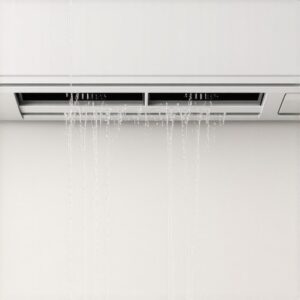
However, if the sound is more of a ‘crunch’ or a ‘ticking’ that speeds up, we’re looking at something else entirely. As a tech who has seen thousands of AC installation jobs, I can tell you that if the unit wasn’t leveled perfectly, the condensate—the water pulled from the air—won’t drain right. It sits in the pan. In high-humidity environments like the South, that water can actually freeze if the airflow is restricted. When the ice starts to form on the fins, it can expand and press against the plastic shroud or even the blower wheel. That’s when the crackling turns into a mechanical warning. You aren’t just hearing plastic; you’re hearing the ‘juice’ (refrigerant) struggling to boil off because the coil is becoming an igloo.
The South’s Hidden Enemy: Latent Heat and Short Cycling
In humid climates, the enemy is always latent heat. If your mini-split was oversized by a salesman who didn’t know a Manual J from a comic book, the unit will ‘short cycle.’ It hits the temperature setpoint so fast that it doesn’t have time to actually pull the moisture out of the air. You end up with a house that feels like a cold swamp. At night, when the sensible heat load (the sun’s heat) disappears, the unit cycles even more frequently. Every time the compressor kicks on and the expansion valve sends that cold gas into the indoor head, the rapid temperature swing triggers another round of crackling. This is why we push for variable-speed compressors; they ramp down instead of shutting off, keeping the coil at a steady temperature and silencing the plastic pops.
Repair vs. Replace: When the Crackle Means Trouble
I despise ‘Sales Techs’ who try to pivot a simple noise complaint into a $12,000 AC installation. If your unit is crackling, the first thing I check isn’t the compressor—it’s the mounting. Sometimes, just loosening the screws on the wall plate by a quarter turn gives the plastic enough room to breathe. Other times, I’ll use a little bit of ‘Pookie’ (mastic) or specialized silicone grease on the contact points between the chassis and the wall. It’s a $50 fix, not a new system. However, if the crackling is accompanied by the sour, acidic smell of a compressor burnout or the screech of a bearing in the blower motor, we have to talk about the ‘Regulatory Cliff.’ By 2025, the industry is moving away from R-410A to A2L refrigerants like R-454B. If your old unit is leaking ‘gas’ and the repair costs are climbing toward the $1,000 mark, you have to weigh that against the rising costs of the new, mildly flammable refrigerant systems that will require specialized sensors and training for the ‘Sparky’ and the tech alike.
“Proper airflow is the foundation of all HVAC performance; without it, thermodynamic efficiency is an impossibility.” – ASHRAE Standards
The Airflow Manifesto: Why Maintenance Trumps Magic
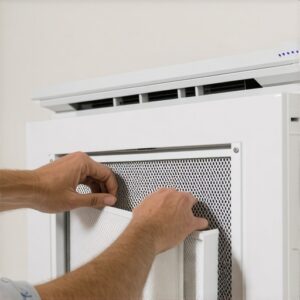
Comfort is physics, not magic. Most of the ‘ghosts in the machine’ that cause nighttime noises can be exorcised with a proper maintenance routine. If you haven’t cleaned your filters, the static pressure increases, the coil temperature drops too low, and the thermal expansion becomes more violent. I tell my customers that a mini-split is like a high-performance engine; it needs to breathe. If you’re hearing that crackle, check your filters first. If that doesn’t fix it, look at the drain line. A clogged drain line can cause water to back up and create gurgling sounds that mimic crackling. Don’t let a ‘tin knocker’ tell you that you need a whole new heating service or furnace repair when a simple deep clean of the blower wheel could solve the vibration and the noise. Maintenance is the difference between a system that lasts 20 years and one that dies in 7. [how-to-diagnose-hvac-noise] This is how you catch the small problems before they become catastrophic failures.