The desert doesn’t care about your comfort. When the mercury hits 115°F in the Mojave or the high plains of Nevada, your air conditioner isn’t just a luxury; it’s a life-support system. You wake up at 2 AM, not to the sound of the compressor humming, but to the rhythmic clicking of a contactor trying to engage a motor that’s too hot to touch. You walk to the vent, and instead of that crisp, 55-degree bite of conditioned air, you get a lukewarm breeze that feels like a tired dog panting on your face. You’ve lost your juice. You have a leak. Now, a Sales Tech—those guys who spend more time in sales seminars than in crawlspaces—will tell you that you need a $15,000 new AC installation the second their electronic sniffer chirps. They’re usually lying. I’ve spent thirty years hunting leaks, and I can tell you that your eyes, ears, and a bit of physics are better than a $500 tool that hasn’t been calibrated since the Bush administration.
The Sales Tech Scam: A Case of the $50 Flare Nut
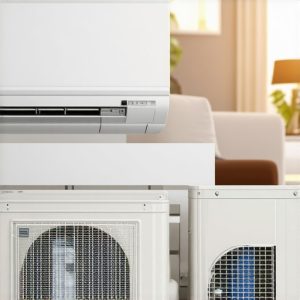
I remember a call last August in a suburb outside Phoenix. A homeowner, a retired sparky who knew his way around a multimeter, called me for a second opinion. A big-box HVAC company had sent a kid out who spent ten minutes at the outdoor unit and told the man his mini-split was ‘biochemically compromised’ (a term he made up) and needed a total replacement. The quote was $11,000. I walked up to the evaporator, pulled the plastic casing, and saw a tiny, shimmering bead of oil on the liquid line flare nut. I grabbed my wrenches, tightened the nut a quarter turn, evacuated the air, and weighed in a fresh charge. Total cost? A fraction of that quote. That ‘Sales Tech’ didn’t even look for the leak; he looked for a commission. He ignored the fundamental law of the trade: it’s a sealed system. If the gas is gone, there is a hole. Find the hole, and you find the truth.
“The most expensive equipment in the world cannot overcome a bad duct system, and the most sophisticated refrigerant cannot cool a home if it is escaping through a microscopic fracture.” – Industry Axiom
Thermodynamic Zooming: Why Leaks Kill Efficiency
To find a leak, you have to understand what the gas is doing. We aren’t just blowing cold air; we are moving heat. Inside your furnace repair or air handler setup, the evaporator coil acts as a heat sponge. The refrigerant enters as a low-pressure liquid, boiling at a temperature much lower than the air in your house. As it boils, it undergoes a phase change, absorbing latent heat. This is where the magic happens: the coil surface drops below the dew point, pulling moisture out of the air. If you have a leak, the pressure in the system drops. According to the P-T (Pressure-Temperature) chart, as pressure drops, the boiling point drops. This sounds like it would make the air colder, but it doesn’t. It causes the coil to drop below 32°F, freezing the condensate into a block of ice. That ice acts as an insulator, stopping the heat exchange. Eventually, the compressor—which relies on cool return gas to stay chilled—starts to cook its own windings. You aren’t just losing cooling; you are murdering your compressor.
The Forensic Diagnosis: Three Ways to Spot the Leak
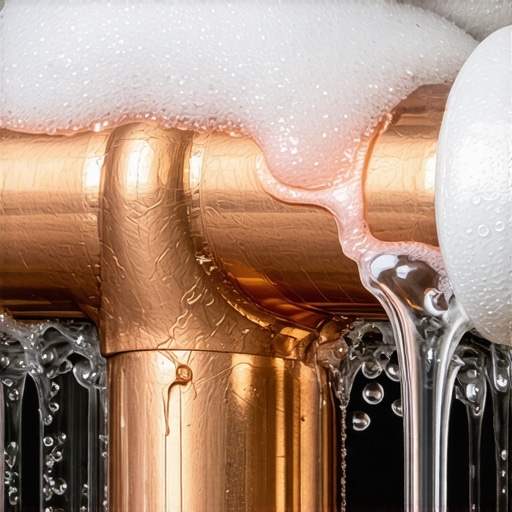
You don’t need a degree in nuclear physics to find a leak, but you do need to be a detective. Here is how I do it without the fancy gadgets. First, look for the oil. Refrigerant and oil are like twins; they go everywhere together. If you see a dark, greasy spot on your copper lines or at the base of the condenser coil, that isn’t just dirt. The refrigerant escaped as a gas, but it left the heavy oil behind. In the dry heat of the Southwest, these oil spots act like magnets for dust. If you see a ‘fuzzy’ patch on a joint or a bend, you’ve found your culprit. Second, use your ears. A high-pressure leak in a 410A system (which can run at over 400 PSI on a hot day) will hiss like a pissed-off rattlesnake. Third, the soap test. This is the Pookie of diagnostic tricks. Mix some high-viscosity dish soap with water and slather it over the joints, the schrader valves, and the service ports. If it starts blowing bubbles like a kid’s birthday party, you’ve located the breach. It works every time, and it costs about five cents.
“Refrigerant circuit integrity is paramount to maintaining the SEER2 ratings mandated by current federal standards.” – ASHRAE Standard 15
The 2025 Regulatory Cliff
We are currently facing the ‘Death of R-410A.’ As the EPA pushes us toward A2L refrigerants like R-454B, which are ‘mildly flammable,’ the cost of the old juice is skyrocketing. If your system has a leak now, ignoring it is a financial death sentence. A leak that costs $300 to top off today might cost $1,000 next year as the supply of R-410A is choked off. This is why heating service and cooling maintenance are more critical than ever. If your tin knocker didn’t install the lineset with proper vibration isolation, the constant humming of the compressor will eventually fatigue the copper, leading to a hairline fracture. This is especially true on mini-split systems where the flare connections are notorious for loosening over time due to thermal expansion and contraction.
The Math of Repair vs. Replace
When I find a leak in the evaporator coil of a ten-year-old unit, I have to be honest with the homeowner. Replacing a coil and recharging the system can run you $2,500. A new AC installation might be $8,000. If the system is an old R-22 ‘dinosaur,’ don’t throw good money after bad. R-22 is extinct. But if it’s a modern system and the leak is at a service valve or a flare nut, fix it. Don’t let a Sales Tech talk you into a new unit just because they’re too lazy to pick up a bottle of soap bubbles. Comfort is physics, not magic. It’s about maintaining that seal, ensuring the airflow isn’t restricted by a ‘choked’ filter, and keeping the pressures within the manufacturer’s spec. Anything else is just hot air.