Why Your HVAC Shop Stays Buried on Google Maps (Even with 5-Star Reviews)
It is the ultimate frustration for any HVAC business owner. You look at the Google Maps “3-Pack” for “AC repair near me,” and you see a competitor sitting at the top with a 4.2-star rating and only 15 reviews. Meanwhile, your shop – boasting 150+ glowing 5-star reviews and a decade of history – is nowhere to be found, buried on page two or three where no homeowner ever looks. This is known as the “Review Paradox.”
The hard truth is that while reviews are a vital trust signal for customers, they are only one small component of the “Prominence” pillar in Google’s local algorithm. If you are wondering why is my google business profile not ranking, you must understand that Google doesn’t just rank the “best” business; it ranks the most authoritative “Entity.” To dominate the local map pack, you need a sophisticated google business profile seo strategy that moves beyond simple review acquisition and into the realm of technical entity trust.
The Three Pillars of the Google Maps Algorithm
To understand why your ranking is stagnant, you have to look at the three pillars Google uses to determine local search results: Proximity, Relevance, and Prominence. By 2026, these factors have become even more nuanced, requiring a robust “Local SEO Foundation” to compete in high-density markets.
- Proximity: This is the distance between the searcher and your business. It is often the hardest signal to overcome. You might notice why your service trucks are in one town but your Google ranking is stuck in another; this happens because Google prioritizes the physical “centroid” of a city for many searches.
- Relevance: This is how well your local listing matches what someone is searching for. If someone searches for “ductless mini-split installation” and your profile only mentions “HVAC,” you lose.
- Prominence: This is how well-known your business is across the web. This is where your reviews, backlinks, and “Entity Trust” come into play.
Google won’t rank a business unless its algorithm can verify exactly who you are, what services you provide, and the specific geographic boundaries you serve. If there is any ambiguity in your data, Google will default to a competitor with a clearer digital footprint.
The “Entity Trust” Gap: Why Reviews Aren’t Enough
Google no longer views your HVAC shop as just a “business listing.” It views you as an Entity – a unique node in its massive Knowledge Graph. If your website, social media profiles, and local directories don’t all tell the same story, that entity trust breaks. This is often the primary reason for a google business profile optimization failure.
Research into local seo ranking factors shows that overall entity trust and local relevance often override high review counts. For example, if your Google Business Profile (GBP) says you are in one city, but your website’s footer lists a different address, or your Facebook page has an old phone number, Google’s “trust score” for your entity drops. It views the conflicting data as a risk to the user experience. To fix this, you need a comprehensive approach to google business profile seo that synchronizes every mention of your brand across the internet.
Category Sabotage: The “Invisible” HVAC Error
One of the most common reasons an HVAC shop stays buried is “Category Sabotage.” Google allows you to select one Primary Category and up to nine Secondary Categories. Many owners make the mistake of choosing a category that is too broad or, worse, completely wrong for their main revenue driver.
If you are an AC specialist but your primary category is set to “General Contractor,” you are competing against home remodelers and roofers instead of other HVAC shops. This is a classic case of why picking the wrong Google Business categories is hiding your HVAC shop. Your primary category carries the most weight in the algorithm. For most HVAC businesses, “HVAC Contractor” or “Air Conditioning Contractor” should be the primary choice, with specific services like “Heating Contractor” or “Air Conditioning Repair Service” as secondary choices. Misalignment here makes your profile irrelevant to the specific high-intent searches you want to win.
Visual Proof: Why Your Van Photos Outrank Your Logo
Most HVAC owners upload their logo and a stock photo of a happy family sitting in a cool house. This is a mistake. Google uses advanced Vision AI to analyze the images you upload to your profile. It can identify objects, text, and even locations within a photo.
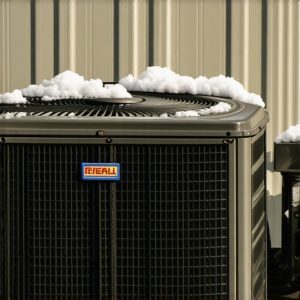
When you upload high-resolution photos of your branded service vans, your technicians in uniform, and actual equipment like furnaces or condensers you’ve installed, you are providing “Geo-relevance” and “Service-relevance” proof to the algorithm. This is why posting photos of your actual service vans boosts your ranking on Google Maps. Google’s AI “sees” the equipment and the branding, which confirms that you are a legitimate, active HVAC service provider in that specific area. Stock photos provide zero ranking signal; authentic, geotagged photos are a powerful google maps ranking service in their own right.
The Technical Foundation: NAP Consistency & Citations
NAP stands for Name, Address, and Phone number. In the world of gmb seo tools, NAP consistency is the bedrock of local authority. Google crawls thousands of directories (Yelp, YellowPages, Angie’s List) to see if the information matches your Google Business Profile.
There are two types of citations you need to manage:
- Structured Citations: These are your listings on formal business directories.
- Unstructured Citations: These are mentions of your business on local news sites, blogs, or neighborhood association pages.
Even a minor discrepancy – like “Suite 100” on Google and “#100” on Yelp – can cause issues. We’ve seen how a single typo in your HVAC citations hands your leads to the competition by confusing the algorithm. To rank higher, you must audit these citations and ensure they are 100% identical to your GBP. This builds the “Prominence” pillar by showing Google that your business is a well-established local authority.
Local SEO Schema: The “Hidden Code” for HVAC
While your Google Business Profile is external to your website, the two are deeply linked. One of the most effective google maps ranking tips is to implement “LocalBusiness” Schema markup on your website. This is a specific type of code that helps search engine bots understand your business data in a structured format.
Schema allows you to define your service area, your hours, and your specific services in a way that Google can ingest without guesswork. It acts as the hidden code that shows your HVAC services to homeowners in the next town over. By explicitly telling Google which zip codes you serve through your website’s code, you can expand your “ranking radius” beyond just the immediate vicinity of your office, helping you rank higher on google maps in the suburbs where the high-ticket installs are located.
Review Velocity vs. Review Count
If you have 500 reviews but you haven’t received a new one in three months, your profile will likely start to drop in the rankings. Google prioritizes Review Velocity – the steady, ongoing stream of new feedback. A competitor who gets three reviews a week will often outrank a shop that got 100 reviews two years ago and then stopped.
Furthermore, your engagement with these reviews is a direct ranking signal. Google’s own documentation mentions that responding to reviews (both positive and negative) improves your local visibility. When you respond, try to naturally include keywords like “AC repair in [City Name]” or “furnace installation.” This reinforces your relevance to both the user and the algorithm. If you are looking for a google maps ranking service, look for one that emphasizes a consistent review acquisition strategy rather than a one-time “blast.”
Using Local SEO Tools to Bridge the Gap
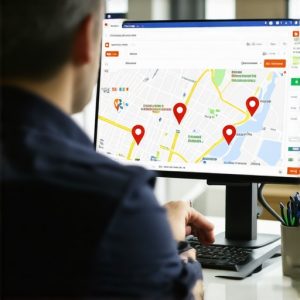
If you are tired of guessing why your rankings are fluctuating, it’s time to move toward a data-driven approach. Most HVAC owners look at their phone and see themselves at #1 because they are standing in their own office. But what does a homeowner five miles away see?
Using local seo tools or a google maps rank tracker allows you to see a grid-based view of your rankings across your entire service area. This data is essential for identifying “dead zones” where your entity trust isn’t strong enough. Once you identify these areas, you can target them with localized content and specific “unstructured” citations to boost your presence.
Stop Guessing and Start Dominating the 3-Pack
The days of simply “setting and forgetting” your Google Business Profile are over. In the competitive HVAC niche, your competitors are likely using advanced google business profile seo tactics to chip away at your market share. If you are stuck below competitors with worse reviews, it is a clear sign that your “Entity Trust” and technical optimization are lacking.
Don’t let your expertise go unnoticed because of a technicality in the algorithm. To truly win, you must align your categories, verify your entity through authentic visuals, clean up your citations, and implement the technical schema that tells Google exactly where you belong. Stop letting the competition take your leads. It’s time to audit your profile, use a professional rank google business profile tool, and claim your spot at the top of the map.