The Sound of a Looming Disaster
I’ve spent three decades dragging my bones through 140-degree attics and wrestling with rusted-out furnace repair jobs that would make a sane man quit. I know the sound of a failing blower motor better than I know my own kids’ voices. But right now, something is changing in this industry that has nothing to do with physics and everything to do with your wallet. We are currently standing at the edge of the ‘Regulatory Cliff’ of 2025 and 2026. If you’re looking at a quote for a new AC installation or a high-efficiency heating service, and it looks ‘too good to be true,’ you’re probably being set up for a massive headache. Specifically, your tech is likely omitting the one $200 component that stands between your family and a ‘mildly flammable’ situation.
The Narrative: The $12,000 ‘Lemon’ That Wasn’t
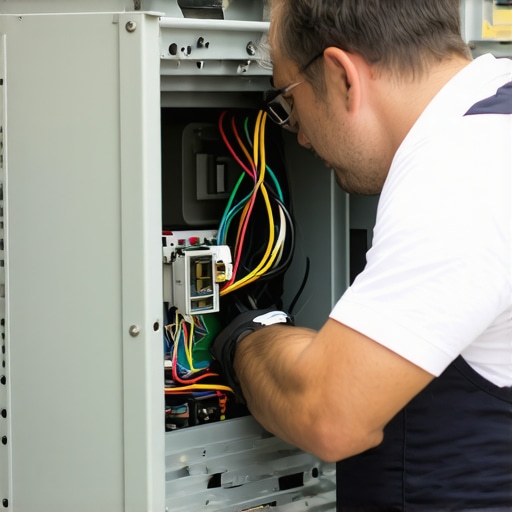
Last August, I followed a ‘Comfort Consultant’—which is just industry-speak for a Sales Tech in a clean polo shirt—into a split-level home. This guy had already quoted the homeowners $12,000 for a total system replacement. He told them their three-year-old unit was a ‘lemon’ because it kept shutting down on a mystery error code. He wanted to rip out a perfectly good evaporator coil and outdoor condenser. I walked in, smelled the air—no acidic tang of a burnout, just the stale scent of a house with no airflow. I opened the cabinet and found that the new A2L refrigerant sensor was tripped. Why? Not because of a leak, but because the original ‘tin knocker’ hadn’t sealed the return air drop with Pookie (mastic). The unit was sucking in garage fumes, triggering the safety sensor. A $200 sensor and a bucket of mastic saved that couple twelve grand. That Sales Tech wasn’t there to help; he was there to hit a quota. And in 2026, these sensors are going to be the new battlefield for scams.
“Refrigerant concentration limits shall be monitored by a detection system that initiates ventilation or shuts down the ignition source upon detection of a leak.” – ASHRAE Standard 15 & 34 (A2L Safety Protocols)
The Physics of the A2L Transition
For twenty years, we used R-410A. It was high-pressure, but it didn’t burn. Now, the EPA has shoved us into the era of A2L refrigerants like R-454B and R-32. These are ‘mildly flammable.’ To satisfy the lawyers and the safety boards, every new AC installation in 2026 requires a Refrigerant Detection System (RDS). This is a $200 sensor board that lives inside your indoor coil cabinet. If the ‘juice’ (refrigerant) leaks out, the sensor detects the concentration, shuts down the compressor, and forces the blower motor to high speed to dilute the gas. Thermodynamic Zooming: We aren’t just moving heat anymore; we are managing the density of flammable vapor. If your quote for 2026 doesn’t explicitly list the RDS or the updated control board required to communicate with it, your contractor is either ignorant or cutting corners. They are selling you a ‘dry’ unit or old stock that won’t be compliant or serviceable in three years.
The Latent Heat Trap: Why Your House Feels Like a Swamp
In humid climates, your AC has two jobs: Sensible cooling (dropping the temperature) and Latent cooling (removing water). Most AC installation guys just look at the ‘tonnage.’ They see a 2,500-square-foot house and slap in a 5-ton unit. That is a recipe for disaster with the new 2026 equipment. An oversized A2L system will ‘short cycle.’ It will drop the air temp so fast that the evaporator coil never stays below the dew point long enough to wring the moisture out of the air. You’ll be sitting in a 68-degree house feeling sticky and miserable because the humidity is still at 70%. This is where a mini-split often wins; their variable-speed inverters allow them to ‘sip’ the power and maintain a constant, low-temperature coil that pulls gallons of water out of your air every hour.
The Static Pressure Lie
I tell every ‘Sparky’ and apprentice I mentor: ‘You can’t cool what you can’t touch.’ Your heating service or AC system is only as good as the ductwork. If you put a high-efficiency 2026 blower motor on a duct system built in 1985, you’re going to strangle the machine. The static pressure will skyrocket, the motor will work twice as hard, and it will burn out in five years instead of fifteen. A proper quote must include a static pressure test. If they aren’t drilling holes in your plenum to check the ‘blood pressure’ of your system, they aren’t doing a real AC installation; they’re just swapping boxes.
“The most expensive equipment in the world cannot overcome a bad duct system.” – Industry Axiom
Mini-Splits and the 2026 Shift
If your furnace repair bill is creeping toward $1,500, it’s time to talk about the mini-split. These aren’t just for ‘man caves’ anymore. With the new refrigerant mandates, the manufacturing costs of traditional ducted systems are parity-climbing with multi-zone heat pumps. A mini-split doesn’t lose 20% of its efficiency through leaky ducts in a hot attic. It delivers the ‘gas’ directly to the room. In 2026, the $200 part you’ll be missing isn’t just a sensor; it’s the intelligence of a system that knows how to modulate. Don’t let a ‘tin knocker’ talk you into a standard ‘bang-bang’ (on/off) system when the world is moving toward inverter-driven precision. Check your quotes for the RDS sensor, demand a Manual J load calculation, and never trust a tech who doesn’t have a smear of Pookie on his work boots.