The Screaming Sentinel of the Attic: Decoding Your Furnace’s Death Rattle
You’re sitting in your living room, the first real cold snap of the 2026 season has just hit, and then you hear it. It’s not the gentle hum of a well-oiled machine; it’s a high-pitched, metallic shriek that sounds like a banshee trapped in your ductwork. In my thirty years of crawling through crawlspaces and dragging my tool bag across frozen rooftops, I’ve learned one thing: a furnace doesn’t scream for attention unless it’s about to give up the ghost. Most folks call me for a heating service call when the silence finally hits, but by then, the damage is done. This isn’t about ‘topping off the gas’—which, by the way, isn’t a thing in a sealed combustion system—this is about the mechanical anatomy of your home’s lungs. If your furnace is screeching, it’s fighting against physics, and physics always wins.
The ‘Comfort Consultant’ and the $18,000 Lie
Before we break down the sounds, I need to tell you about a call I took last November. I followed a ‘Sales Tech’—one of those guys who wears a crisp white shirt and carries a tablet but doesn’t have a speck of Pookie on his boots—who had just quoted a retired schoolteacher $18,000 for a full system replacement. He told her the ‘screeching’ was a sign of a cracked heat exchanger and that her family was in immediate danger of carbon monoxide poisoning. He was trying to push a high-efficiency AC installation and furnace combo before the new 2025 A2L refrigerant mandates drove prices even higher. I walked in, pulled the blower panel, and found a $0.50 piece of loose foil tape that had been sucked into the blower wheel. It was hitting the housing like a playing card in a bicycle spoke. Twenty minutes of actual labor vs. an $18,000 scam. That’s why I’m writing this. You need to know what you’re hearing before some Sparky-turned-salesman tries to retire on your dime.
“The most expensive equipment in the world cannot overcome a bad duct system, nor can it ignore the fundamental laws of rotational friction.” – Industry Axiom
1. The Inducer Motor: The High-Pitched Whine
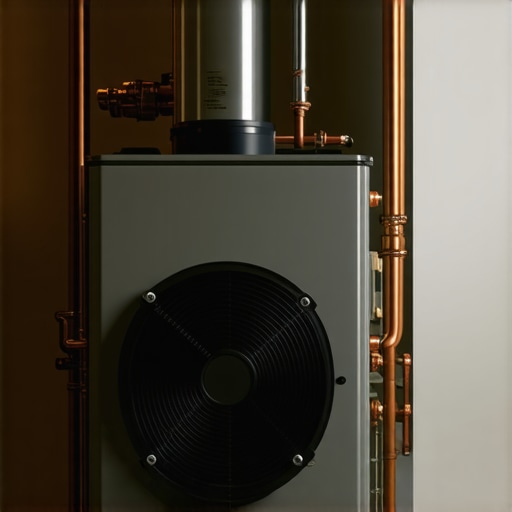
If the screeching happens the moment the thermostat clicks, before the actual ‘whoosh’ of the burners, you’re looking at the inducer motor. In a modern furnace, this small motor is responsible for clearing the heat exchanger of any residual gases and ensuring a safe draft for combustion. It’s the first thing to turn on. These motors use sealed bearings, but ‘sealed’ is a relative term when you’re dealing with the acidic condensate found in high-efficiency 90%+ AFUE furnaces. When those bearings dry out, they vibrate at a frequency that sounds like a jet engine spooling up. It’s a furnace repair staple. If you ignore it, the motor will eventually seize, the pressure switch won’t close, and you’ll be sitting in a 45-degree house wondering why the heating service company is booked three weeks out. [image_placeholder_1]
2. The Blower Wheel: The Thumping Screech
Now, if the noise starts a minute or two after the burners ignite, you’re dealing with the main blower—the ‘heart’ of the system. This is where the Airflow Architect in me gets frustrated. Most screeching here is caused by two things: a failing capacitor or a ‘squirrel cage’ (the blower wheel) that’s out of balance. If the wheel is coated in dust because you haven’t changed your filter since the last eclipse, it becomes heavy. This puts lateral stress on the motor bearings. You’ll hear a rhythmic screeching-thump. This is a mini-split or central air killer because it restricts airflow, causing the heat exchanger to overheat and ‘limit out.’ When the metal expands too fast due to low airflow, it groans. If it screeches, those bearings are metal-on-metal. This is where the ‘juice’ (refrigerant) doesn’t matter; it’s all about the cubic feet per minute (CFM) of air moving across that coil.
“Equipment shall be sized in accordance with ACCA Manual J, and airflow must be verified to prevent premature component failure.” – ASHRAE Standard 62.2
3. The Heat Exchanger ‘Pop’ and Squeal
This is the most dangerous one. In the North/Cold climate zones, we see furnaces running 2,000 hours a year. The heat exchanger is a series of metal tubes that expand and contract. If your ductwork was installed by a Tin Knocker who was in a hurry, you likely have high static pressure. This means the furnace is trying to push air through a straw. The metal gets too hot, and as it expands, it can rub against the frame, creating a structural screech. If this isn’t caught, the metal fatigues and cracks. That’s when the carbon monoxide stays in your house instead of going up the vent. It’s not just a furnace repair; it’s a life-safety issue. 2026 systems have more sensors than ever, but sensors fail. Your ears won’t. If the screech sounds like metal grinding against metal specifically during the heating cycle, shut it down and get a pro with a combustion analyzer out there.
The Math: Repair vs. Replace in the A2L Era
By 2026, the HVAC landscape has shifted. We are now fully into the era of ‘mildly flammable’ refrigerants like R-454B and R-32. If your 15-year-old furnace is screeching and it’s paired with an old R-410A AC unit, the math is changing. A blower motor replacement might run you $600 to $1,200. But if your AC installation is also on its last legs, you have to consider that new 2026 units require specialized leak sensors and different line sets. Don’t let a tech talk you into a ‘dry ship’ unit or a ‘hack job’ retrofit. If the screech is just a capacitor—a $20 part—don’t let them sell you the $15,000 ‘Ultimate Comfort Package.’ But if the heat exchanger is whistling Dixie, it’s time to look at a new mini-split or a high-efficiency furnace before the federal tax credits for the 25C energy efficiency program change again. Keep your coils clean, keep your filters fresh, and remember: if it sounds like a dying cat, it’s probably a dying bearing. Get it fixed before the ice builds up on the inside of your windows.