The 2026 Refrigerant Cliff: Why Your Old Central Air is a Financial Time Bomb
I followed a ‘Sales Tech’ last Tuesday into a split-level home in the suburbs. The homeowner, a retired shop teacher who knew his way around a wrench, had been told his ten-year-old R-410A system was ‘critically low on juice’ and needed a full $18,000 replacement. This ‘technician’—fresh out of a two-week sales seminar and wearing a pristine uniform that had never seen a crawlspace—didn’t even pull his gauges out. He just saw a ten-year-old tag and smelled a commission. I walked in, found a loose schrader core that was leaking ‘gas’ at a microscopic rate, tightened it, and the system hummed back to life. But here is the kicker: even though I saved him that day, the industry is changing so fast that by 2026, guys like him won’t just be lying about repairs; the very physics of the equipment will make traditional central AC installation a legacy choice for the desperate or the uninformed.
The Death of R-410A and the Rise of A2L Refrigerants
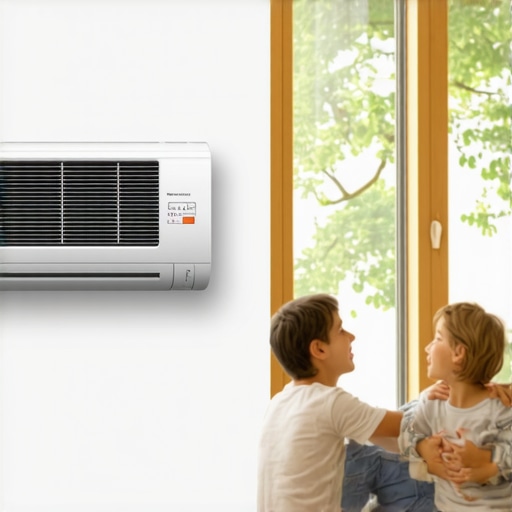
We are standing at the edge of the regulatory cliff. As of 2025 and 2026, the EPA has essentially mandated the phase-out of R-410A in favor of A2L refrigerants like R-454B. If you think your local ‘Sparky’ or ‘Tin Knocker’ is ready for this, you’re dreaming. These new refrigerants are ‘mildly flammable.’ That means the new central air units require leak sensors, specialized mitigation boards, and forced ventilation logic. It adds layers of complexity to a system that already struggles with basic efficiency. When you look at the cost of a 2026-compliant central furnace repair or a full AC installation, the price tag has jumped 30% just to account for the safety sensors. This is why homeowners are looking at the wall-mounted alternative. A mini-split doesn’t just bypass the ductwork; it bypasses the massive overhead of 2026 central air regulations.
“The most expensive equipment in the world cannot overcome a bad duct system.” – Industry Axiom
In the North where we deal with brutal winters, the ‘monster in the basement’—the gas furnace—is losing its crown. I’ve spent thirty years watching heat exchangers crack because of poor airflow. When a furnace fails, homeowners are asking for a heating service that doesn’t involve burning fossil fuels at 1,200 degrees Fahrenheit just to keep a bedroom at 70. This is where the physics of the mini-split takes over. In a traditional furnace, you have a massive blower motor trying to shove air through ‘Pookie’-covered tin boxes that are usually undersized. You lose 20-30% of your energy just moving the air. With a mini-split, the ‘Suction Line’ carries the refrigerant directly to the zone where it’s needed. There is no duct loss. It is pure thermodynamic efficiency.
Thermodynamic Zooming: How Latent Heat Changes Everything
Let’s talk about the ‘sticky’ feeling in a house. Most central air units are oversized by ‘Sales Techs’ who think bigger is better. An oversized unit ‘short cycles’—it slams on, drops the sensible temperature (the number on your wall) in ten minutes, and shuts off. But it never runs long enough to address the latent heat. To remove humidity, the evaporator coil must stay below the dew point of the room for an extended period. The moisture in the air hits those cold fins and turns into liquid, dripping into the condensate pan. If the unit shuts off too soon, that moisture just sits there, or worse, blows back into the house. 2026 homeowners are ditching central air because mini-splits use inverter-driven compressors. These units don’t just blast on and off; they ‘sip’ electricity, running at 20% capacity to constantly wring moisture out of the air. It turns a humid North-East summer into a crisp, dry environment without the ‘meat locker’ chill of a cycling central unit.
“Designers shall use the procedures outlined in Manual J to calculate the heating and cooling loads of the building.” – ACCA Standard 5
The Physics of the North: Heat Pumps vs. Furnaces
For decades, the knock on mini-split heating service was that they couldn’t handle the ‘Polar Vortex’ in places like Chicago or Boston. That’s old-school thinking. The 2026 generation of cold-climate heat pumps can pull heat out of -15°F air. Think about that: even at sub-zero temperatures, there is still thermal energy in the molecules outside. The mini-split uses a vapor injection circuit to compress the ‘gas’ to extreme pressures, creating heat that is then released inside. It’s more efficient than a furnace because you aren’t creating heat; you are moving it. When a homeowner faces a $4,000 furnace repair for a cracked heat exchanger, the jump to a multi-zone mini-split becomes the only logical move. You get individual room control, no more ‘hot spots’ on the second floor, and you stop paying to heat the guest room no one uses.
Why Static Pressure is the Silent Killer
If you’ve ever heard your vents ‘whistle’ or seen your furnace filters sucked inward like a collapsed lung, you have a static pressure problem. Most ‘Tin Knockers’ don’t use a manometer; they just guess. When static pressure is too high, the blower motor works twice as hard and dies twice as fast. It’s like trying to run a marathon while breathing through a cocktail straw. Central air is a slave to the ductwork. If the ducts are in the attic, you’re losing cooling to the 140°F rafters. If they’re in a damp crawlspace, you’re breathing whatever is growing down there. The mini-split eliminates the ‘straw’ entirely. By placing the evaporator directly in the living space, we eliminate the friction loss of the ductwork. It’s the difference between a garden hose with a dozen leaks and a direct bucket pour. The comfort is immediate, and the ‘Suction Line’ stays ‘beer can cold’ right until it enters the head unit, ensuring every BTU you pay for actually makes it into your lungs.
The Long-Term Play: Maintenance and Longevity
The scam ‘tune-up’ usually involves a kid with a spray bottle of coil cleaner and a pitch for a $500 capacitor. In 2026, real maintenance is about keeping the sensors clean and the filters washed. A mini-split is a precision instrument. It requires a technician who understands communication protocols and DC voltage, not just a guy with a pipe wrench. While the initial AC installation of a high-end mini-split system might mirror the cost of a high-efficiency central unit, the operational savings and the lack of ‘duct-leak’ related dust make it the superior choice. As we move away from R-410A, the simplicity of a self-contained mini-split head, which has its own thermal expansion valve and sensors, beats a Frankenstein central system any day of the week. Homeowners are finally realizing that they don’t need to cool the attic or the floor joists; they just need to cool themselves.