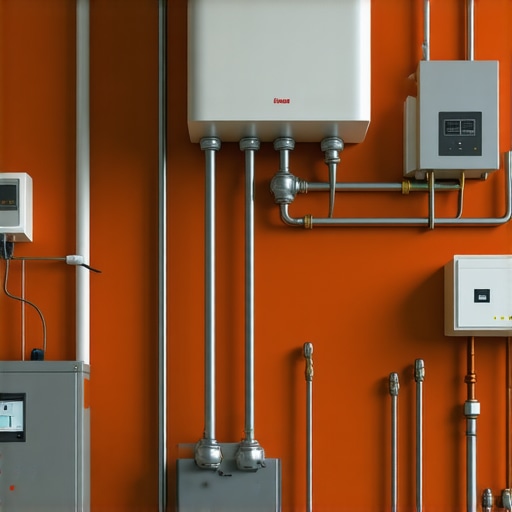
The High-Stakes Shift: Why Heating Costs Are Spiraling in 2026
If you are reading this while wearing a parka in your own living room because your furnace kicked the bucket, take a breath. The landscape of heating service changed overnight between 2025 and 2026. We aren’t just dealing with old-school furnace repair anymore; we are in the middle of a massive regulatory transition that most service companies are using as an excuse to pad their margins. I’ve spent three decades dragging tool bags through crawlspaces, and I can tell you that the smell of a scorched inducer motor is nothing compared to the stench of a dishonest quote. Many ‘technicians’ arriving at your door today are actually high-pressure salesmen in work boots. They don’t want to fix your AC installation or your heat pump; they want to sell you a shiny new box because they don’t understand the physics of the ones already in your basement.
“Equipment selection shall be based on the sensible and latent heat loads of the space, not on a rule of thumb based on square footage.” – ACCA Manual S
The Forensic Diagnosis: A $200 Trap That Cost One Homeowner $12,000
Last winter, during a week where the mercury didn’t crawl above 10°F, I followed a ‘comfort advisor’ from one of the big corporate shops to a home in the suburbs. The homeowner, a retired shop teacher who knew enough to be dangerous, was told his three-year-old high-efficiency furnace had a ‘cracked heat exchanger’ and was leaking carbon monoxide. The quote for a new AC installation and furnace was $12,000. When I arrived for a second opinion, I didn’t see a crack. I saw a clogged condensate trap. Because the furnace couldn’t drain the water it produced during the combustion process, the pressure switch kept the burners from firing. A five-minute cleaning of the drain line and the ‘broken’ system roared to life. This happens every single day. If a tech doesn’t pull out a combustion analyzer or a borescope to show you the crack, they are guessing with your checkbook.
Culprit 1: The R-454B and R-32 Transition ‘Tax’
We are now firmly in the era of A2L refrigerants. By 2026, the old R-410A systems are becoming the dinosaurs of the industry. These new gases, like R-454B and R-32, are ‘mildly flammable.’ While they are better for the planet, they require entirely new tools, sensors, and training. Many companies are upcharging for heating service by claiming the ‘new regulations’ make repairs impossible. This is a lie. While the juice (refrigerant) might cost more, the thermodynamic principles remain the same. The real cost culprit is the ‘leak search’ that isn’t a search at all, but a preamble to a replacement pitch. If your mini-split is low on gas, it has a leak. Period. It’s a sealed system. ‘Topping it off’ is like trying to fill a bucket with a hole in the bottom; you’re just throwing money into the atmosphere.
Culprit 2: The Static Pressure Nightmare
Most furnace repair calls aren’t actually furnace problems—they are ductwork problems. I call it ‘Asthma of the Air Handler.’ If your tin knocker (duct guy) didn’t size your return air drops correctly, your blower motor is working twice as hard to pull air through a straw. In 2026, with the high-efficiency ECM motors now mandatory, high static pressure will cook a motor control board faster than you can say ‘warranty.’ You’ll be told you need a new motor ($1,200), but unless you fix the restrictive ductwork or that ‘high-MERV’ filter that’s thick as a brick, the new motor will burn out in two years. Airflow is king. If the air can’t touch the heat exchanger, it can’t carry the heat to your bedroom. This is sensible heat transfer 101.
“The most expensive equipment in the world cannot overcome a bad duct system.” – Industry Axiom
Culprit 3: The ‘Smart’ Thermostat Incompatibility
We are seeing a massive surge in proprietary communicating systems. A standard heating service call can turn expensive when a ‘Sparky’ (electrician) or an untrained tech tries to wire a generic smart thermostat to a high-end communicating furnace. These systems don’t just turn ‘on’ and ‘off’; they talk to each other in data strings. When the communication fails, the system defaults to a lockout. I’ve seen homeowners charged for entire control boards when the only issue was a crossed data wire or a firmware glitch. Before you let someone replace a $800 board, ask them to check the DC voltage on the communication bus. If they look at you like you’re speaking Greek, get them out of your house.
Culprit 4: Overlooking the Latent Heat in Heat Pumps
In the North, we are seeing more dual-fuel setups and mini-split arrays. The hidden cost here is improper defrost cycles. If your outdoor unit looks like a block of ice during a polar vortex, your ‘backup heat’ (the expensive electric strips) is likely running 24/7. This isn’t usually a mechanical failure; it’s often an installation failure where the unit wasn’t elevated enough to allow melt-water to drain. A tech will try to sell you a new compressor, claiming the ‘gas’ is low, when in reality, the unit just needs to be lifted six inches off the pad. Thermodynamics don’t lie: if you can’t move heat from the outside air because the coil is encased in ice, your efficiency drops to zero.
How to Protect Your Wallet in 2026
Stop buying ‘Tune-Up’ specials for $29. No company can afford to send a truck, a tech, and insurance to your house for thirty bucks unless they plan on finding a $1,000 problem. Real maintenance involves checking the capacitance of the start components, cleaning the flame sensor (don’t use sandpaper, use a dollar bill or a scotch-brite pad), and checking the manifold pressure of the gas valve. If your tech doesn’t use a manometer and a multimeter, they aren’t a tech; they’re a part-changer. Insist on seeing the Pookie (mastic) on your duct joints. If they used silver tape, it’ll fail in five years. Real pros use mastic to seal the plenum. Don’t pay for 2026 technology with 1980s installation habits.
This article highlights some very important issues many homeowners overlook until it’s too late. I had a similar experience last year where I was quoted $8,000 for a refrigerant leak, only to discover after a second opinion that my system just needed a minor repair and recharging—total cost around $300. It’s frustrating how some service providers leverage the new regulations and complex systems like the A2L refrigerants or smart thermostats to upsell unnecessary replacements. I agree that ductwork is often the real culprit behind high energy bills; it’s surprising how many ignore proper sizing and sealing. In my case, sealing a few leaks and upgrading my filters made a noticeable difference. What are some practical ways to identify reputable technicians who focus on genuine diagnostics rather than quick replacements? It seems like insisting on detailed reports and asking for diagnostic readings can help protect against these inflated charges.