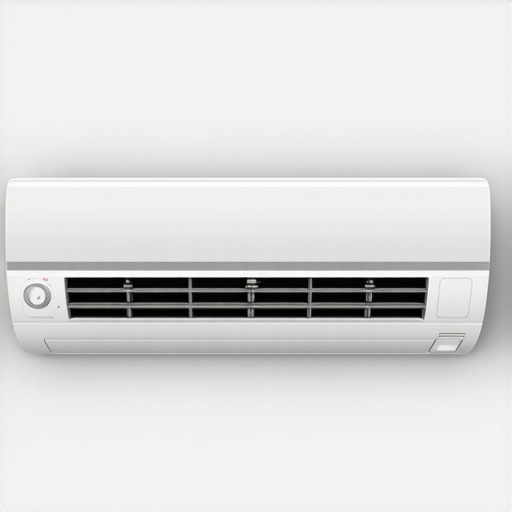
The Ghost in the Machine: Why Your Mini-Split Gave Up
There is a specific sound—or rather, a lack of it—that haunts every homeowner in the dead of a North Country winter. It is the eerie silence of a high-efficiency mini-split that has decided to stop moving heat. You look at the head unit, the lights are blinking some cryptic code, and the room is starting to lose that hard-won sensible heat. After thirty years of crawling through crawlspaces and dragging manifolds across icy roofs, I can tell you one thing for certain: your machine didn’t just ‘break.’ It was likely strangled. My old mentor used to scream at me until his face was the color of a manifold gauge: ‘You can’t cool what you can’t touch, and you can’t heat what you can’t breathe!’ This is the fundamental law of the Airflow Manifesto. If that refrigerant—the juice—can’t exchange its thermal load because of a physical barrier, your fancy 2026 inverter is nothing more than a very expensive wall ornament.
“Equipment shall be sized in accordance with ACCA Manual J or other approved heating and cooling calculation methodologies.” – International Residential Code (IRC)
By 2026, we are dealing with the full rollout of A2L refrigerants like R-454B. These systems are tighter, smarter, and more sensitive than the old R-22 ‘clunkers’ I started on. If you are experiencing a loss of power, we need to perform a forensic diagnosis. We aren’t just looking for a broken part; we are looking for a violation of physics. In the cold North, where the polar vortex likes to sit on your outdoor condenser like a fat cat, the physics of the defrost cycle becomes your primary battleground. If your heat pump is losing ‘oomph,’ it’s usually because the thermodynamic zooming isn’t happening—the evaporator coil isn’t dropping below the dew point correctly in summer, or the outdoor coil is failing to extract latent heat from the freezing air in winter.
Fix 1: The ‘Tin Knocker’ Logic – Cleansing the Lung
The most common reason a 2026-era mini-split loses its punch is the indoor blower wheel. Most folks change their filters (I hope), but they ignore the squirrel cage. When dust builds up on those tiny blades, it changes the aerodynamics. You get what we call ‘static pressure’ issues. The fan spins, but it isn’t moving the mass of air required to strip the heat off the coil. I’ve seen units where the owner complained of ‘no heating service capacity,’ only to find a 1/8-inch layer of organic ‘pelt’ on the blower. That layer acts as an insulator. If the air can’t touch the copper fins, the heat stays in the juice. Clean that wheel with a dedicated coil brush. If you don’t, you’re asking the compressor to work twice as hard for half the result, which leads to a premature furnace repair or, worse, a total compressor burnout that smells like a sour bucket of pennies.
Fix 2: The Inverter Brain Fog and Communication Lines
Unlike a standard AC installation where a simple 24v signal tells the unit to ‘go,’ a 2026 mini-split uses complex DC voltage pulses to communicate between the indoor and outdoor boards. If your power is dipping, check your data line (the 14/4 wire). I recently followed a ‘Sales Tech’ who told a homeowner they needed a $12,000 system replacement because of a ‘dead compressor.’ I opened the outdoor service panel and found that a field mouse had chewed just enough of the insulation on the communication wire to cause a signal interference. The ‘brain’ was getting garbled data and was ‘hunting’ for the right frequency, causing the compressor to ramp down. A bit of wire stripping and a proper terminal connection saved that customer five figures. Always ensure your connections are tight and free of oxidation; the electronics in these newer A2L systems are intolerant of high resistance.
Fix 3: The Condensate Dam and the Latent Heat Trap
In the humid shoulder seasons, your mini-split is a dehumidification factory. It pulls gallons of water out of the air. If the drain line is even slightly restricted—maybe some ‘bio-slime’ grew in the Pookie-sealed exit hole—the water backs up. Modern units have float switches that will throttle the compressor or shut it down entirely to prevent a flood. If your unit feels like it’s ‘losing power,’ check if the head unit is slightly tilted or if the drain is gurgling. If the latent heat (humidity) isn’t being carried away in the form of liquid water, the coil stays ‘wet’ and ‘heavy,’ preventing efficient sensible heat transfer. I’ve seen DIYers try to use tape to fix these leaks, but a real tin knocker knows that only proper gravity and clear lines keep the system breathing.
Fix 4: The ‘Sparky’ Check – Voltage Drop and Hard Starts
Even though mini-splits are variable speed, they still hate ‘dirty’ power. In 2026, our grids are more stressed than ever. If you’re at the end of a utility line, a voltage drop can cause the inverter to limit its output to protect the bridge rectifiers. This looks like ‘losing power’ to the homeowner. Check your disconnect. I’ve found charred lugs where a sparky didn’t torque the set screws to spec. High resistance at the disconnect means the unit isn’t getting the ‘gas’ it needs to run the high-speed scrolls.
“The most expensive equipment in the world cannot overcome a bad duct system—or a bad electrical feed.” – Industry Axiom
The Final Verdict: Repair or Replace?
If you’re staring at a $2,000 repair bill on a unit that’s already out of its 10-year parts warranty, it might be time to look at a new mini-split. But if it’s just a dirty coil, a clogged drain, or a loose wire, don’t let a ‘Sales Tech’ talk you into a whole new AC installation. Real heating service is about understanding the refrigeration cycle, not just reading a sales brochure. Remember: pressure, temperature, and airflow. If you have those three, you have comfort. Without them, you just have a box that makes noise. Stop looking for ‘magic’ fixes and start looking at the physics. If the suction line isn’t ‘beer can cold’ in the summer, or the discharge line isn’t ‘coffee pot hot’ in the winter, something in the thermodynamic loop is broken. Fix the loop, fix the problem.