The Death of the R-410A Era: Why 2026 Changes Everything
If you are sitting in a house that smells like a wet dog and a burnt toaster because your 15-year-old furnace finally gave up the ghost, you are facing a crossroads that didn’t exist five years ago. We are currently staring down the barrel of the most significant regulatory shift in the history of the trade. The ‘gas’—what most of you call Freon but we call the juice—is changing. By 2026, the R-410A systems that have been the industry standard are being replaced by A2L refrigerants like R-454B and R-32. This isn’t just a name change; it’s a total shift in how we handle AC installation and heating service.
“Equipment shall be sized in accordance with ACCA Manual J based on local design conditions; oversizing of equipment leads to excessive cycling and reduced latent heat removal.” – ACCA Manual S Standard
I remember my old mentor, a man we called ‘The Radiator’ because he could tell the temperature of a suction line just by looking at the shade of frost on the copper. He used to scream at me, ‘You can’t cool what you can’t touch!’ He wasn’t talking about the thermostat; he was talking about the molecules of air hitting that evaporator coil. This is why 90% of the furnace repair calls I go on in the dead of a Chicago winter end up being airflow problems, not mechanical failures. People think a bigger unit is better, but a bigger unit in a house with a choked-off return is just a high-priced way to freeze your own coil or crack a heat exchanger.
The Physics of the 2026 Mini-Split: Beyond the Marketing Fluff
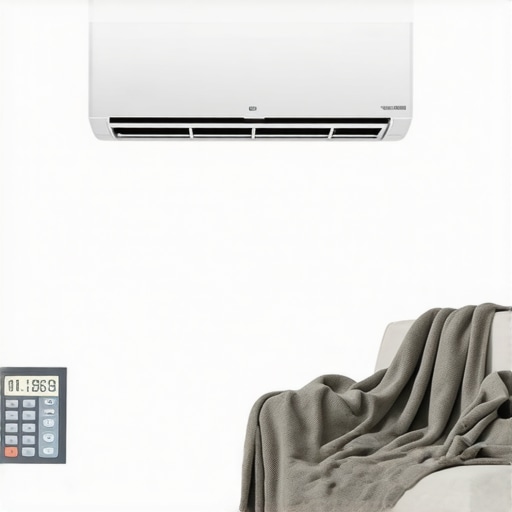
Let’s talk about mini-split technology through the lens of ‘Thermodynamic Zooming.’ In a traditional split system, you have a massive blower motor trying to shove air through a labyrinth of ductwork that was probably installed by a tin knocker who was in a hurry to get to lunch. By the time that air reaches your bedroom, it has lost half its velocity and picked up 5 degrees of heat from the attic. A ductless mini-split eliminates the ‘transport tax.’ We are moving the evaporator coil directly into the living space. When the refrigerant enters that coil, it’s not just ‘cold.’ It is a low-pressure liquid-vapor mix designed to drop the coil surface temperature below the dew point of your room. This triggers a phase change in the humidity of your air, turning latent heat (moisture) into sensible heat that we can actually move out of the house. In the North, where we deal with the ‘Polar Vortex’ effect, modern mini-splits use vapor injection to keep pulling heat out of the air even when it’s -15°F outside. That is not magic; it’s high-pressure physics.
The Cost Crisis: Why Waiting for a Repair Might Break the Bank
In 2026, a simple heating service call is going to look a lot different. Because the new A2L refrigerants are classified as ‘mildly flammable,’ every new AC installation now requires leak detection sensors and more robust venting. This has sent the ‘dead cost’ of equipment through the roof. If you are looking at a furnace repair that costs more than $1,200 on a unit that’s over 12 years old, you are throwing good money after bad. Why? Because the R-410A ‘juice’ you’ll need to recharge that old system is being phased out, and the price per pound is going to look like the price of fine bourbon. A mini-split might have a higher upfront sticker price, but you aren’t paying for a sparky to rewire your whole house, and you aren’t paying for a crew to crawl through your crawlspace with buckets of pookie (mastic) trying to seal up leaky ducts.
“The design and installation of the air distribution system shall be such that the static pressure at the equipment does not exceed the manufacturer’s rating.” – ASHRAE Standard 62.2
The ‘Cold Swamp’ Warning: Zoning vs. Horsepower
One thing those ‘Sales Techs’ won’t tell you while they are trying to sell you a 5-ton system is the danger of short-cycling. In our Northern climate, if you slap an oversized mini-split in a small room, it will hit the setpoint in six minutes and shut off. The air will be cold, but the humidity will stay, leaving you in a ‘cold swamp.’ True comfort comes from the inverter compressor—the heart of the mini-split—which can ramp down to 10% capacity. It’s like a car that can cruise at 2 mph without stalling. It keeps the air moving over the coil constantly, scrubbing the moisture out of the air and ensuring that your heating service doesn’t result in a moldy mess in the spring. When you compare a traditional AC installation to a multi-zone mini-split, you are comparing a sledgehammer to a scalpel. The scalpel is always more expensive, but it’s the only way to perform surgery on a high energy bill. Don’t let a tech talk you into a ‘quick fix’ with a hard-start kit on a dying compressor. In 2026, the only way to win is to stop fighting the physics of your home and start working with them.