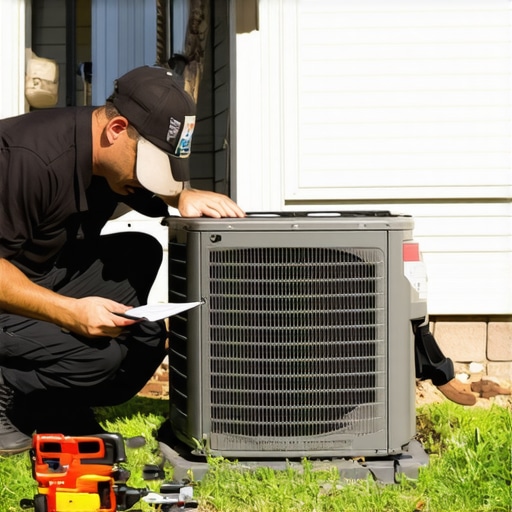
The Scent of Copper and Deception
The first thing you notice when a compressor is actually dying isn’t the silence; it’s the smell. It’s a sharp, acidic metallic odor that stings the nostrils—the smell of a motor winding that has literally cooked itself in its own oil. But last August, I walked into a mechanical room in a stucco house in the Mojave where the only thing that stank was the ‘diagnosis’ left behind by a tech from a big-box franchise. He’d told a family that their five-year-old system was ‘leaking lethal gas’ and needed a $19,000 replacement immediately. I put my gauges on it, checked the subcooling, and found a loose wire at the disconnect. It was a five-minute fix. That tech wasn’t a mechanic; he was a salesman with a manifold, and as we head toward the 2026 regulatory cliff, his kind is going to become a lot more common. If you’re looking at an AC installation or a heating service call, you need to know the physics, or you’re going to get taken for a ride.
The 2026 Regulatory Cliff: R-454B and the A2L Transition
We are currently standing at the edge of the biggest shift in HVAC history since the R-22 phase-out. By 2026, the R-410A refrigerant you’ve known for two decades is essentially history for new equipment. The industry is moving to A2L refrigerants—specifically R-454B and R-32. The ‘A2L’ designation means ‘mildly flammable.’ Don’t let a ‘Sales Tech’ scare you into thinking your house is a tinderbox, but do understand that these new systems require sensors and mitigation boards that didn’t exist three years ago. If someone tries to sell you a ‘blowout’ price on an old 410A unit in late 2025, realize you are buying a dinosaur. When that unit eventually leaks its juice, the cost to repair it will skyrocket because the gas will no longer be in production. You need to ask your installer if they are certified in A2L handling and if they are installing a system with integrated leak detection. If they look at you like you have three heads, show them the door.
“The most expensive equipment in the world cannot overcome a bad duct system.” – Industry Axiom
The Physics of the Desert: Sensible Heat vs. The Commission
In the Southwest, we deal primarily with sensible heat—the kind of heat you can measure with a thermometer. Unlike the humid South, our goal isn’t just dehumidification; it’s surviving 115°F ambient temperatures that push head pressures to the limit. A furnace repair in the winter is one thing, but an AC installation in a dry climate requires a deep understanding of the condenser’s ability to reject heat. If your installer doesn’t mention a ‘Hard Start Kit’ for a high-ambient environment, they don’t know the desert. These kits give the compressor a kick in the pants to get it moving against high pressure. Without it, your compressor’s life expectancy drops faster than a lead balloon. Furthermore, in dry climates, we often see mini-split systems becoming the preferred choice for zone control, but they are only as good as the vacuum pulled during installation. If a tech doesn’t use a micron gauge to ensure they’ve pulled the system down to 500 microns, moisture will remain in the lines, react with the oil, and create hydrofluoric acid. That acid eats your motor windings from the inside out.
How to Spot the ‘Sales Tech’ Scam
Here is the reality of the 2026 market: equipment prices have increased by 30% due to the new A2L safety requirements. This creates a vacuum where dishonest companies will try to ‘condemn’ systems that have years of life left. If a tech tells you your heat exchanger is cracked during a routine heating service, ask for a combustion analysis printout or a camera feed. If they say your compressor is ‘grounded,’ ask to see the continuity test on their multimeter. A real tech shows you the numbers; a ‘Sales Tech’ shows you a financing brochure. I’ve seen tin knockers do better diagnostics than some of these suit-and-tie ‘Comfort Consultants.’ If the person in your house is wearing a clean white shirt and doesn’t have a speck of pookie (mastic) on their hands, be skeptical. A real HVAC veteran has calluses and knows that a system is a symphony of static pressure, not a line item on a spreadsheet.
“Proper sizing and installation of high-efficiency equipment is critical to achieving the rated performance.” – ACCA Manual J
Static Pressure: The Silent System Killer
You can buy a 25-SEER2 variable-speed marvel, but if you hook it up to the undersized, 20-year-old ductwork in your attic, you’ve wasted your money. Airflow is king. In our dry climate, the evaporator coil needs to see a specific CFM (Cubic Feet per Minute) to prevent the system from ‘slugging’ the compressor with liquid refrigerant. If your AC installation quote doesn’t include a static pressure test of your existing ducts, you aren’t getting a professional job. High static pressure is the equivalent of trying to run a marathon while breathing through a cocktail straw. It makes the blower motor work harder, increases your power bill, and eventually leads to a premature furnace repair or motor failure. Don’t let them just ‘swap the box.’ Demand a Manual D duct calculation to ensure your home can actually handle the air the new unit wants to move.
The Verdict on 2026 Upgrades
When vetting your contractor, look for the ‘Sparky’ (electrician) and the lead installer. Ask them about the ‘suction line’—it should be ‘beer can cold’ on a standard orifice system, but on these new 2026 units with electronic expansion valves, they should be talking about ‘target superheat’ and ‘subcooling.’ If they don’t know those terms, they aren’t technicians; they are part-changers. Your goal for 2026 is to find a company that understands the transition to new refrigerants, respects the laws of thermodynamics, and doesn’t treat a mini-split install like it’s a simple window unit. Comfort isn’t a commodity you buy; it’s a result of physics applied correctly. Stop the upsell by becoming the most informed person in the room. If the tech can’t explain why your latent heat load requires a specific coil match, they shouldn’t be touching your heating service or cooling system.
This post really hits home about the importance of being an informed homeowner when it comes to HVAC work, especially with the upcoming 2026 refrigerant change. I remember a similar situation where a tech tried to sell me a new system without thoroughly checking the current ductwork or explaining the importance of static pressure testing. It turned out I just needed some duct sealing to improve efficiency. It’s clear that the right knowledge and questions can save hundreds or even thousands of dollars. I especially appreciate the emphasis on verifying certifications for handling new refrigerants like R-454B or R-32 — that’s a detail most homeowners wouldn’t think to ask about but is crucial for safety and legality. Have others found that pointing out the need for a Manual D duct calculation or micron gauge during installation actually changes the quality of work they receive? I’d love to hear some success stories or tips on how to best communicate these needs to your contractor.