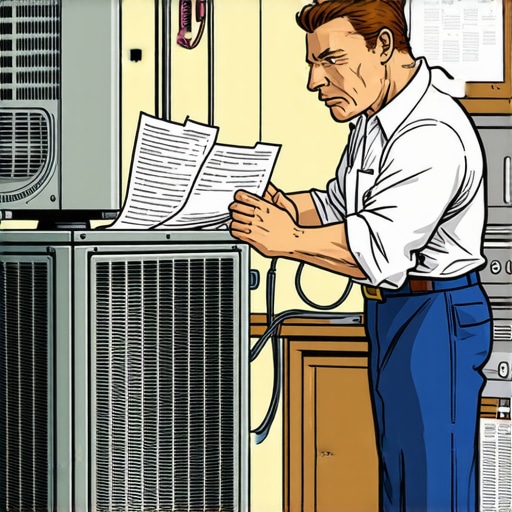
The 2026 HVAC Apocalypse: Why Your Quote is Probably a Lie
I’ve spent thirty years crawling through blown-in insulation and dragging my knuckles across jagged ductwork, and I’ve never seen a mess quite like the 2026 transition. We are currently standing on a regulatory cliff. If you are looking at a quote for a new AC installation or a heating service overhaul, you aren’t just buying a box of metal; you’re buying into a massive shift in chemical physics. The EPA has slammed the door on R-410A, and the industry is pivoting to A2L refrigerants like R-454B and R-32. These aren’t your father’s gasses. They are ‘mildly flammable,’ which means if your contractor doesn’t mention the word ‘sensor’ or ‘mitigation,’ you’re being hustled by a ‘Sales Tech’ looking for a quick commission.
The Narrative Matrix: The $22,000 ‘Liquidator’ Scam
I followed a ‘Sales Tech’ last week who quoted a young couple in a 1,500-square-foot ranch a staggering $22,000 for a ‘high-efficiency’ 5-ton system. The guy told them their old furnace repair was impossible because ‘parts don’t exist.’ Here is the reality: He was trying to dump an oversized, obsolete R-410A unit from his warehouse before the 2026 bans make it a paperweight. He didn’t perform a Manual J load calculation; he just looked at the old unit and guessed. I caught him because he didn’t even check the static pressure. He was ready to shove a 5-ton blower into a 3-ton duct system, which would have turned that evaporator coil into a block of ice within twenty minutes. I told that couple the truth: their ‘unrepairable’ furnace just needed a new inducer motor and a proper cleaning. I saved them twenty grand, and I’ll sleep better for it.
“The most expensive equipment in the world cannot overcome a bad duct system.” – Industry Axiom
Thermodynamic Zooming: The Latent Heat War
When we talk about AC installation, most people think about temperature. They’re wrong. As a tech, I think about Latent Heat. In a mixed-humid climate, your AC isn’t just a cooler; it’s a dehumidifier. The evaporator coil must drop below the dew point of the return air to wring out the moisture. This is where the ‘dodgy’ quotes fail. If a tech quotes you an oversized unit to ‘ensure you’re never hot,’ they are setting you up for a ‘cold swamp’ house. An oversized compressor hits the setpoint too fast (short cycling), meaning it never runs long enough to pull the humidity out of the air. You’ll be sitting in 70-degree air, but you’ll be sweating because the relative humidity is still 65%. A real pro will talk about variable-speed blowers and matching the sensible heat ratio to your specific climate’s needs.
The A2L Transition: The Regulatory Trap
By 2026, every new AC installation must utilize these new refrigerants. These systems require integrated leak detection sensors that shut the system down and activate the blower if a leak is detected. If your quote for a ‘2026-ready’ system doesn’t include the cost of these safety controls or specialized A2L-rated TXVs (Thermal Expansion Valves), the contractor is cutting corners. They’re likely planning to use old ‘gas’ (refrigerant) in a new system or ignoring the mandatory brazing standards. I’ve seen ‘Tin Knockers’ try to reuse old, undersized suction lines for these new high-pressure systems. That is a recipe for a compressor burnout that smells like a bucket of sour vinegar.
“Equipment shall be selected such that the total sensible capacity is not less than the calculated sensible heat gain.” – ACCA Manual S
The Physics of the ‘Tin Knocker’ and Static Pressure
Airflow is the lifeblood of thermodynamics. You can have a 25 SEER2 heat pump, but if your ‘Pookie’ (mastic) application is sloppy or your return air drop is restricted, that unit is a glorified fan. A dodgy quote ignores the ductwork entirely. A professional quote includes a Static Pressure Test. Think of it like blood pressure for your house. If the resistance is too high, the motor works harder, the ‘gas’ doesn’t evaporate correctly, and you’re throwing money into the utility company’s pockets. When looking at a mini-split or furnace repair quote, ask about the ‘External Static Pressure.’ If they look at you like you have three heads, show them the door.
The Heating Service Red Flags: Why the Heat Pump is Your 2026 Hero
In 2026, the push toward electrification means heat pumps are the gold standard. But don’t let a tech sell you a heat pump without discussing the ‘Balance Point.’ In colder climates, you need to know exactly when that heat pump hands the baton to the backup electric heat or the furnace. If they don’t mention a dual-fuel setup or the AFUE rating of your backup furnace, they aren’t designing a system; they’re just selling a box. A proper heating service analysis involves checking the flame rollout sensors and the heat exchanger’s integrity with a combustion analyzer, not just a flashlight and a ‘hunch.’
How to Spot the ‘Sparky’ Mistakes
Modern high-efficiency systems, especially those with variable-speed compressors, are sensitive to power quality. A dodgy quote won’t mention the electrical side. A real pro checks if your current ‘Sparky’ work can handle the new load. Do you need a surge protector? (With these new $1,000 control boards, yes, you do). Do you need a new disconnect? If these aren’t on the quote, expect ‘Change Order’ fees to hit you halfway through the job. Comfort isn’t magic; it’s physics. If the quote feels like a sales pitch instead of a mechanical blueprint, it’s dodgy. Demand the Manual J. Demand the static pressure readings. And never trust a man who doesn’t have ‘Pookie’ on his boots.{“@context”:”https://schema.org”,”@type”:”HowTo”,”name”:”How to Spot a Dodgy AC Quote”,”step”:[{“@type”:”HowToStep”,”text”:”Demand a Manual J Load Calculation to ensure the unit isn’t oversized.”},{“@type”:”HowToStep”,”text”:”Verify the refrigerant type; ensure 2026 quotes include A2L safety sensors.”},{“@type”:”HowToStep”,”text”:”Check for a Static Pressure test on your existing ductwork before installation.”}]}