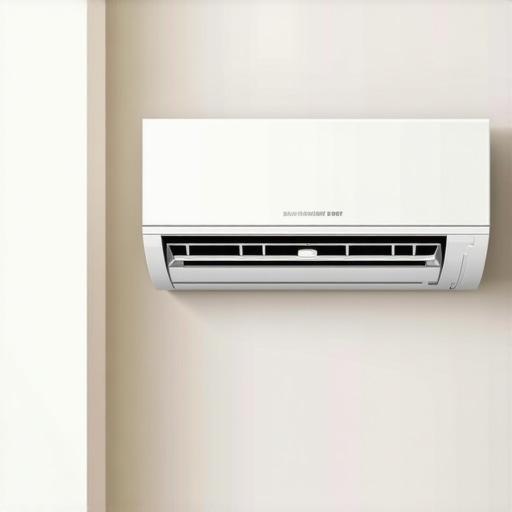
The 2026 Reality Check: Why Your Mini-Split Quote Just Jumped
If you are looking at a quote for a ductless mini-split installation in 2026 and your jaw just hit the floor, you aren’t alone. We are currently standing on the edge of a regulatory cliff that has fundamentally changed the HVAC landscape. The transition from R-410A to A2L refrigerants like R-454B and R-32 isn’t just a change in the juice we pump into these systems; it’s a total overhaul of the safety protocols and hardware requirements. As a tech who has spent three decades dragging gauges through crawlspaces, I’ve seen every ‘revolutionary’ shift since the R-22 phase-out, and this one is the most expensive yet.
The Physics Lesson: You Can’t Cool What You Can’t Touch
My old mentor used to scream, ‘You can’t cool what you can’t touch!’ whenever I complained about a stubborn unit. This is the fundamental law of thermodynamics. In a traditional furnace repair or standard AC installation, we rely on massive blowers to shove air through a labyrinth of dusty, leaky ductwork. But in a ductless project, we are bringing the heat exchange process directly into your living room. The mini-split’s evaporator coil is the front line of this battle. By 2026, the technology has reached a point where we are no longer just ‘moving air’; we are managing molecular heat transfer with surgical precision. If your installer doesn’t understand the difference between sensible heat (temperature) and latent heat (humidity), they aren’t an HVAC tech; they’re just a tin knocker with a drill.
“The most expensive equipment in the world cannot overcome a bad duct system, or in the case of ductless, a failure to account for proper building envelope infiltration.” – Industry Axiom
The A2L Transition: Why 2026 Pricing Is Different
By 2026, the EPA Section 608 regulations have fully pushed the industry into ‘mildly flammable’ refrigerants. This sounds scarier than it is, but it adds significant cost to your mini-split project. These systems now require integrated leak detection sensors and spark-proof electrical components. When you are pricing your project, you aren’t just paying for the compressor; you are paying for the advanced safety logic that ensures if a leak occurs, the system shuts down before a ‘sparky’ can accidentally cause a flash. This has added a 15-20% premium on equipment costs alone compared to the old R-410A units we were installing five years ago.
Breakdown of 2026 Mini-Split Costs
When you look at a quote for a mini-split, you need to see past the big number. A single-zone 12,000 BTU unit for a standard bedroom is going to run you between $4,500 and $7,000 fully installed in 2026. If you are going for a multi-zone setup—say a five-zone ‘whole house’ solution—you are looking at $18,000 to $28,000. Why the range? It’s the airflow architecture. A proper install requires a dedicated 240V circuit, a concrete pad or wall bracket for the condenser, and a meticulous vacuum pull on the line sets. If a tech tells you they can ‘blast it in’ in four hours, run. They aren’t pulling a vacuum to 500 microns; they’re leaving moisture in the lines that will turn your expensive gas into acid within three years.
The Latent Heat Trap: Humidity and Short Cycling
In humid climates, a mini-split is a double-edged sword. Because these units use inverter-driven compressors, they can ramp down to 20% capacity. This is great for efficiency, but if the unit is oversized, it will ‘short cycle.’ It will drop the air temperature (sensible heat) so fast that it never stays on long enough to pull the moisture (latent heat) out of the air. You end up with a room that is 68 degrees but feels like a damp cave. This leads to mold growth on the blower wheel—a common nightmare for homeowners who went with the cheapest heating service bid. In 2026, we use high-end psychrometric calculations to ensure the coil temperature stays below the dew point long enough to actually dry the air.
“Equipment capacity shall be determined based on the total load of the space, ensuring that both sensible and latent cooling requirements are met to maintain indoor air quality.” – ACCA Manual J Section 3
The Hidden Costs: Line Sets and ‘Pookie’
One of the biggest variables in your 2026 project is the distance between the indoor head and the outdoor unit. Copper prices haven’t exactly dropped, and the ‘line set’ is more than just a pipe. It needs to be insulated with high-grade closed-cell foam to prevent condensation inside your walls. We also use pookie (mastic) and specialized sealants for every wall penetration. If a tech uses cheap tape instead of proper sealing, your AC installation becomes an invitation for rodents and energy loss. Always ask if the quote includes a protective ‘Slimduct’ or line hide; otherwise, you’ll have ugly black hoses hanging off your house like an octopus.
Repair vs. Replace: When to Call the Furnace Repair Specialist
If you have an existing system and are debating a mini-split upgrade, consider the ‘2026 Rule of 50.’ If the furnace repair costs more than 50% of the value of the unit and the system is over 12 years old, pull the plug. Old R-22 and R-410A systems are becoming ‘financial black holes’ because the juice is so expensive due to production caps. Upgrading to a modern heat pump mini-split often pays for itself in five years through lower utility bills, especially with the 2026 federal tax credits for high-efficiency heat pumps.
Final Verdict on 2026 Project Pricing
Don’t fall for the ‘Sales Tech’ who walks in with a tablet and a shiny suit, promising a ‘same-day deal.’ A real professional will spend an hour measuring your windows, checking your insulation, and calculating your static pressure needs. In 2026, you are buying a piece of power electronics that happens to move heat. Treat it like a long-term investment. Pay for the expertise of a technician who knows why ‘beer can cold’ is a lazy man’s measurement and who treats your home’s airflow like the delicate science it is. Your comfort depends on it.“,