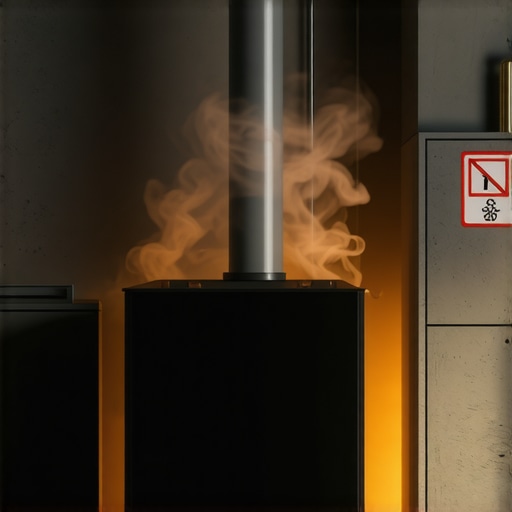
You wake up at 3 AM in the middle of a November cold snap, and there it is: that acrid, chemical stench that pricks the back of your throat. It’s not the dusty smell of a first-run furnace; it’s the unmistakable scent of melting insulation. As a tech who’s spent thirty years crawling through spider-infested crawlspaces and diagnosing cracked heat exchangers, I can tell you exactly what’s happening—and it usually isn’t what the ‘Sales Tech’ from the big-box outfit will tell you. Last winter, I followed a guy they called ‘Billy the Closer.’ He’d visited a homeowner in a drafty colonial who complained of this exact burning plastic smell. Billy told her the entire secondary heat exchanger was ‘compromised’ and quoted her $14,000 for a full system replacement including a new AC installation. I walked in, pulled the blower door, and found a $12 terminal block that had vibrated loose and was arcing against the cabinet. Ten minutes of work and a new connector saved her a fortune. That’s the difference between a salesman and a mechanic.
The Forensic Anatomy of the 2026 Thermal Event
When you smell burning plastic, your furnace isn’t just ‘getting old.’ You are witnessing a failure of components designed to handle high-voltage electricity or intense sensible heat. In the 2026 models, we are seeing more complex control boards and integrated sensors due to the A2L refrigerant transition in split systems, which changes how even the furnace side of the house operates. If the airflow—the absolute king of HVAC—is restricted, the internal temperatures of your cabinet will spike far beyond the design specs.
“The most expensive equipment in the world cannot overcome a bad duct system.” – Industry Axiom
1. The Blower Motor Capacitor & Stator Meltdown
The most common culprit for a plastic smell is the blower motor itself. If you have a PSC motor, that run capacitor is filled with a dielectric oil and encased in plastic or thin metal. When it fails, it can leak or overheat the motor windings. As the copper windings lose their varnish—that’s the ‘juice’ that keeps them insulated—they begin to short. This creates a specific, sour plastic smell. If your furnace repair tech isn’t checking the microfarads on that cap, he’s just guessing. We call it ‘Thermodynamic Zooming’: as the motor works harder to overcome a dirty filter, the amperage draws more heat, the heat melts the varnish, and the smell enters your ductwork via the supply plenum.
2. High-Resistance Connections (The ‘Sparky’s’ Nightmare)
Electricity is lazy; it wants the easiest path. Over time, the vibration of the inducer motor or the blower can loosen the wire nuts or the spade connectors on the control board. A loose connection creates resistance. Resistance creates heat. This isn’t the heat of a flame; it’s the heat of electrons struggling to jump a gap. It will melt the plastic molex connectors right off the board. If you see ‘pookie’ (mastic) dripped onto a wire near the heat exchanger, it can also off-gas, but a true electrical melt has a sharp, ozone-heavy bite to it.
“Standard 62.1-2022 defines acceptable indoor air quality as air in which there are no known contaminants at harmful concentrations.” – ASHRAE Standards
3. The 2026 Limit Switch Failure
Your furnace has a ‘brain’ called the High Limit Switch. Its job is to shut down the gas valve if the heat exchanger gets too hot. However, if your heating service has been neglected and the blower is failing, that switch might ‘cycle’ dozens of times a day. Eventually, the plastic housing of the switch itself can begin to degrade and char. This is a massive red flag. It means your furnace is ‘short cycling’ on a safety limit. This often happens when people close off too many vents in a misguided attempt to save money, which kills the static pressure and chokes the system. Never close more than 20% of your registers; your furnace needs to breathe just as much as you do.
4. Foreign Objects in the Heat Exchanger
I’ve seen everything from plastic army men to lost TV remotes dropped down floor registers by curious toddlers. When the furnace kicks on, these items slide down toward the heat exchanger. As the metal plates expand—a process of sensible heat transfer—they pin the plastic against the 1,000-degree surface. This doesn’t just smell bad; it releases toxic fumes. If you’ve recently had a mini-split installed and the ‘tin knocker’ (duct guy) left a roll of tape inside the return air drop, that tape will eventually migrate to the blower and start to cook.
The Math of Repair vs. Replace
In 2026, the cost of equipment is higher than ever due to new EPA mandates and the shift toward more efficient, inverter-driven blowers. If your furnace is under 12 years old and the smell is a localized electrical melt, a $400 repair is a no-brainer. But if that smell is accompanied by a ‘rollout’ of the flame or a cracked heat exchanger, you’re looking at a safety hazard. Don’t let a sales tech scare you, but don’t ignore the physics. If the ‘suction line’ on your AC is ‘beer can cold’ in the summer but your furnace smells like a tire fire in the winter, your airflow is the culprit. Check your filters, look for scorch marks on the control board, and always demand a static pressure test during your annual heating service. Anything less is just a glorified ‘spray and pray’ tune-up.