The Sound of a Cold House: The Death Rattle of a Silicon Carbide Igniter
You know the sound. It is 3:00 AM on a Tuesday in February, the wind is howling off the lake, and instead of the comforting roar of your furnace, you hear a rhythmic click… click… click… and then silence. No heat. Just the sound of your pipes starting to shiver. Most homeowners think the whole machine is shot. They envision a massive furnace repair bill or, worse, a complete replacement. But more often than not, the culprit is a piece of ceramic about the size of your thumb that has literally shaken itself to death because somebody didn’t know how to keep their hands to themselves. I followed a ‘comfort advisor’ last winter—one of those ‘Sales Techs’ who wears a tie and carries a clipboard instead of a meter. He had just finished telling an retired shop teacher that his ten-year-old high-efficiency furnace was a ‘ticking time bomb’ and quoted him $14,000 for a new AC installation and furnace combo. I walked in, looked at the Hot Surface Igniter (HSI), saw the tell-tale white chalky smudge of a thumbprint on the element, and swapped it out for forty bucks. The Sales Tech didn’t just misdiagnose it; he had likely killed it himself during his ‘inspection’ by touching the element. That is the reality of the trade today, and if you want to avoid being taken for a ride, you need to understand the brutal physics of your heating system.
The Forensic Anatomy of the Hot Surface Igniter
To understand why your igniter keeps snapping, you have to look at the molecular level. Your furnace doesn’t use a pilot light anymore. We haven’t used standing pilots since the days when people actually knew how to time a car’s engine. Modern units use a Hot Surface Igniter. Think of it like a lightbulb filament but on steroids. When the thermostat calls for heat, the control board sends 120 volts to this sliver of silicon carbide or silicon nitride. In seconds, it reaches temperatures exceeding 2,500°F. It has to be hot enough to instantly combust the gas-air mixture flowing out of the burners. It is a violent, thermal shock.
“Proper commissioning of gas-fired equipment requires verification of ignition safety timings and the integrity of the ignition source.” – ACCA Manual S
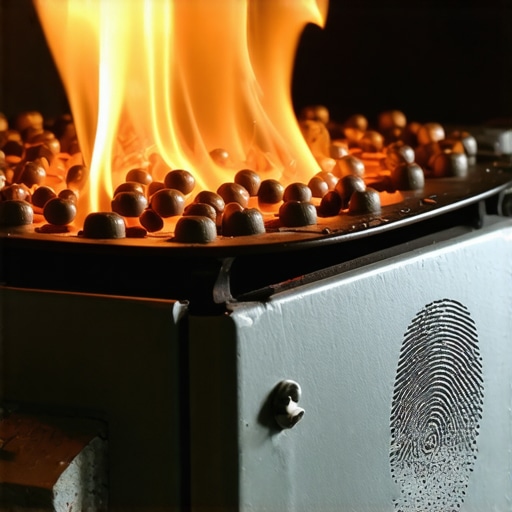
This brings us to the fingerprint problem. Your skin is covered in oils. When you touch that gray ceramic element, you leave a microscopic layer of grease behind. When the furnace kicks on and that element hits 2,500 degrees, that oil doesn’t just burn off—it creates a ‘hot spot.’ Because the oil has a different thermal conductivity than the silicon carbide, it causes that specific area of the igniter to expand at a different rate than the rest of the material. That internal stress leads to a microscopic fracture. Within a few cycles, that crack grows, the resistance spikes, and the element snap-cracks in half. You just turned a $40 part into a heating service emergency because you didn’t wear gloves.
Thermodynamic Zooming: Why Airflow Kills Igniters
While fingerprints are a common assassin, the silent killer is often poor ductwork design. My old mentor used to say that a furnace is just a big hair dryer with a dangerous habit. If your heating service tech isn’t checking your static pressure, they aren’t doing their job. If your ductwork is too small or your filter is a ‘high-MERV’ slab of cardboard that stops air like a brick wall, the heat inside the furnace cabinet skyrockets. We call this ‘limit tripping.’ The furnace gets too hot, the high-limit switch cuts the flame, the fan cools it down, and the cycle repeats. This is called short-cycling. Every time that furnace short-cycles, the igniter has to go through another 2,500-degree thermal shock. Most igniters are rated for a certain number of ‘hits.’ If you are hitting it six times an hour because your AC installation guy was a ‘tin knocker’ who didn’t understand airflow, you are going to burn through igniters every two seasons. It is not a bad part; it is a bad system.
“The design and installation of the air distribution system shall be in accordance with recognized industry standards.” – ASHRAE Standard 62.1
You can’t just keep throwing parts at a machine that is suffocating. You have to look at the static pressure, the ‘gas’ pressure, and the flame signal. If your furnace repair tech doesn’t pull out a manometer, he is just a parts changer.
The 2025 Regulatory Cliff: Why Your Next System Will Be Different
If you are tired of fixing an old furnace and are looking at a mini-split or a new central system, the landscape is shifting under your feet. We are entering the era of A2L refrigerants. The old R-410A ‘juice’ is being phased out because of its high Global Warming Potential. The new stuff, like R-454B, is ‘mildly flammable.’ This means your next AC installation is going to require leak sensors and specialized control boards that can shut the system down if a leak is detected. It is more complex, more expensive, and requires a tech who actually understands the ‘sparky’ side of the job. For those of us who have spent 30 years in attics, this is a massive change. It is why you can’t trust the low-bidder anymore. If they don’t know how to brazing with a nitrogen purge, they are going to contaminate your system with carbon scale, and that new, high-efficiency compressor will be dead in three years. Whether you are dealing with a snap-cracking igniter or a full system failure, the solution isn’t a bigger hammer—it’s better physics. Clean your coils, change your filters, and for the love of everything holy, don’t touch the igniter element with your bare hands.