
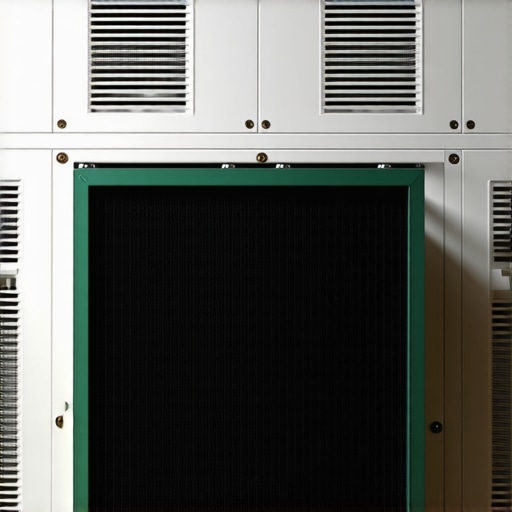
The Diagnostic Reality of the Black Filter
Pulling a furnace filter out of a return air drop and seeing it coated in a thick, midnight-black soot is enough to make any homeowner’s heart skip a beat. Most folks assume it’s just ‘extra dirty’ or that the Chicago winter has been particularly dusty. But after thirty years of crawling through crawlspaces and sweating out my salt levels in mechanical rooms, I can tell you that a black filter is a forensic signature. It’s a mechanical scream for help. In the trade, we don’t just see dirt; we see a breakdown in physics or a failure in combustion. If your filter looks like it spent a week in a coal mine, you aren’t just looking at a furnace repair issue; you’re looking at a potential safety hazard or a serious Indoor Air Quality (IAQ) crisis.
The Narrative: The $14,000 Candle Mistake
I remember a call I took last February during a brutal cold snap. I was following a ‘Sales Tech’—one of those guys who carries a tablet instead of a pipe wrench—who had just quoted a retired schoolteacher $14,000 for a total system replacement. He’d shown her a black filter and told her the heat exchanger was ‘disintegrating’ and leaking carbon monoxide. He’d effectively scared her out of her own living room. When I arrived for a second opinion, I didn’t start with a sales pitch. I started with a manometer and a flashlight. I pulled the burner assembly and inspected the heat exchanger cells with a borescope. They were pristine. No cracks, no secondary failures. Then, I walked into her dining room and saw three large, soot-stained jars of scented candles. She’d been burning them for six hours a day to ‘stay cozy’ during the freeze. Those candles were paraffin-based. When they burn, they release micro-fine soot that the return air duct, usually located near the floor, sucks right into the system. The filter was doing its job—catching the candle wax byproduct—not catching the remnants of a dying furnace. A $15 filter and a tip to switch to soy candles saved her a fortune. That’s the difference between a tech who understands thermodynamics and a guy looking for a commission.
Thermodynamic Zooming: The Physics of Soot
To understand why a filter turns black, we have to look at the molecular level. Your furnace is a heat exchange machine. In a standard gas-fired system, the burners ignite, creating a flame that heats up the metal tubes of the heat exchanger. The blower motor then pushes indoor air over the exterior of these tubes. This is ‘sensible heat’ transfer. However, if the combustion process is ‘oxygen-starved,’ the chemical reaction of burning methane (natural gas) becomes incomplete. Instead of producing just CO2, water vapor, and heat, it produces pure carbon—soot.
“The most expensive equipment in the world cannot overcome a bad duct system or a failure in combustion air requirements.” – Industry Axiom
When this happens inside a cracked heat exchanger, the ‘pressure differential’ between the combustion side and the air-stream side can shift. If the blower is running, it usually creates a higher pressure outside the tubes, often pushing air *into* the crack. But during the startup or shutdown cycles, that soot can migrate into the airstream. If you see black soot and you *don’t* burn candles, you are likely looking at ‘Flame Rollout’ or a cracked cell. This is where furnace repair becomes a life-saving necessity rather than an elective maintenance task.
The Three Main Culprits
1. Paraffin Wax Soot: As mentioned, this is the most common non-mechanical cause. In the North, where houses are sealed tight during the ‘Polar Vortex’ months, these particles have nowhere to go but the filter. The soot is greasy to the touch. 2. The ‘Gas Ghost’ (Incomplete Combustion): If your furnace’s burners are dirty or the gas valve is over-fired, the flame will turn yellow instead of a crisp, sharp blue. This creates carbon. If this is happening, you’re not just clogging a filter; you’re likely venting Carbon Monoxide into the home. 3. Ductwork Leaks (The ‘Pookie’ Factor): If your return air ducts are leaking in a basement or crawlspace, they can pull in ‘black mold’ spores or coal dust from old Michigan basements. I’ve seen tin knockers leave gaps in the return air drop that act like a vacuum cleaner for every nasty bit of debris under the house.
Static Pressure: The Silent Blower Killer
When that filter turns black, its ‘Permeability’ drops to near zero. In HVAC, airflow is king. If the air can’t pass through the filter, the static pressure in the return plenum skyrockets. This forces the blower motor to work twice as hard. In modern ECM (Electronically Commutated Motor) systems, the motor will actually ramp up its RPMs to compensate for the resistance. This leads to the ‘Screech of Death’—the sound of failing bearings. I’ve seen $800 motors burnt out because a homeowner ignored a $20 black filter for three months.
“Provisions shall be made to ensure that the air-distribution system does not interfere with the proper operation of combustion-burning appliances.” – ASHRAE Standard 62.2
The Mini-Split Alternative
In some cases, the old ductwork is so contaminated with years of soot and ‘Pookie’ (mastic) failure that a traditional furnace isn’t the best path forward. This is where mini-split technology is changing the game. By moving to a ductless system, you eliminate the ‘lung’ of the house that is circulating these particles. Each room gets its own filtered air handler. If you’re tired of heating service calls every time the wind blows soot through your old vents, a mini-split installation offers a clean-slate solution. It bypasses the ‘dirty duct’ syndrome entirely.
The Verdict: Repair or Replace?
If your filter is black, your first step is a manometer test. We measure the pressure drop across the coil and the filter. If the heat exchanger is compromised, no amount of cleaning will fix it. You’re looking at a furnace repair that likely involves a component that is no longer manufactured, or a full AC installation and furnace swap. However, if the ‘gas’ (refrigerant) levels are fine in the summer and the soot is just environmental, a deep cleaning of the ‘Sparky’ (electrical) components and a burner adjustment might buy you another five years. Don’t let a sales tech scare you. Use your senses. Does the mechanical room smell acidic? That’s a burnout. Is the soot oily? That’s candles. Is the soot dry and flaky? That’s your heat exchanger crying for help.