The Sound of a Dying Current: Why Your Home Just Went Dark
You hear it every afternoon. That heavy, metallic thunk from the outdoor unit, a momentary flicker of the lights, and then—silence. Not the peaceful silence of a cool home, but the oppressive, heavy silence of a failing HVAC system in the middle of a 115-degree Southwest heatwave. You check the panel, and sure enough, the 50-amp double-pole breaker is tripped. You flip it back, it holds for twenty minutes, and then pop. Do it too many times, and you aren’t just resetting a switch; you’re carbonizing the oil in your compressor and turning your expensive R-410A juice into a batch of corrosive acid.
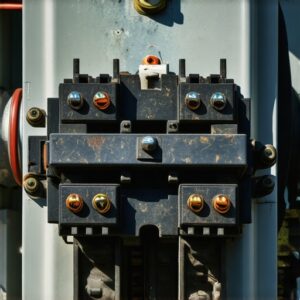
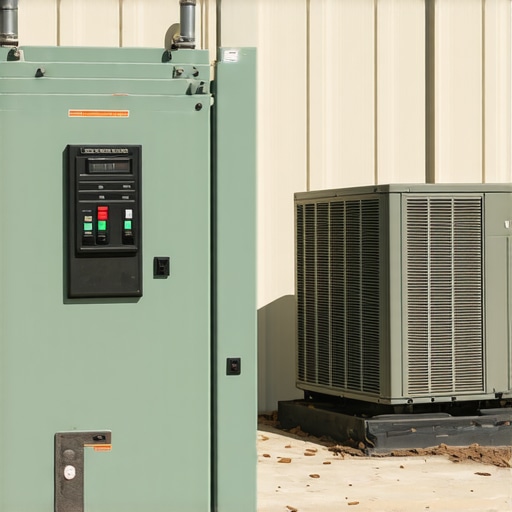
I remember following a ‘Sales Tech’ out to a job in the blistering outskirts of Scottsdale last July. This kid—fresh out of a three-week ‘academy’ and wearing a shirt so white it blinded you—had already quoted the homeowner $18,000 for a full AC installation. His diagnosis? ‘A grounded compressor.’ He hadn’t even pulled his gauges or an amp clamp. He just saw an old Rheem unit, saw the tripped breaker, and smelled a commission. I pushed him aside, pulled the disconnect, and opened the electrical cabinet. The ‘grounded compressor’ was actually a $40 contactor with a fried lizard wedged between the points, causing a dead short. Twenty minutes and a bit of cleaning later, the unit was humming at a perfect 12-amp draw. That’s the difference between a technician and a salesman. One understands physics; the other understands quotas.
The Thermodynamic Zoom: Why Amps Spike When Heat Rises
To understand why that breaker is tripping, you have to understand Locked Rotor Amps (LRA). When your thermostat calls for cooling, the compressor has to transition from a dead stop to 3,600 RPMs almost instantly. In that split second, the motor draws a massive surge of current—often five to six times its running load. This is where the physics of sensible heat rejection comes into play. If your outdoor coils are matted with dust and ‘monsoon’ dirt, the refrigerant can’t shed its heat. This causes the head pressure to skyrocket. High pressure equals high resistance. High resistance means the motor has to fight harder to turn, pulling more and more ‘gas’ until the breaker senses the thermal overload and snaps shut to prevent your house from burning down.
“The most expensive equipment in the world cannot overcome a bad duct system or neglected maintenance.” – Industry Axiom
In our dry, high-heat climate, we deal with Sensible Heat. Unlike the swampy South where they fight humidity (latent heat), we are fighting pure temperature. When the ambient air hitting that condenser is 110°F, the delta-T (temperature difference) is razor-thin. If that coil isn’t ‘beer can cold’ on the suction line because of a leak or a restriction, the compressor starts to bake. This is why heating service and cooling maintenance aren’t just suggestions; they are survival requirements for the machinery.
The Usual Suspects: From Capacitors to ‘Sparky’ Problems
If your breaker trips the second the compressor kicks in, you’re likely looking at a ‘Hard Start’ issue. Inside that cabinet sits a dual-run capacitor. Think of it as a localized battery that gives the motor the ‘kick’ it needs to get moving. When these swell up and fail—usually because the heat in the Southwest cooks the oil inside them—the compressor struggles to start, stays in that high-current LRA phase too long, and trips the breaker. If you’re lucky, a $150 furnace repair or AC tune-up involving a new capacitor and a Hard Start Kit (a capacitor/relay combo that boosts starting torque) will buy you another five years.
However, it could be the Sparky (electrician) factor. Sometimes the breaker itself has grown weak from years of heat cycling. Every time a breaker trips, the internal spring mechanism weakens. Or, even worse, the ‘tin knocker’ who installed the ducts didn’t account for static pressure, causing the blower motor to pull excessive amps, adding to the total load on the circuit. If you’ve recently added a mini-split to a garage or workshop on the same sub-panel, you might simply be over-taxing the total amperage available to the house.
“No person may open any appliance… unless they have been certified… and the equipment must meet strict evacuation standards to prevent atmospheric discharge.” – EPA Section 608 Regulations
The 2025 Regulatory Cliff: Repair vs. Replace
We are currently entering the ‘A2L Transition.’ The old R-410A refrigerant is being phased out for R-454B and R-32. This means that if your compressor is actually shorted to ground—meaning the internal windings have melted and are touching the copper shell—you’re facing a tough choice. Replacing a compressor in an old system is like putting a new engine in a 1998 Corolla. It might work, but the rest of the machine is tired. With the new 2025 regulations, AC installation costs are expected to jump significantly due to the new sensors and mildly flammable refrigerants required. If your tech finds ‘acid’ in the lines during a heating service or cooling check, the system is likely toast. Acid eats the varnish off new motor windings, meaning a new compressor will just fail again in six months.
The Airflow Manifesto: Prevention is Physics
Before you let a Sales Tech talk you into a $20,000 system because of a tripped breaker, check the basics. Is your filter black? If the evaporator coil can’t get air, the refrigerant returns to the compressor as a liquid (slugging), which is like trying to compress a rock. It will trip that breaker and destroy the valves in a heartbeat. Use Pookie (mastic) to seal your plenum leaks and ensure your return air is sized correctly. Comfort isn’t a setting on a Nest thermostat; it’s the result of proper static pressure and electrical integrity. If your breaker keeps tripping, stop flipping it. Call a veteran who knows how to use a Megohmmeter to test the winding insulation. Your wallet will thank you.