The Sound of a Dying Command Center
You’re sitting in your living room, the thermostat clicks, and instead of the reassuring roar of the outdoor unit, you hear a pathetic, rhythmic click-buzz-click. Or worse, the fan is spinning, but the air coming out of the vents is as lukewarm as a bowl of yesterday’s soup. Most homeowners immediately start sweating—not just from the heat, but from the fear of a $12,000 AC installation bill. But before you call a heating service company and get stuck with a ‘Sales Tech’ who’s more interested in his commission than your comfort, let’s talk about the hardest-working $30 part in your system: the contactor.
I’ve spent thirty years crawling through blown-in insulation and navigating crawlspaces that would make a claustrophobic monk weep. I’ve seen it all, and I can tell you this: about 40% of ‘dead’ units I encounter are actually just suffering from a contactor that’s been chewed up by electrical arcing or invaded by suicidal earwigs. It’s an electromagnetic switch, the bridge between your low-voltage thermostat and the high-voltage juice that runs your compressor. If that bridge is out, your house stays hot. Period.
The Narrative: The $15,000 Ant Hill
I remember a call last August in the middle of a record-breaking heatwave. Ambient temps were pushing 114°F, and the pavement was soft enough to leave footprints. I followed a ‘Comfort Consultant’—which is trade-speak for a salesman in a clean polo shirt—to a house where he’d already quoted the owner $15,000 for a full system replacement. He told her the compressor was ‘electrically compromised.’ That’s a fancy way of saying he didn’t know what was wrong or he wanted to hit his monthly quota. I pulled the side panel off that condenser, and you know what I found? A literal ant hill had been built inside the contactor. Every time the 24V coil tried to pull the points together, the bodies of a thousand ants acted as an insulator, preventing the 240V gas from reaching the compressor. I cleaned it out, filed the points, and the unit roared to life. She didn’t need a new system; she needed five minutes of actual diagnostic work. That’s the difference between a technician and a salesman.
Thermodynamic Zooming: Why the Points Matter
To understand why pitted points are a death sentence for your efficiency, you have to understand the physics of the arc. When your thermostat calls for cooling, it sends 24 volts to a copper coil inside the contactor. This creates an electromagnetic field that physically pulls down a metal bar, closing the circuit. In that split second before the points touch, electricity jumps the gap. This is an electrical arc, and it’s hot—hot enough to vaporize metal over time.
“The most expensive equipment in the world cannot overcome a bad duct system, but it also cannot survive a failing electrical interface.” – Industry Axiom
In a Southwest/Dry climate, where the AC installation works overtime against 110-degree sensible heat, these contactors might cycle fifty times a day. Every cycle creates a tiny crater on the silver-plated surface of the points. This is ‘pitting.’ Once the surface is pitted, the electrical resistance increases. Resistance creates heat. Heat creates more oxidation. Eventually, the points weld shut (the unit won’t stop running) or they get so carbon-crusted that they can’t pass enough current to start the compressor. When your compressor tries to start against high head pressure with restricted current, it draws massive amps, overheats, and eventually, you’re looking at a furnace repair or full system overhaul because you fried the windings.
The Forensic Diagnosis: How to Check the Points
Step 1: Kill the Power. Don’t be a hero. Pull the disconnect at the outdoor unit and turn off the breaker at the main panel. Sparky isn’t coming to save you if you take 240 volts to the chest. Verify with a multimeter that there is zero voltage across the L1 and L2 terminals.
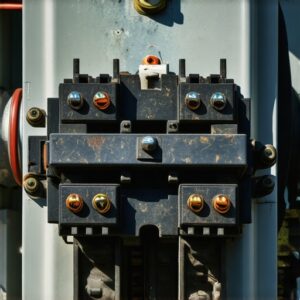
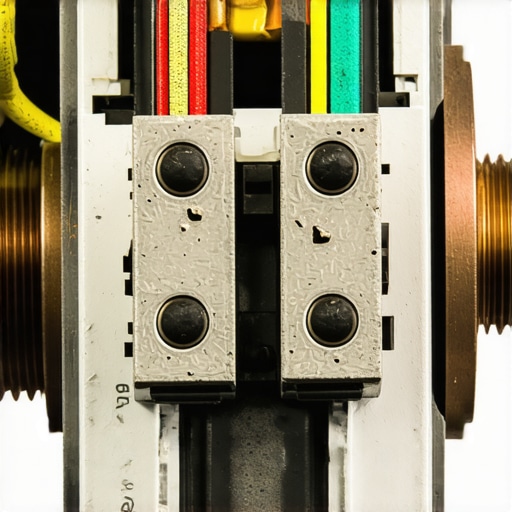
Step 2: Visual Inspection. Look at the contacts. Are they black and sooty? That’s carbon buildup. Do they look like the surface of the moon? That’s pitting. If the plastic housing around the points is melted or discolored, the contactor has been running hot for a long time. This is often a sign of loose wiring or a failing compressor drawing too much current.
Step 3: The Smell Test. A burnt contactor has a distinct, acrid smell—like ozone and burnt hair. If you open the panel and it smells like a small electrical fire just went out, you’ve found your culprit. While you’re in there, check the suction line; if the contactor was stuck closed, that line might be a block of ice, even in the desert heat.
Step 4: Resistance Check. Using your ohmmeter, check the resistance across the closed points. It should be near zero. If you’re seeing anything more than 0.2 or 0.3 ohms, those points are toast. They’re creating a bottleneck for the electricity, and your compressor is suffering for it.
The Mini-Split Exception
If you’re running a modern mini-split, you won’t find a traditional contactor. Those systems use inverter boards and solid-state relays. They are much more efficient but a lot harder for a DIYer to diagnose without a proprietary communication tool. However, for a traditional split system, the contactor remains the primary point of failure.
“Standard 608 of the EPA mandates that all technicians must prioritize the integrity of the sealed system, yet the electrical controls remain the most frequent source of operational failure.” – HVAC Regulatory Manual
The Physics of Arcing in High Humidity
In humid zones, the enemy isn’t just the heat; it’s the moisture. High humidity makes the air more conductive, which can actually increase the intensity of the arc when those points close. This leads to ‘chattering,’ where the contactor bounces rapidly. Chattering is the fastest way to kill a compressor. It’s like trying to start your car in fifth gear over and over again. If you hear a machine-gun sound coming from your AC unit, shut it off immediately and check that contactor coil voltage.
Repair vs. Replace: The $500 Threshold
I always tell my customers: if the repair is under $500 and the unit is under 12 years old, fix it. A contactor is a ‘wear item,’ much like the tires on your truck. You don’t buy a new truck because you hit a nail; you patch the tire. Replacing a contactor is a routine part of any real heating service or AC maintenance plan. If a tech tells you that burnt points mean you need a whole new R-454B system (the new ‘mildly flammable’ stuff they’re pushing in 2025), show them the door. They’re looking at your wallet, not your capacitor.
Conclusion: Airflow is King, but Electricity is the General
You can have the cleanest coils and the best tin knocker in the state can build you a perfect duct system with pookie-sealed joints, but if the electrical signal can’t bridge that 1/8th inch gap in your contactor, it’s all for naught. Keep your points clean, check them every spring, and don’t let a sales-hungry ‘tech’ talk you into a replacement when all you need is a fresh set of silver contacts. Comfort isn’t magic; it’s just physics, and usually, the physics of a simple switch.