The Ghost in the Machine: When the Handshake Fails
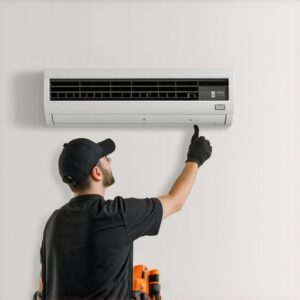
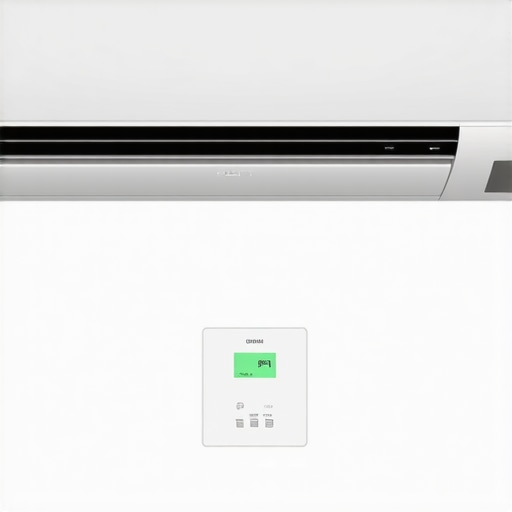
You press the button on that sleek wall-mounted controller, expecting the whisper of a fan and the sweet relief of conditioned air, but instead, you get nothing. Absolute silence. In thirty years of crawling through crawlspaces and sweating through shirts, I’ve seen more homeowners lose their minds over a non-responsive mini-split than almost any other HVAC failure. It’s not like an old-school furnace repair where you can just jump the R and W terminals and see the glow of an igniter. Mini-splits are essentially computers that happen to move heat. They rely on a digital ‘handshake’ between the user interface and the printed circuit board (PCB) inside the head unit. If that handshake is interrupted, you aren’t just hot; you’re locked out of the system’s logic.
The $12,000 Lie: A Tale of ‘Sales Tech’ Sabotage
I remember a call last November in a drafty Victorian outside of Boston. The homeowner was a retired schoolteacher who had been told by a ‘Sales Tech’ from one of those big-box franchises that her three-year-old high-efficiency mini-split was ‘totaled.’ He quoted her $12,000 for a full AC installation replacement because the wall controller wouldn’t talk to the indoor head. He told her the ‘compressor had an internal logic short.’ That’s a made-up term. I went in there, pulled the cover off the wall unit, and found that when the original installers—probably some green ‘tin knockers’—had hung the bracket, they’d pinched the communication wire. A five-cent wire nut and some electrical tape, and she was back in business. That’s the difference between a technician and a salesman in a branded polo. You don’t replace the car because the key fob battery died.
“The most expensive equipment in the world cannot overcome a bad duct system, but in the case of ductless, it cannot overcome a bad data loop.” – HVAC Field Manual
The Physics of the Data Loop (S1, S2, S3)
In a standard mini-split, you usually have four wires running from the outdoor condenser to the indoor head. S1 and S2 carry the high-voltage AC power. S3 is the ‘brain’ line. It carries a fluctuating DC voltage signal that tells the system what to do. If you have ‘electrical noise’ or interference—often caused by a sparky running the lines too close to a high-frequency light ballast—the communication gets garbled. This is Thermodynamic Zooming in action: the system isn’t just ‘on’ or ‘off.’ The inverter compressor modulates its hertz based on the resistance readings from the thermistors. If the wall controller can’t send the setpoint signal, the PCB stays in ‘standby’ because it doesn’t want to risk a slugging event where liquid juice (refrigerant) hits the compressor scrolls. It’s a fail-safe that looks like a failure.
Climate Zone Impact: The Polar Vortex Problem
In colder climates where these units are used for heating service, the wall controller might not respond because the system is in a ‘Defrost Hold.’ When the outdoor ambient temperature drops and the humidity is high, the outdoor coil frosts over. The system reverses the cycle to melt the ice. During this time, the indoor fan shuts off to prevent blowing cold air on you. If you keep hitting the controller, it might seem unresponsive, but it’s actually just protecting your comfort. However, if the thermistor—the little sensor that looks like a matchstick—is dirty or out of calibration, it sends the wrong resistance value to the board. The board thinks the coil is 120 degrees when it’s actually 30, and it won’t let the fan kick on. It’s a psychrometric logic error.
Diagnostic Checklist for the Frustrated Homeowner
Before you call for a furnace repair or a new AC installation, check the basics. Is the controller in ‘Auto’ mode? Never use ‘Auto.’ It causes the system to hunt between heating and cooling, leading to short-cycling. Set it to ‘Heat’ or ‘Cool’ specifically. Next, check the batteries. Even if the screen is on, the signal strength might be too weak to reach the infrared receiver. Finally, look at the LED lights on the indoor head. They usually blink in a sequence—that’s the unit ‘talking’ to you in Morse code. Three blinks might mean a serial communication error; five might mean a fan motor lock.
“Proper sizing and commissioning of heat pump systems are critical for maintaining the integrity of the vapor compression cycle under extreme ambient loads.” – ASHRAE Standard 15
The Reality of Maintenance
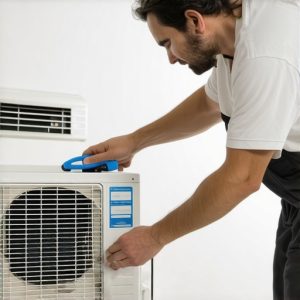
Most ‘unresponsive’ controllers are actually just the system screaming for a cleaning. If the indoor barrel fan is caked with dust, the motor draws more amps. The PCB senses this ‘over-current’ and shuts down the communication loop to prevent frying the motor. You don’t need a new system; you need a technician who knows how to use a multimeter and a pressure bag. Don’t let a salesman talk you into a $15,000 replacement when a deep clean and a wire tightening will give you another ten years of ‘beer can cold’ air. Comfort is physics, and physics doesn’t lie—only people do.