The Sound of Silence in a 110-Degree Garage
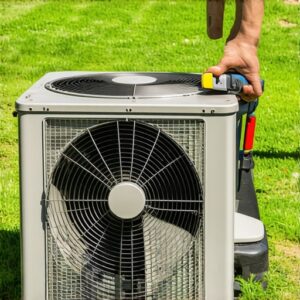
It starts with a frantic call. The homeowner is sweating, the dog is panting, and the thermostat is a liar. It says ‘Cool On,’ but the only thing happening outside is the pathetic drone of a condenser fan motor spinning while the heart of the system—the compressor—is dead silent. Most techs will roll up, see a ten-year-old box, and immediately start sharpening their pencils for a $12,000 AC installation quote. They’ll tell you the ‘compressor is grounded’ or ‘valves are shot.’ Most of the time, they are lying. Or worse, they’re just ignorant. I followed a guy last Tuesday—a ‘Sales Tech’ in a starched white shirt who didn’t have a single smudge of Pookie on his boots. He told a retired teacher she needed a full system replacement because her compressor had ‘suffered a terminal internal failure.’ I stepped in after he left. I didn’t need a new unit. I needed a wire stripper and five minutes.
“Equipment shall be sized according to the heating and cooling loads calculated in accordance with ACCA Manual J.” — ACCA Standard 5
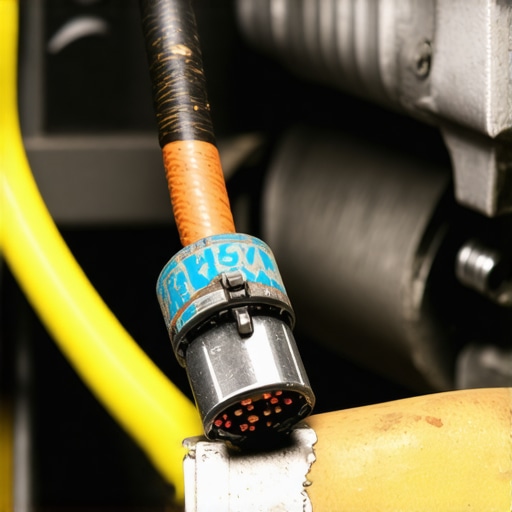
I opened the service panel and there it was: the smell of sour ozone and melted plastic. The ‘one wire’ that kills more systems than actual mechanical failure isn’t some complex sensor; it’s the common wire lead connecting the run capacitor to the compressor’s ‘C’ terminal. In the brutal heat of the Southwest, where the sensible heat load is high enough to bake bread on the sidewalk, these wires carry massive amperage. When a connection gets slightly loose, resistance climbs. Resistance creates heat. Heat melts the spade connector right off the compressor terminal. The ‘Sales Tech’ saw a burnt wire and saw a commission. I saw a $5 repair.
Thermodynamic Zooming: Why the Wire Fails
To understand why this wire sacrifices itself, you have to look at the physics of the refrigeration cycle. Your compressor is a vapor pump. It takes low-pressure juice (refrigerant) and squeezes it into a high-pressure, high-temperature gas. This process requires a massive amount of electrical energy, especially when the head pressure is spiking because the outdoor coils are choked with dust and dead cicadas. As the ambient temperature hits 115°F, the compressor has to work harder to reject heat. This increases the ‘Amp Draw.’ If that common wire is even slightly oxidized, it becomes a toaster filament. It glows red until the metal fatigues and snaps. Suddenly, the circuit is broken. No circuit, no cooling. It’s not a ‘dead compressor’; it’s a broken bridge.
The Anatomy of the Failure: Capacitor to Contactor
In a standard AC installation, the electrical path is a sequence of high-stakes handshakes. The Sparky brings the 240V to the disconnect, but from there, it’s all HVAC territory. You have the contactor—a magnetic switch that slams shut when the thermostat calls for cooling. Then you have the run capacitor, which provides the phase shift necessary to keep the motor spinning. The wire connecting these components to the compressor’s ‘Hermetic’ and ‘Common’ terminals is the lifeline. When we talk about furnace repair or heating service, we worry about cracked heat exchangers, but in the cooling world, it’s all about terminal integrity. If you see a wire that looks like a charred marshmallow at the compressor plug, you’ve found your culprit. We call this ‘terminal blowout,’ and if caught early, it’s a simple fix involving a terminal repair kit and some high-temp solder.
“The most expensive equipment in the world cannot overcome a bad duct system or poor electrical termination.” — Industry Axiom
Mini-Split vs. Central Air: The Wiring War
It is worth noting that a modern mini-split handles this differently. Those systems use DC inverters and communicate via shielded data lines. They don’t have a single ‘fat wire’ that carries the whole load in the same way an old-school 5-ton beast does. But for the 80% of homes running traditional split systems, that single 10-gauge wire is the primary point of failure. If your tech isn’t checking the ‘lug tightness’ during a heating service or AC tune-up, they aren’t doing their job. They’re just waiting for it to break so they can sell you a new furnace and coil.
The Math of Repair vs. Replace
Should you spend $500 on a hard-start kit and a terminal repair, or $10,000 on a new 16-SEER2 system? If your compressor is actually mechanically sound—meaning the windings aren’t shorted to ground and the suction line is still ‘beer can cold’ when it runs—you fix the wire. Don’t let a ‘Tin Knocker’ convince you that a burnt wire means the ‘acid has contaminated the system.’ That’s a scare tactic. Unless the compressor actually burned out internally (which smells like a literal bucket of battery acid and old gym socks), the juice is still clean. You clean the terminals, replace the wire, and verify that your static pressure isn’t so high that it’s causing the motor to overheat in the first place.