The Sound of a Dying Compressor: Why Your AC Won’t Stay On
You hear it every five minutes. The thermostat clicks, the fan outside starts its deep, mechanical rumble, the suction line begins to sweat, and then—silence. Two minutes later, it happens again. In the trade, we call this short cycling, and it’s the primary way a ‘Sales Tech’ tricks you into a $12,000 replacement you don’t need. But if your unit is brand new, the problem is deeper than just a bad part. It’s usually a failure of physics.
The Forensic Diagnosis: The Case of the $15 Wire
Last August, I followed a ‘Sales Tech’ from a big-box franchise who told a homeowner in Georgia that her three-year-old compressor was ‘internally grounded’ and needed a full AC installation. He quoted her $14,800. When I arrived, the unit was short cycling every ninety seconds. I didn’t look at the compressor first; I looked at the Sparky’s work on the low-voltage lines. A vibrating shroud had rubbed the insulation off a 24v wire, causing a dead short to the chassis every time the fan kicked on. It wasn’t a dead compressor; it was a $15 repair. But that’s the exception. Usually, short cycling in new units is a symptom of ‘The Bigger is Better’ fallacy.
“The most expensive equipment in the world cannot overcome a bad duct system.” – Industry Axiom
Thermodynamic Zooming: Sensible vs. Latent Heat
Most homeowners think an AC unit just ‘makes cold.’ It doesn’t. It’s a heat mover. In humid climates like the Southeast, your AC has two jobs: removing sensible heat (the actual temperature you see on the dial) and latent heat (the moisture in the air). When a unit is oversized—a common sin in modern heating service—it satisfies the sensible heat in five minutes. The air temperature drops, the thermostat is happy, and it shuts down. However, the evaporator coil needs at least 10 to 15 minutes of runtime to reach a temperature below the dew point. If it doesn’t run long enough, the moisture stays in your air. You end up with a house that is 72 degrees but 70% humidity. It feels like a cold swamp.
The Enemy: Static Pressure and the ‘Tin Knocker’s’ Revenge
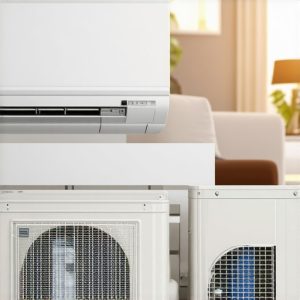
If your mini-split or central air is cutting out, we have to talk about static pressure. Think of it like blood pressure for your house. If the Tin Knocker who built your ducts made them too small, the blower motor has to work twice as hard to push air through. This causes the internal limit switches to trip. If the air can’t move across the evaporator coil, the gas (refrigerant) stays too cold, the coil freezes into a block of ice, and the low-pressure switch cuts the power to save the compressor. Before you call for a furnace repair or AC swap, check your filter. A one-inch pleated filter from a big-box store can sometimes act like a brick wall to airflow, causing the exact same short cycling behavior.
“Equipment shall be sized according to the heating and cooling loads calculated using ACCA Manual J.” – ACCA Standard 5
The Mechanical Anatomy of a Cycle
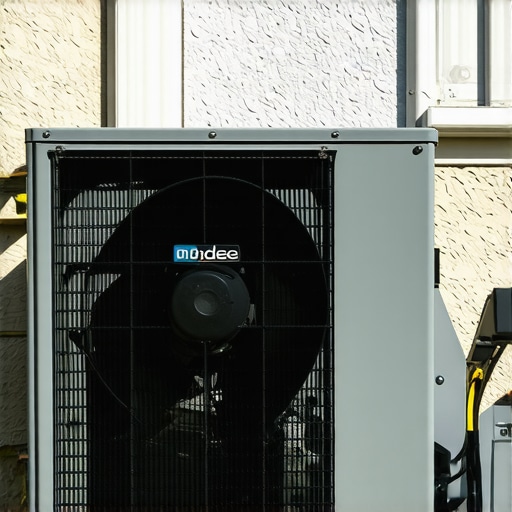
When the unit cycles too fast, it’s not just the humidity that suffers; it’s the juice consumption. A compressor draws 5 to 6 times its running amperage just to start. Constant cycling spikes your electric bill and cooks the start capacitor. If you look at your outdoor unit and see the suction line (the big insulated pipe) isn’t ‘beer can cold’ but is instead covered in frost, you’re looking at a restricted airflow issue or a gas leak. We use Pookie (mastic) to seal those duct leaks because even a small hole in the return air can suck in 140-degree attic air, throwing the whole thermodynamic balance into chaos. Don’t let a tech talk you into a new unit until they’ve performed a true static pressure test with a manometer.
Conclusion: Physics Over Salesmanship
A new AC unit cycling every five minutes is a cry for help. It’s either oversized, starving for air, or suffering from a low-voltage ghost. Fix the airflow, and you fix the comfort. Ignore it, and you’ll be buying a new compressor long before the warranty expires.